EU pulls back from Nigeria’s 2027 election after two decades of observer missions, citing insecurity and hostile treatment
The European Union will reportedly not deploy a full election observation mission to Nigeria for the 2027 general election, potentially ending more than two decades of extensive EU monitoring of elections in Africa’s most populous country.
 Black News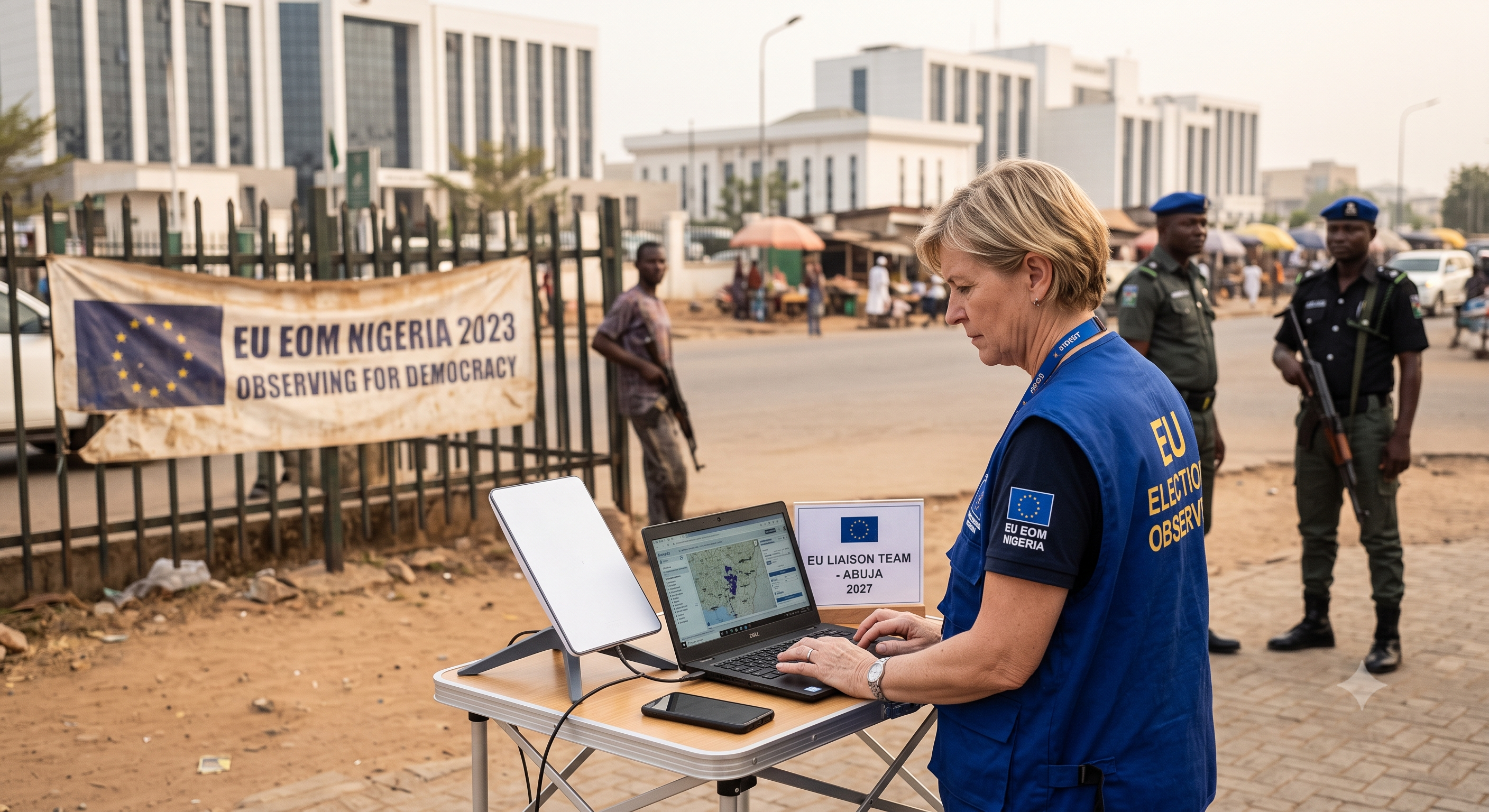

![EU pulls back from Nigeria’s 2027 election after two decades of observer missions, citing insecurity and hostile treatment.[Gemini Generated Image]](https://ocdn.eu/pulscms/MDA_/4fe78054e0557c5ecf5f1cb53a0c5974.png)
The European Union will reportedly not deploy a full election observation mission to Nigeria for the 2027 general election, potentially ending more than two decades of extensive EU monitoring of elections in Africa’s most populous country.
- The European Union will reportedly not deploy a full election observation mission for Nigeria’s 2027 general election.
- The move would break a more than two-decade pattern of EU missions monitoring elections in Africa’s most populous country.
- The EU reportedly cited worsening insecurity and hostile treatment following its critical assessment of Nigeria’s 2023 elections.
- The development comes after the bloc warned last year that Nigeria was running out of time to implement reforms needed to strengthen confidence in the 2027 vote.
The bloc cited growing security concerns and what it described as hostile treatment of its officials following the 2023 elections, Nigeria’s Daily Sun reported on Monday.
Rather than deploying observers across the country as it has done during previous election cycles, the EU is expected to maintain only a small team in Abuja to follow developments and report to Brussels, according to the report.
If maintained, the decision would mark a significant shift in the EU’s engagement with Nigeria’s electoral process.
The bloc has deployed election observation missions to Nigeria for every general election since 2003, making the country one of its longest-running election observation engagements in Africa.
The EU’s own records show that missions were deployed for Nigeria’s elections in 2003, 2007, 2011, 2015, 2019 and 2023.
From 110 observers to a small Abuja team
The scale of the reported pullback is particularly significant when compared with the EU’s presence during Nigeria’s last general election.
Ahead of the February 2023 presidential election, a core team of 11 EU experts arrived in Abuja in January, followed by 40 long-term observers deployed around the country.
DON'T MISS THIS: Trump administration puts Nigeria’s 2027 election under close watch as US weighs tougher ties
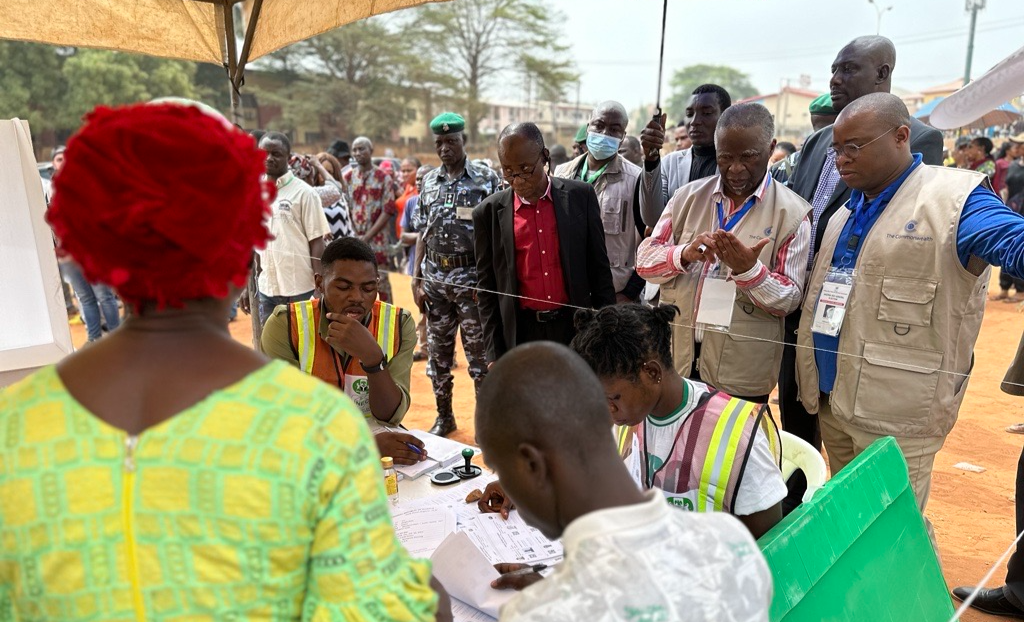
The mission eventually accredited 110 observers drawn from 25 EU member states, alongside Norway, Switzerland and Canada. They monitored the presidential and legislative elections as well as subsequent state elections.
The mission remained in Nigeria for three months, from January to April 2023.
Nigeria has long attracted significant international election monitoring because of its political and economic weight on the continent.
With a population exceeding 200 million, developments in the country are closely watched for their potential implications for democratic stability in West Africa, a region that has experienced a series of military coups and political crises in recent years.
A difficult aftermath to the 2023 election
The EU’s relationship with Nigerian authorities became strained following its assessment of the 2023 general election.
In its final report, the EU mission said the elections exposed “enduring systemic weaknesses” and that shortcomings in electoral law and administration damaged public trust in the Independent National Electoral Commission (INEC).
The mission issued 23 recommendations, six of which it considered priorities.
DON'T MISS THIS: Nigeria could face sanctions from Trump for allegations of ‘religious cleansing’
Among them were calls to improve the transparency of election results, strengthen safeguards around the appointment of INEC officials, address impunity for electoral offences, improve protections for journalists and tackle barriers facing women in politics.
The Nigerian government pushed back strongly against the assessment at the time, rejecting some of the mission’s conclusions.
Despite those tensions, engagement between the EU and Nigeria’s electoral authorities continued.
In October 2025, an EU follow-up mission led by Barry Andrews, who headed the 2023 observer mission, returned to Nigeria to assess progress on the recommendations.
INEC said at the time that the EU acknowledged “very significant progress” in some areas. But the European delegation also warned that major reforms were still outstanding and that time was running out to implement them before the 2027 election.
The EU’s follow-up assessment found that only one of its 23 recommendations had been fully implemented, while two had been partially implemented, eight were ongoing and nine had not been implemented.
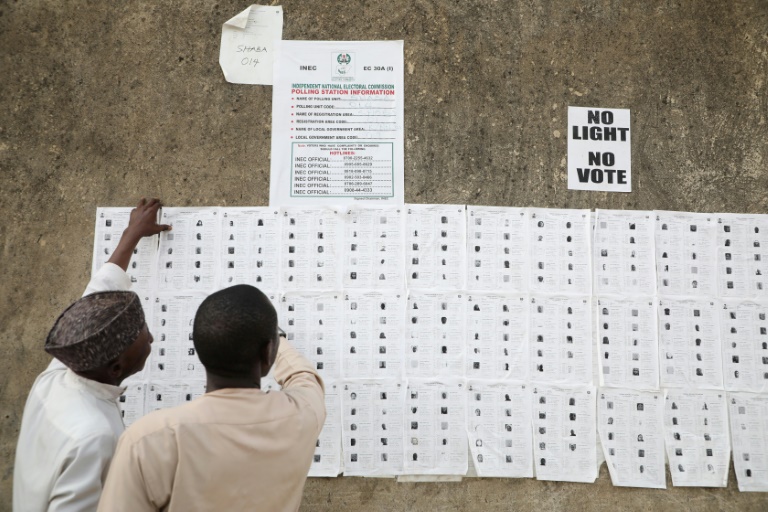
Nigeria prepares for another consequential election
The reported EU decision comes as preparations for Nigeria’s next general election begin to gather pace.
DON'T MISS THIS:BREAKING: Tinubu wins Nigeria's most closely-fought presidential election
INEC had previously said it intended to invite the EU alongside the African Union, the Economic Community of West African States and the Commonwealth to observe the 2027 elections.
In October 2025, then-INEC chairman Mahmood Yakubu said international observation missions had helped improve the quality of Nigerian elections and electoral activities.
Civil society organisations have also recently called on the electoral commission to issue invitations to international observer groups early enough to allow comprehensive monitoring of the process.
For Nigeria, the absence of a full EU mission would not prevent other international and domestic groups from observing the election.
But it would remove one of the largest and most established international monitoring operations from a presidential election that will be closely watched across Africa and beyond.