‘Explosive Diarrhea’ Outbreak: What You Need to Know
By Zeteo Photos: YouTube Screenshot|Wikimedia Commons An outbreak of cyclosporiasis, which causes “explosive diarrhea,” has surged across the U.S., spreading faster than the federal government can track. The outbreak has left thousands of people in more than half of the states ill, with cases continuing to rise. The source of the infection remains a mystery. Where did the parasite come from? Is it contagious? And what role did the Trump administration’s decision to cut federal funding from health agencies play in difficulties tracking the outbreak? Here are six things you need to know about the cyclosporiasis outbreak: 1. Where did it come from? The infection is caused by a microscopic parasite. The source for this outbreak has not been identified. The parasite is uniquely difficult to track, as it typically takes one to two weeks for people to start experiencing symptoms. Perhaps Steven Mandernach, executive director of the Association of Food and Drug Officials, put it best, telling the BBC: “This isn’t like detecting a needle in a haystack. It’s like detecting a microscopic portion of a needle in a haystack.” 2. How is it spreading? Cyclosporiasis is transmitted by consuming food or water contaminated with feces. Foods associated with cyclosporiasis outbreaks have included raspberries, basil, salad mixes, cilantro, berry mixes, lettuce, and snap peas. It is unlikely that the illness spreads through person-to-person contact. 3. Why are people blaming the Trump administration? Under the Trump administration, the CDC removed cyclospora – and several other parasites – from its mandatory reporting list. This was a part of Health Secretary Robert F. Kennedy Jr.’s broader effort to cut back on the CDC’s tracking system for food-borne diseases. In addition, many of those laid off from the CDC by the Trump administration have been employees who used to track these types of outbreaks. Health experts have warned that these changes are making the illness more difficult for the CDC to track, as the number of cases is likely higher than reported. 4. What are the symptoms of cyclosporiasis? According to the CDC, common symptoms of cyclosporiasis include watery diarrhea, loss of appetite, weight loss, nausea, cramping, and bloating. There are also less common symptoms, such as vomiting, low-grade fever, headaches, body aches, and other flu-like symptoms. Typically, those who have the infection will begin to experience symptoms about one week after eating food or drinking water contaminated by the parasite, but symptoms can appear as soon as two days after the exposure or as late as two weeks or more. Some people who are infected may be asymptomatic, especially where there are outbreaks. Symptoms can last from a few days to a month or longer without treatment, but doctors can prescribe antibiotics to help treat the infection. 5. Which states are affected by the outbreak? As of Tuesday afternoon, according to an official health alert, CDC had identified 1,645 cases of cyclosporiasis across the country, with another 5,100 reported by states since May 1. In the same time period in 2025, the CDC reported just 249 cases. At least 34 states are reporting cases. Roughly half are in Michigan, which has confirmed more than 3,300 infections. New York’s health department has identified just over 400 cases. The CDC suspects that at least 400 cases from across Kentucky, Michigan, Ohio, and West Virginia are connected. Since cases were first reported in May, 141 people have been hospitalized with the infection, but no deaths have been reported. 6. How can I avoid cyclosporiasis? While the source of the outbreak hasn’t been confirmed, Joellen Russell, a climate and integrative science professor at the University of Arizona, told USA Today the one thing people should be most cautious of are bag salad mixes, which are often from more than one grower. All fruits and vegetables, including pre-washed produce, should be washed before eating, experts say. Michigan’s state health department says cooking produce can also help prevent people from contracting the infection, as the parasite dies at a temperature of 158 degrees Fahrenheit.
 Black News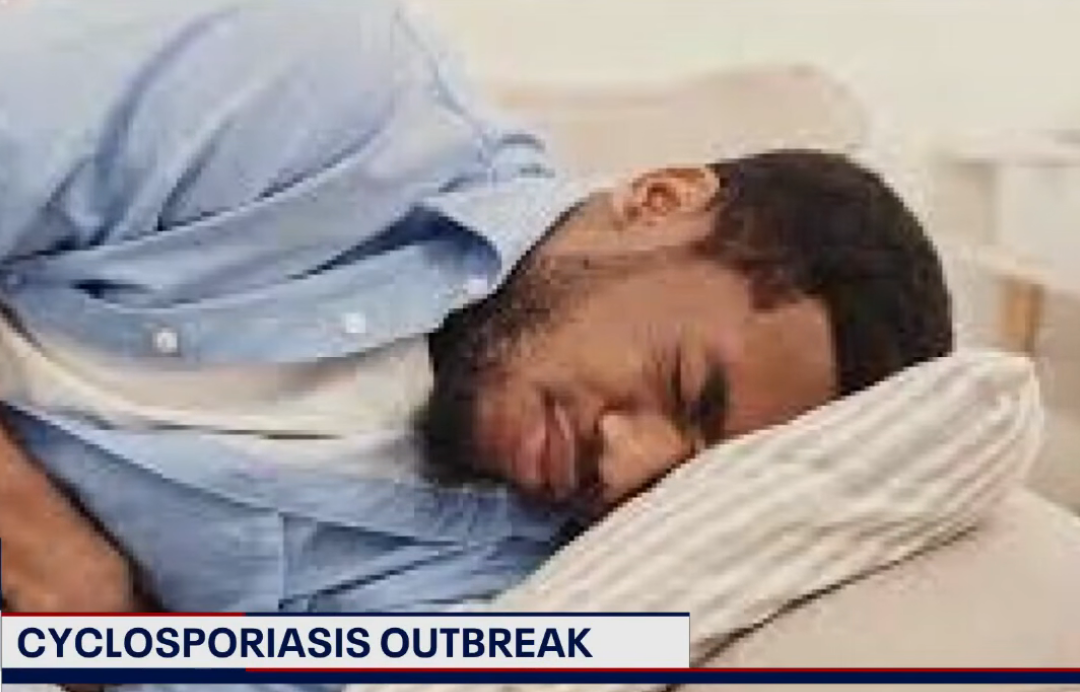

By Zeteo
Photos: YouTube Screenshot|Wikimedia Commons
An outbreak of cyclosporiasis, which causes “explosive diarrhea,” has surged across the U.S., spreading faster than the federal government can track.

The outbreak has left thousands of people in more than half of the states ill, with cases continuing to rise.
The source of the infection remains a mystery.
Where did the parasite come from? Is it contagious? And what role did the Trump administration’s decision to cut federal funding from health agencies play in difficulties tracking the outbreak?
Here are six things you need to know about the cyclosporiasis outbreak:
1. Where did it come from?
The infection is caused by a microscopic parasite. The source for this outbreak has not been identified. The parasite is uniquely difficult to track, as it typically takes one to two weeks for people to start experiencing symptoms.
Perhaps Steven Mandernach, executive director of the Association of Food and Drug Officials, put it best, telling the BBC: “This isn’t like detecting a needle in a haystack. It’s like detecting a microscopic portion of a needle in a haystack.”
2. How is it spreading?
Cyclosporiasis is transmitted by consuming food or water contaminated with feces. Foods associated with cyclosporiasis outbreaks have included raspberries, basil, salad mixes, cilantro, berry mixes, lettuce, and snap peas.
It is unlikely that the illness spreads through person-to-person contact.
3. Why are people blaming the Trump administration?
Under the Trump administration, the CDC removed cyclospora – and several other parasites – from its mandatory reporting list. This was a part of Health Secretary Robert F. Kennedy Jr.’s broader effort to cut back on the CDC’s tracking system for food-borne diseases.
In addition, many of those laid off from the CDC by the Trump administration have been employees who used to track these types of outbreaks. Health experts have warned that these changes are making the illness more difficult for the CDC to track, as the number of cases is likely higher than reported.
4. What are the symptoms of cyclosporiasis?
According to the CDC, common symptoms of cyclosporiasis include watery diarrhea, loss of appetite, weight loss, nausea, cramping, and bloating.
There are also less common symptoms, such as vomiting, low-grade fever, headaches, body aches, and other flu-like symptoms.
Typically, those who have the infection will begin to experience symptoms about one week after eating food or drinking water contaminated by the parasite, but symptoms can appear as soon as two days after the exposure or as late as two weeks or more.
Some people who are infected may be asymptomatic, especially where there are outbreaks.
Symptoms can last from a few days to a month or longer without treatment, but doctors can prescribe antibiotics to help treat the infection.
5. Which states are affected by the outbreak?
As of Tuesday afternoon, according to an official health alert, CDC had identified 1,645 cases of cyclosporiasis across the country, with another 5,100 reported by states since May 1. In the same time period in 2025, the CDC reported just 249 cases.
At least 34 states are reporting cases. Roughly half are in Michigan, which has confirmed more than 3,300 infections. New York’s health department has identified just over 400 cases. The CDC suspects that at least 400 cases from across Kentucky, Michigan, Ohio, and West Virginia are connected.
Since cases were first reported in May, 141 people have been hospitalized with the infection, but no deaths have been reported.
6. How can I avoid cyclosporiasis?
While the source of the outbreak hasn’t been confirmed, Joellen Russell, a climate and integrative science professor at the University of Arizona, told USA Today the one thing people should be most cautious of are bag salad mixes, which are often from more than one grower.
All fruits and vegetables, including pre-washed produce, should be washed before eating, experts say. Michigan’s state health department says cooking produce can also help prevent people from contracting the infection, as the parasite dies at a temperature of 158 degrees Fahrenheit.