One more African country added to U.S. 'Do Not Travel' list, bringing total to 10
The number of African countries under the U.S. government's highest travel advisory has risen to 10, after Uganda was added to Washington's Level 4: Do Not Travel list, according to the latest update from the U.S. Department of State.
 Black News

The number of African countries under the U.S. government's highest travel advisory has risen to 10, after Uganda was added to Washington's Level 4: Do Not Travel list, according to the latest update from the U.S. Department of State.
- The U.S. has added Uganda to its Level 4: Do Not Travel list, raising the total of African countries at this advisory to ten.
- A Level 4 advisory means Americans are warned not to travel under any circumstances due to extreme risks or limited U.S. consular support.
- Countries on the list face issues such as armed conflict, terrorism, violent crime, kidnapping, unrest, or health crises like Ebola.
- Africa now has the highest regional count of 'Do Not Travel' advisories, reflecting ongoing security and public health challenges.
In a reminder posted on X on Tuesday, the State Department's TravelGov account reiterated that a Level 4 advisory means Americans should "Do Not Travel" under any circumstances, citing dangerous local conditions or the U.S. government's limited ability to provide emergency assistance.
"We issue Travel Advisories with Levels 1–4. Level 4 means DO NOT TRAVEL," the department said. "These places are dangerous. Do not go for ANY reason."
DON'T MISS THIS: 9 African countries remain under the U.S. “Do Not Travel” warning in May 2026 update
The latest advisory brings the number of African countries on the list to 10, up from nine earlier this year.
The 10 African countries on the U.S. 'Do Not Travel' list
The African countries currently under the State Department's highest travel advisory are:
- Burkina Faso
- Central African Republic
- Chad
- Democratic Republic of Congo
- Libya
- Mali
- Niger
- Somalia
- South Sudan
- Uganda
Most of the countries have remained on the list for years because of ongoing armed conflict, terrorism, violent crime, kidnapping, civil unrest or weak government control over parts of their territories.
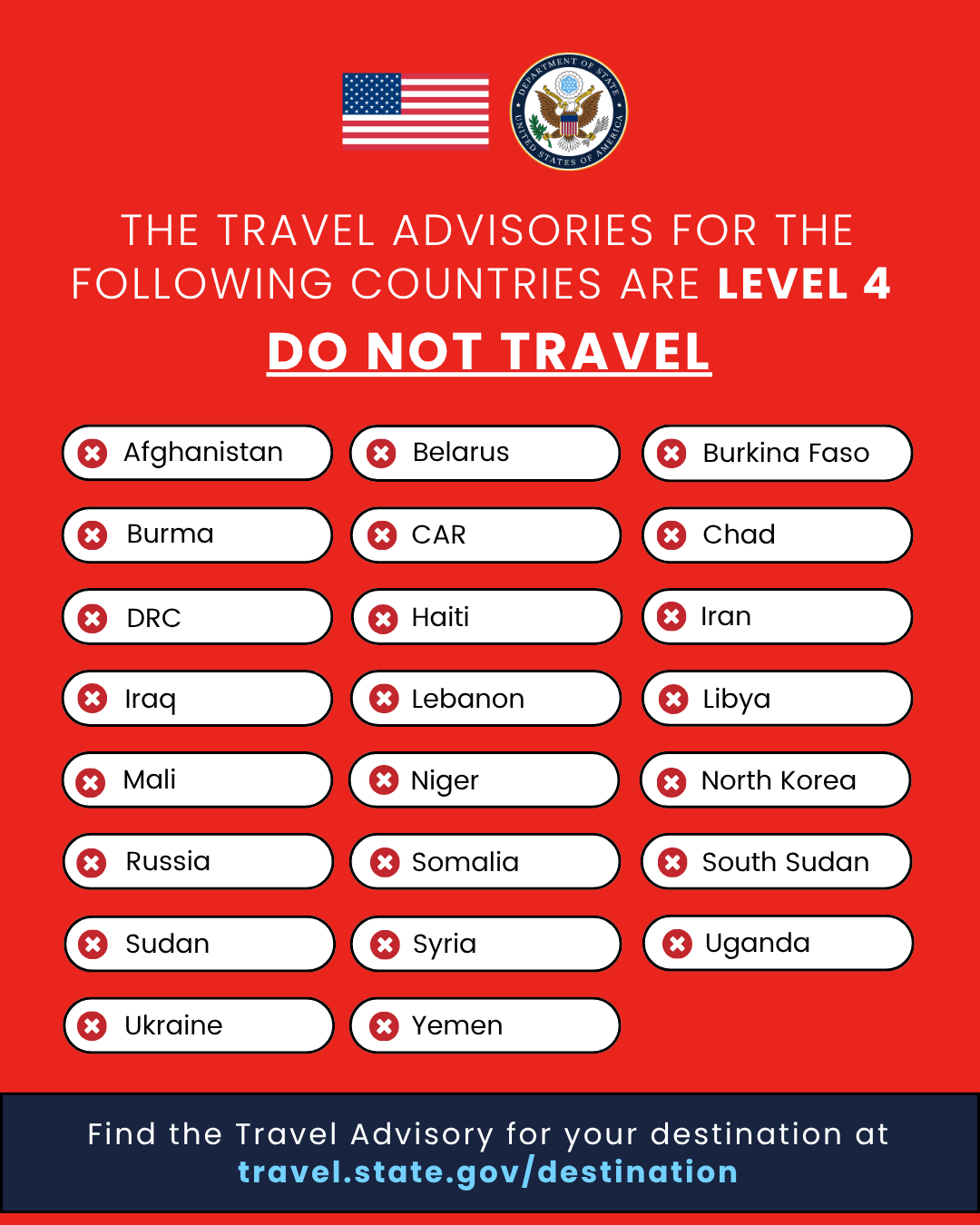
Uganda is the newest addition after the U.S. upgraded the country's travel advisory to Level 4 in May, citing the Ebola outbreak alongside concerns over crime, terrorism and civil unrest.
What a Level 4 advisory means
The U.S. State Department's travel advisory system ranges from Level 1 ("Exercise Normal Precautions") to Level 4 ("Do Not Travel").
A Level 4 designation is reserved for destinations where the U.S. government believes the security or health risks are severe enough that Americans should avoid travel altogether.
The designation may also reflect situations where the U.S. has a limited ability to provide consular assistance because of conflict, deteriorating security or public health emergencies.
DON'T MISS THIS: African countries under the US Level 4 travel alert rise to eight with new addition
With 10 countries now on the list, Africa has the largest regional concentration of destinations under the U.S.'s highest "Do Not Travel" advisory, reflecting persistent security and public health challenges linked to armed insurgencies, political instability, cross-border terrorism and disease outbreaks.
While U.S. travel advisories are intended primarily for American citizens, they are closely watched by international travelers, multinational companies, insurers and investors as a gauge of security and operational risks in different parts of the world.
The updated list comes as several African governments continue efforts to improve security, contain health emergencies and attract foreign investment and tourism despite persistent regional challenges.