Former OPEC president and Nigerian oil minister Diezani cleared after 11-year UK corruption probe
Former OPEC president and former Nigerian petroleum minister Diezani Alison-Madueke has been cleared of all bribery charges in the United Kingdom, ending an 11-year corruption investigation that became one of the most prominent legal battles involving an African energy official.
 Black News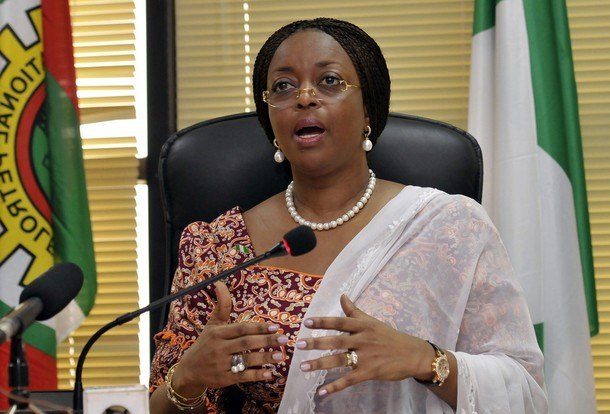
Former OPEC president and former Nigerian petroleum minister Diezani Alison-Madueke has been cleared of all bribery charges in the United Kingdom, ending an 11-year corruption investigation that became one of the most prominent legal battles involving an African energy official.
- Former OPEC president and ex-Nigerian petroleum minister Diezani Alison-Madueke has been acquitted of all bribery charges in the UK.
- The verdict ends an 11-year international investigation involving authorities in Britain, Nigeria and the United States.
- Prosecutors alleged oil industry figures funded a luxury lifestyle for her while seeking access to opportunities in Nigeria’s oil sector.
- The ruling marks a major victory for Alison-Madueke and a setback for one of Britain’s highest-profile anti-corruption prosecutions.
A jury at London’s Southwark Crown Court found Alison-Madueke not guilty on five counts of accepting bribes and one count of conspiracy to commit bribery after more than 46 hours of deliberation, bringing to a close a case that had drawn scrutiny from authorities in the UK, Nigeria and the United States.
The verdict is a big setback for British investigators, who spent more than a decade pursuing allegations that the former minister benefited from luxury properties, private travel, expensive shopping and other perks allegedly provided by oil industry figures seeking influence in Nigeria’s petroleum sector.
For Alison-Madueke, however, the ruling marks a major personal and legal victory after years of investigations, asset seizures, court proceedings and public scrutiny.
The former minister served as Nigeria’s petroleum minister between 2010 and 2015, overseeing Africa’s largest crude oil producer at a time when oil revenues remained central to the country’s economy.
She later became the first woman to lead the Organisation of the Petroleum Exporting Countries (OPEC), placing her among the most influential figures in global energy diplomacy.
Prosecutors argued that business figures seeking opportunities in Nigeria’s oil industry funded an extravagant lifestyle for Alison-Madueke in Britain between 2011 and 2015.
The allegations included luxury accommodation, chauffeur-driven vehicles, private travel and high-end shopping. The former minister consistently denied wrongdoing.
Throughout the trial, she maintained that she neither requested nor accepted bribes and did not control the process through which oil and gas contracts were awarded.
Her defence team argued that expenses linked to official engagements were reimbursed through legitimate channels and that prosecutors had failed to prove criminal conduct.
The acquittal concludes one of the highest-profile corruption cases involving a former African public official.
The case had become a test of how effectively Western authorities could pursue complex corruption investigations spanning multiple jurisdictions, financial systems and regulatory agencies.
It also showed growing efforts by governments to strengthen accountability in sectors such as energy, where billions of dollars in public revenues and private investments are at stake.
The ruling is unlikely to end debate over governance and transparency in Nigeria’s oil industry, a sector that has faced repeated scrutiny over the management of public resources despite years of reform efforts.
But after more than a decade of allegations, investigations and legal battles, Alison-Madueke leaves the UK courtroom without a criminal conviction, bringing one of the most closely watched chapters in Africa’s energy and anti-corruption history to a close.