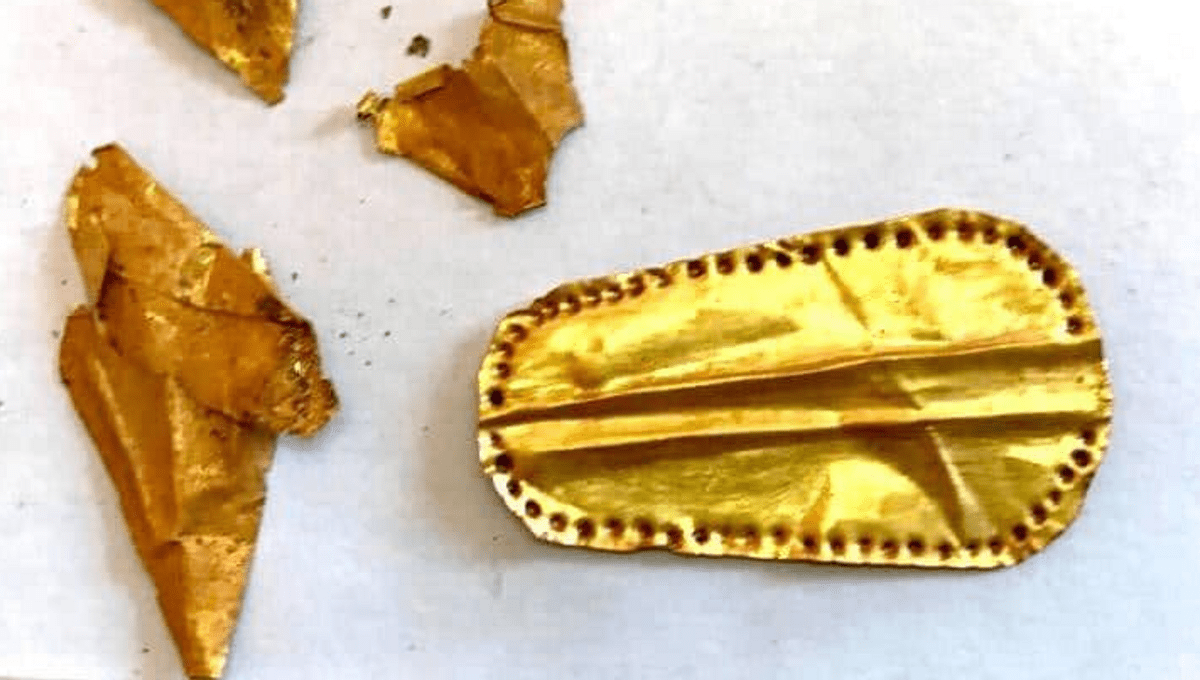
From Revival to Erasure: Ebbs and Flows of Judaism in Kaifeng
Foreign missionary contact, the rise of nationalism, and ethnic identification work undertaken under the rule of the Chinese Communist Party culminated in the construction of ‘Jews’ as an ethnic identity altogether foreign, resulting in the suppression of recent efforts to revive Sinicised Judaism in Kaifeng. Despite continued efforts by and optimism among some groups, a revival of any kind would be impossible without a reassessment of the Chinese nation itself. The post From Revival to Erasure: Ebbs and Flows of Judaism in Kaifeng appeared first on Made in China Journal.
 Black News
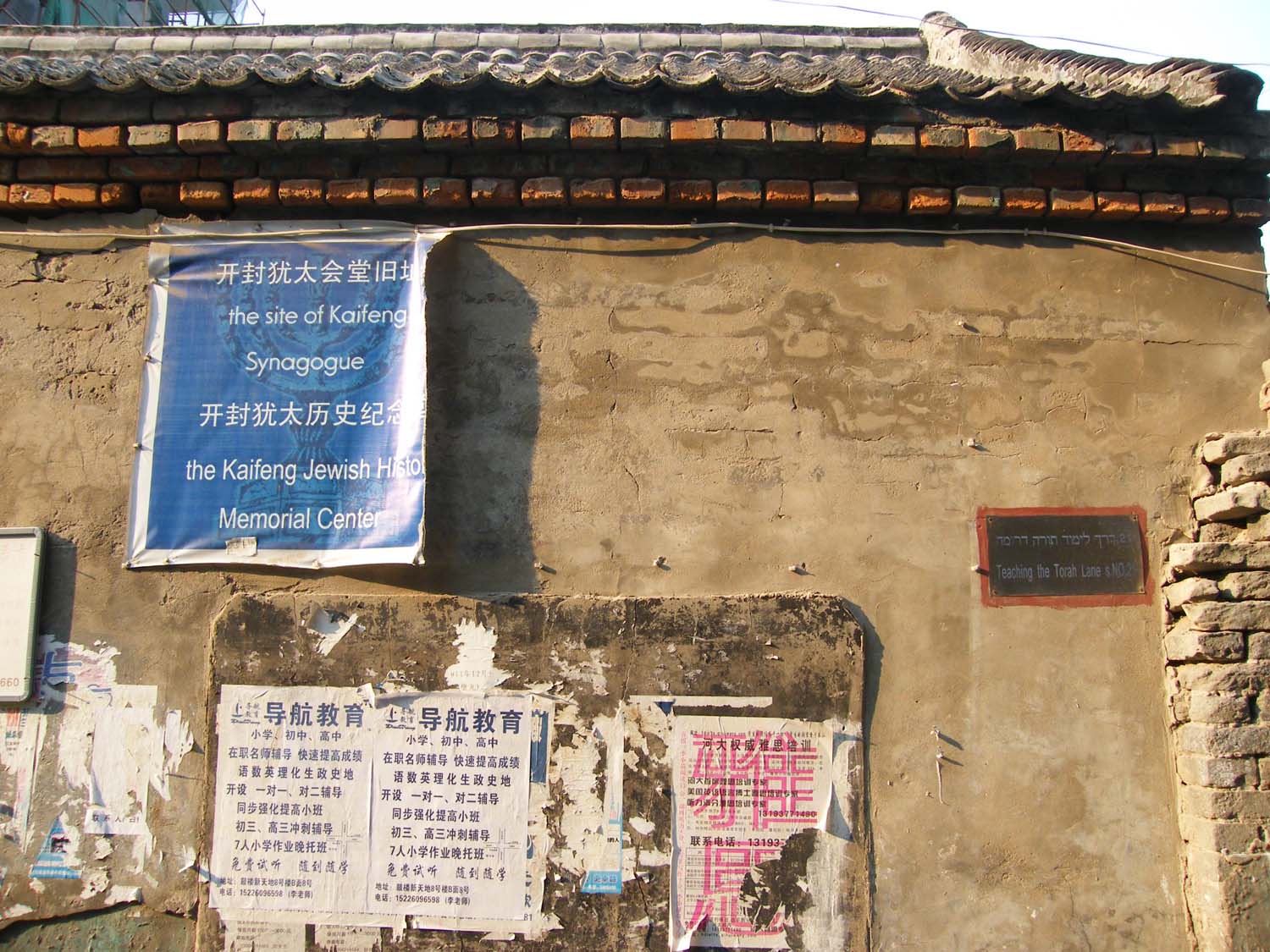
Today, there are no physical markers in the city of Kaifeng, Henan Province, that would suggest the presence of Jews. But the story of Judaism in Kaifeng remains well known among Jewish people around the world. In an era when Ashkenazi Jews have been absorbed into Western whiteness, lost cultural and linguistic distinctiveness, and become basically indistinguishable from their neighbours, the utterance of ‘Chinese Jews’ in conversation serves as a point of pride; we Jews were even in China and there we thrived, for a time.
But Chinese Jews, too, have assimilated into Han Chinese culture in a process that involved both voluntary absorption of local cultural traits—like the way Jewish communities around the world have adapted to their environments and developed localised habits—and, later, coerced assimilation that succeeded in stripping them of distinctiveness, severing their connection with outside groups who sought to ‘revive’ Judaism in China. These groups have periodically put down roots in the once-cosmopolitan imperial capital of Kaifeng since the seventeenth century as missionaries, emissaries, or volunteers affiliated with nongovernmental organisations, all with their own ideas of what should be done with this community of ‘lost Jews’: revive the local religion, send them ‘back’ to Israel, convert them to Orthodoxy, or bring them to Jesus (Urbach 2016).
In the 1990s and 2000s, a period of remarkable openness in Kaifeng allowed foreign groups to offer religious education (both Jewish and Christian) to local Kaifeng Jewish descendants. The municipal government, for a brief period, embraced the influx of foreign cash and came close several times to reconstructing a Jewish synagogue (Urbach 2016). However, this ‘golden era’ was short-lived: all foreign groups were ordered to leave in 2015, after news of a Jewish ‘revival’ attracted too much international attention, and as Xi Jinping ordered the further ‘Sinicisation’ of all Chinese religions (of which Judaism is not one) (Laytner 2016). All markers of Jewish identity—including a memorial stone inaugurated by the local government in the 2000s and historical stone inscriptions displayed in the Kaifeng municipal museum—were removed.
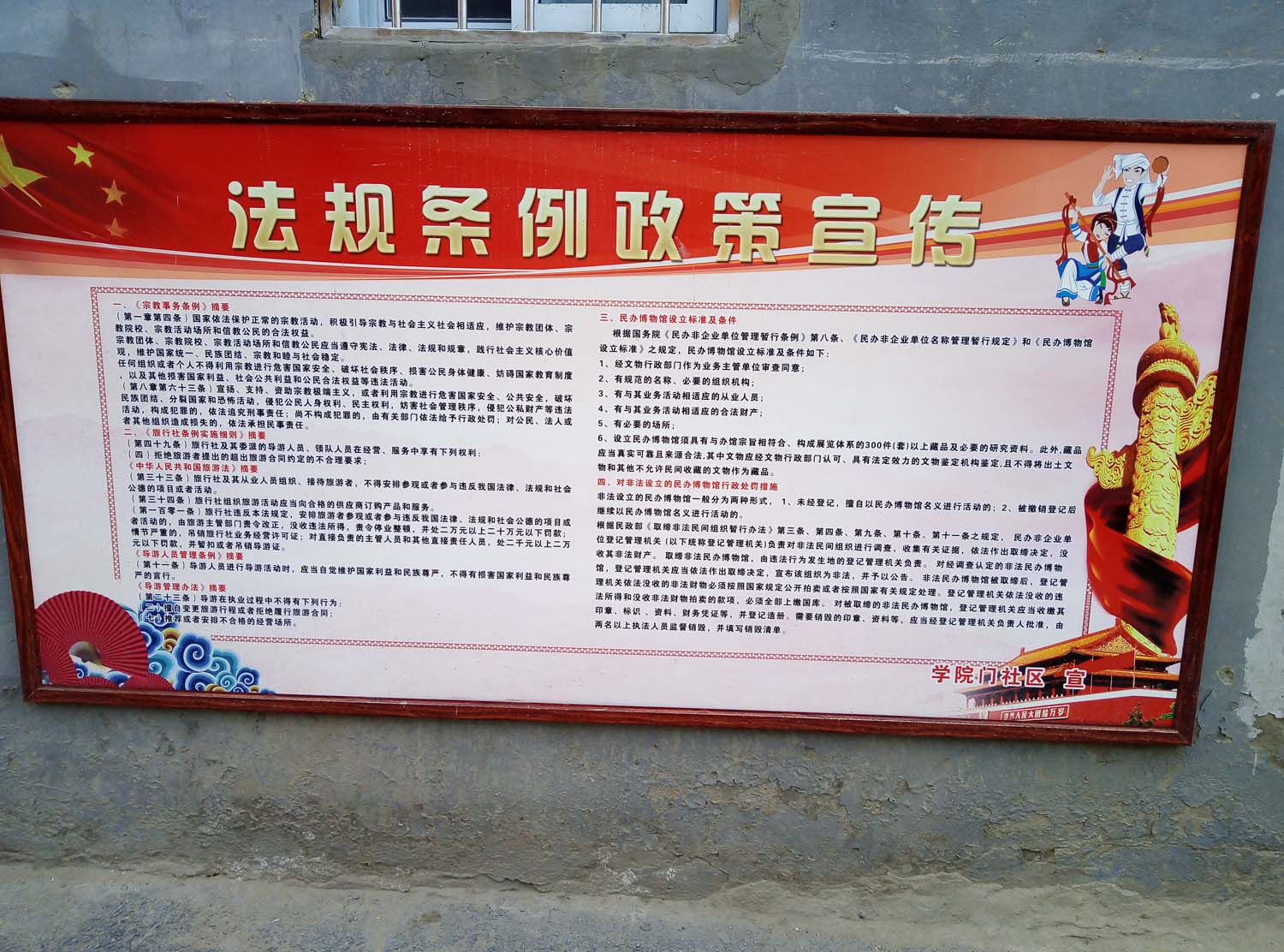
Caught among these efforts are the Kaifeng Jewish descendants themselves, who have welcomed foreign groups to varying degrees. In the spring of 2025, as I was conducting research on the role of nationalism in Chinese discourse about ‘the Jews’, I met one particularly public-facing descendant, 45-year-old Ester Guo. From 2008 to 2017, she had run a private museum dedicated to the Chinese Jews of Kaifeng in her home and led group tours for 100 yuan per hour. When we met, the situation had changed dramatically: her hourly rate was still the same, but her home museum had been destroyed (likely by a relative, Guo says). The government would not allow her to rebuild due to local zoning regulations and, at the time of writing in March 2026, according to Guo, the situation had not changed, with the house remaining derelict. She could not give me a tour of the area; being seen near the old Kaifeng synagogue site with a foreigner would cause too much trouble with local authorities, she said. When I later walked by her house on my own, posters had been hung around her old courtyard listing China’s five legal religions and the laws regarding private museums.


Over two days, Guo described at length, often tearfully, her journey through identity as a Kaifeng Jewish descendant, her relationship to faith and God, and the betrayal she felt from the State of Israel when she discovered that Kaifeng Jews were required to convert to Judaism to receive citizenship—a requirement she saw as a denial of her Jewish identity. ‘I feel that Chinese culture is the body, and Jewish culture is the soul,’ she said.
If we can bring these two things together, that would be very complete. That’s why I often say I’m doing this. Not to go back to Israel, not to go back to the West, but to do this here in China. Because in this place, it has meaning. I’m studying this, what meaning it has for the whole world, for humankind.
In this essay, I reflect on how the development of Chinese nationalism and shifts in Sino-Israeli relations throughout the twentieth century ultimately prevented the Kaifeng Jewish descendants from achieving recognition of their claimed Jewish identity in either Israel or China. This trajectory helps explain why the Kaifeng Jewish identity has been placed under pressure and will likely not experience a ‘revival’ under the current conditions, which make official recognition of the Chinese-Jewish identity impossible.
Early Histories of Chinese Jews
Jews came to China from Persia via the overland and maritime Silk Roads and settled in Kaifeng during the Song Dynasty (Eber 2020: 5). They quickly began incorporating Chinese cultural elements into their practice, shifting from community-oriented to clan-oriented organisation and engaging in ancestor worship. Perhaps most importantly, their Judaism in China was passed down through the patrilineal line rather than through the mother, as is traditional under Jewish law (Eber 2017: 113).
Scholars such as the late Irene Eber concluded that the incorporation of Chinese traditions into Judaism is what allowed it to survive for so long. Eber (2017: 103) writes that this unique ‘Judeo-Confucian syncretism’
did not have to be regarded by others as the religion of strangers but could be seen to fit into a mosaic of syncretic sectarian groups, which characterised Chinese religious life in the north as well as in other parts of China.
Members of the community became scholar-officials, pulling the most capable away from Jewish religious leadership and closer to the Chinese bureaucracy (Eber 2017: 102–3). By the time of the Ming Dynasty—considered a golden period for the Kaifeng Jews—the community’s population had reached 5,000 (al-Sudairi 2017: 358).
In premodern China, Stevan Harrell (1996: 19) argues, to be Chinese was to be ‘civilised’ or ‘cultured’; more than race or ethnicity, Confucian moral education represented the difference between ‘barbarians’ and Chinese. Thus, the Chinese who lived among them saw Jews not as foreign, but as a local sect (教) (Eber 2017: 102–3). Others saw them as blue-hatted Muslims (蓝帽回回), the scripture-teaching sect (教经教), or ‘the sect that pulls out the sinews’ (挑筋教)—a reference to kosher practices. They referred to themselves as Yicileye (一赐乐业), meaning ‘Israelites’ (spelled differently in Chinese from ‘Israel’, the country, Yiselie 以色列) (Pan 1983).
The sources that detailed the development of the Kaifeng Jewish community and their unique practices came primarily from Jesuit and Protestant missionary observers. For the Protestants, who contacted the Kaifeng Jewish community in the nineteenth century, the primary motivation was conversion. The Jesuits, in the seventeenth century, had more complex motives: winning the Rites Controversy and showing that Chinese beliefs were compatible with Catholicism, which could be achieved by securing the ‘Kaifeng Jewish Bible’. This ‘original’ text, which was never found, was believed in the sixteenth and seventeenth centuries to predict more clearly and explicitly the coming of Jesus Christ in passages that had supposedly been altered or deleted by Jewish scribes in the available Jewish Bible (Zürcher 2017: 71–72; Bender 2017: 239).
Historian Zhou Xun has questioned the reliability of these missionaries’ accounts, arguing they may have exaggerated the Kaifeng community’s connection to what those in the West recognised as ‘Judaism’ for the purpose of fulfilling their missions. In an essay for a 2005 book titled Orientalism and the Jews, Zhou goes so far as to assert that the story of the Kaifeng Jews was ‘a pure Western invention’ that ‘played an essential part in the Occidental construction of the oriental Jews’ (2005: 68). She points to inconsistencies in the missionaries’ reports, which claimed that the Kaifeng Jews were both well-read in Hebrew and ignorant of their own religion (Zhou 2005: 71). She also recounts how sketches of the Kaifeng synagogue by one missionary, initially considered ‘unattractive’, were ‘reworked so that they would look more like the Chinese synagogue that fit the Western imagination’ (Zhou 2005: 71). Protestants who travelled there in the nineteenth century in pursuit of descendants of the Israelites also brought back Torah scrolls of disputed origin and authenticity that they had apparently purchased from an impoverished Kaifeng, whose people Zhou (2005: 75) notes often sold fakes as ‘a reasonably profitable business’.
From Blue-Hatted Muslims to Youtai Ren
By the nineteenth and twentieth centuries, Kaifeng’s Jewish population was already in dramatic decline. The acceleration of assimilation into the general population, combined with the general poverty of the region and flooding that destroyed the local synagogue, made conditions for sustaining the community almost impossible. Meanwhile, perceptions of the ‘Chinese Jews’ were beginning to change.
The Chinese themselves had no consciousness of ‘the Jews’ as part of a wider global community until missionaries’ first translation of the Bible in 1837, which offered a new term for the ‘blue-hatted Muslims’: they were now called Youtai ren (犹太人), and represented a national ‘problem’ in Europe (Xian 2000). As new concepts of anthropology, race science, and nationalism gradually spread from West to East, and more Chinese and Western scholars ventured to Kaifeng to study the ‘Kaifeng Jews’, this community suddenly became altogether different from ordinary Chinese, transforming from a Chinese sect ‘once regarded by the Jesuits as completely Chinese in their physical appearance’ into a separate race that ‘had by now also acquired “Jewish features”’ such as big noses and deep-set eyes, as well as other stereotypical racial characteristics assigned to Western Jews such as innate business acumen (Zhou 2005: 75).
Intellectuals who travelled West returned with warnings for the Chinese nation, seeing their own fate reflected in the stateless Jews. Shan Shili, wife of the late Qing diplomat Qian Xun, for example, wrote in her 1910 travel diary about the miserable situation of Jews in Europe, who ‘have lost their country and are scattered around all over the world’ and ‘have been ill-treated everywhere they went’ despite their financial power—except in China, where they experienced a relative degree of freedom under the ‘yellow race’ (Zhou 2001: 176–83). Sun Yat-sen, perhaps the most famous person to write about Jews at this time, contrasted the strength of Jewish and Chinese nationalisms in the context of China’s fight against foreign imperialism. Sun alleged that the Jews’ religion and strong national character were what ensured their survival despite large-scale displacement. He wrote that the ‘capitalist forces in Britain and the United States are also controlled by Jews’ (Sun 2014: 6), while lamenting that China’s ‘precious’ nationalism, on the other hand, was extinguished as soon as it was overpowered by foreign military force (Gao 2013: 15).
[Figure 3: Ester Guo standing in a building from which she can view her former ancestral home, May 2025. Image by Jordyn Haime.]
The fate of Jews as a foreign people was sealed by the 1950s as a result of two major developments: China’s ethnic minority identification campaign and the establishment of the State of Israel in 1948. In Mao’s China, Stalinist conceptions of ethno-cultural groups as ‘nations’ took the place of the racial discourse of the previous era. China’s central government in 1953 denied Kaifeng Jews’ appeal for ethnic minority (少数民族) status in accordance with these newly established standards of ethnic identity; they were seen as lacking common characteristics due to years of assimilation. Moreover, as Zhou (2001: 157) writes, ‘Israel was perceived in China as the “Jewish nation state”; the “old Jewish race” with a new country and new language’, placing the Jewish national home squarely outside China’s borders. Authorities also feared that recognition of a Jewish minority in Kaifeng would upset its significant Muslim population given the recent founding of the State of Israel. This was particularly the case in the mid-1950s, when China’s shift in alignment towards the Afro-Arab nation-states including Palestine led to more hostile official rhetoric towards Israel, shifting its depictions of Jews in Israel from victims of Western imperialist and Arab armies, defending their right to self-determination, to aggressors backed by China’s now primary enemy, the American imperialists (Fan 2024: 27–28; She 2016: 136).
This approach was reaffirmed in 1980 when the issue was raised amid the influx of foreigners who sought out Chinese Jews, this time more clearly stipulating that official media and the government should only refer to members of this group as ‘descendants of Kaifeng Jews’ (Xu 2016: 69). From then on, officials denied the existence of Chinese Jews in Kaifeng.
As a consequence of this erasure, Jews remain deeply connected to the West in the Chinese imagination. On a practical level, this impacts religious practice: foreign Jews in China today are welcome to observe their religion and culture at sanctioned locations such as Chabad houses, of which there are seven in China as of this writing in early 2026. Kaifeng Jewish descendants, however, may not participate in their activities. On a discursive level, ‘Jews’ have become an entirely foreign ‘other’. The stereotypical image of the Jew as intelligent and wealthy with considerable power over Western institutions is seen in a generally positive, admirable light—something Chinese should learn from or aspire to—in times of good relations with the West, particularly the United States and Israel. But given the assumption of Jewish ‘control’ over the West, attitudes towards Jews shift when those relations sour.
For examples of this, we may consider the boom in what I like to call the Jewish self-help book industry in the 1980s and 1990s, as Chinese publishers churned out millions of copies of get-rich-quick books ostensibly based on Jewish Talmudic wisdom, just as China and Israel established official diplomatic relations in 1992, laying the foundations for fruitful and, at times, controversial trade and technological exchanges (Haime 2021; Ross 2016; Byler and Ketter 2024). The tide began to shift as Jewish conspiracy theories circulated worldwide after the 2008 Global Financial Crisis; in China, Song Hongbing, a US-educated former consultant for the American financial institutions Fannie Mae and Freddie Mac, published the first in his six-part book series, Currency Wars, centred on the Jewish Rothschild family, which he blamed for manipulating the global financial system against China (McGregor 2007). And, by 2023, after Hamas’s attack on Israel and Israel’s ensuing genocide in Gaza, anti-Jewish and conspiratorial rhetoric became commonplace in Chinese media and popular discourse, where it merged with legitimate criticism of Israel and was utilised as a discursive weapon against American imperialism (Haime 2023; Wang 2022, 2024). The unquestioning assumption of a reality of Jewish control and manipulation is also embodied in the rise of localised popular conspiracy theories such as the mythologised ‘Fugu Plan’, which imagines a Jewish-Japanese collaborative plot against the Chinese people to establish a ‘Jewish state’ in Manchukuo during the Second Sino-Japanese War (Gering and Haime 2023).
The Twenty-First Century Rise and Fall of Kaifeng Jewry
Ester Guo, who grew up in the 1980s and 1990s—a period of relative warmth towards Israel and the United States—was always proud of her Jewish identity. Among ordinary Chinese, she never experienced hostility, criticism, or suspicion for her Jewishness:
All through school, when I said I was Jewish, I was wrapped in love. I was very proud to be Jewish because every time I said it, people praised me: you’re smart, you’re clever. It was all compliments. That love strengthened my Jewish identity.
While Guo was growing up, Kaifeng became a hotbed of activity for foreign groups with varying motivations: missionaries who sought to Christianise the Jewish population; Zionist groups (both Jewish and Christian) with motivations to ‘return’ the Kaifeng Jews to their homeland (to bring about the return of Jesus the messiah or to demographically ‘strengthen’ the State of Israel); or Jewish teachers and academics who aimed simply to help restore Judaism in Kaifeng (al-Sudairi 2017). It was also at this time that the first municipal government proposal to restore the Kaifeng synagogue was raised and shelved shortly after, when Jewish descendants went to the Israeli Consulate demanding the right to Israeli citizenship, showing the Youtai marker on their hukou (household registration) as proof. In the aftermath, all ethnic Youtai markers were changed to either Han or Hui (Urbach 2016).
In 2007, Guo considered aliyah—or immigration—to Israel. Her cousin had just attained Israeli citizenship with the help of Shavei Israel, an Israeli nongovernmental organisation primarily concerned with helping ‘lost tribe’ Jewish communities ‘return’ to Israel. But before becoming Israeli Jews, they were required to undergo a formal traditional conversion process. As of 2016, 19 Kaifeng Jews had done so willingly with the help of Shavei Israel; some have even joined the Israeli Defence Forces (Zalman 2016; Perkas 2014). Guo saw this as a humiliating rejection. It filled her with resentment, anger, and hurt. She compared herself to China’s ‘left-behind children’: raised by an aunt (China) while she longed for her real mother (Israel), only to be disowned upon reunion.
For that left-behind child, what is the feeling towards the parent who denies them? Of course, it’s anger. I checked my genealogy and found I hadn’t gotten anything wrong. Why do you accept them and not me … Don’t we have a long history? Don’t we have our own culture?
Guo described this discovery—that Israel did not accept them as Jews—as a major turning point that transformed her from an atheist into a theist, from a girl into a woman. She read the Torah—the whole thing. It said nothing about matrilineal descent. Western Jews, she said, had strayed from God’s words: ‘Kaifeng Jewish culture has already been lost. Now you want to give me a Western Jewish body. If I am to shape a Jewish body, shouldn’t it be the Kaifeng Jewish body I should restore?’
In 2008, she purchased the old house in her siheyuan, a traditional courtyard compound, from the government, which had acquired it during the Cultural Revolution. She entered a loveless marriage so that she could split the cost with her husband, whose name is on the hukou. She turned it into a museum and dedicated her life to researching and preserving Kaifeng Jewish culture, railing against the universality of matrilineal descent. For a time, it seemed like the government supported her plans to rebuild the synagogue and turn the area into a Jewish tourism hub, complete with a prayer hall where visitors could experience Jewish culture, a kosher restaurant, and a hotel. It did not last long.
While the brief ‘revival’ of Jewish culture and tourism was made possible by foreign groups, they are also at least partly responsible for its decline. In April 2015, The New York Times ran a story about a Passover Seder in Kaifeng and the city’s remarkable Jewish revival, quoting a local finance official on its economic potential (Davis 2015). A month later, President Xi Jinping called for the ‘Sinicisation’ of religions at a United Front Work Conference, further elaborating in 2016 that guiding religions to adapt to socialist society ‘safeguards the unity of the motherland and the great unity of the Chinese nation’ and necessitated ‘resisting infiltration by foreign entities’ (Xinhua 2016). While the directive was aimed mainly at challenges presented by Muslim minorities and the proliferation of Protestant ‘house churches’, Kaifeng Jews—as members of a non-legal religious group—were not spared (Chang 2018). The crackdown began: foreign groups were expelled and their schools closed; signage and exhibits erected by the local government that memorialised Jewish culture were removed. Local police officers began barging in on meetings with tourists at Guo’s house and demanding to see identification. By 2017, she had to abandon the house altogether. The harassment and pressure had become too intense.
‘It’s Better to Let it Die Than to Try to Revive It’
Under these conditions, can Judaism in Kaifeng ever be revived? Today, researchers estimate that fewer than 1,000 Chinese of Jewish descent still live in Kaifeng. Of those, far fewer still attempt to maintain Jewish practice; however, on-the ground data are impossible to collect in the current environment and, thus, we know little about the situation.
A few individuals are still reflecting on mistakes made in the past to forge a more practical path forward and attempt to keep Judaism in Kaifeng alive. They put forward different diagnoses. Some point out that the presence of numerous foreign groups with different agendas led to deep divisions among the Kaifeng Jewish descendants; others express scepticism of Guo and what they saw as her monetisation of Kaifeng Jewish identity; yet others suspect that some were faking their Jewish connection for financial gain.
The solutions they propose also vary. Noam Urbach (2016), an Israeli researcher who conducted fieldwork in Kaifeng in 2000, has raised the possibility of revival as Yicileye—the word the community used to refer to themselves on a 1489 stone inscription—rather than as Youtai ren. He said in an interview:
Someone may see the potential here—this local community, very unique, is re-creating their own customs and their own worldview: it’s called Yicileye, it’s Hebraic Israelism and Confucian Chinese culture. This community in Kaifeng can be completely detached from world Jewry. For China, this could be an asset.
Anson Laytner, a former president of the Sino-Judaic Institute, has other ideas. As a representative of one of the organisations that provided Jewish education in Kaifeng until 2015, he believes the foreign presence was ultimately a good thing. It helped cultivate a sense of identity that now needs only to be maintained. He said: ‘Us foreign Jews, we gave them a teacher, we taught them a little bit of Hebrew, how to observe Shabbat, things like that. That inoculation, that booster shot, is helping to sustain them.’ He believes the central government’s policy towards the Kaifeng Jews is outdated and ought to be revised given its inception before the government knew much about them and before the establishment of China–Israel relations. But he has also raised several alternative solutions, such as the formation of a ‘patriotic association’ for Kaifeng Jews or registering their ethnic identity as Hui Muslims so that they could legally open a ‘mosque’ of their own, where Kaifeng Jewish rituals would supposedly be observed without harassment.

But when even on-the-ground academic research on the topic has become impossible due to the issue’s sensitivity—when such a firm line is drawn in the sand between ‘Jew’ and ‘Chinese’—such ideas are no more than wishful thinking. The last time a new ethnic minority group was recognised in China was in 1979, and Sinification of ethnic groups and religions only continues to intensify under Xi. Under the current architecture of the Chinese nation-state, which has rendered Judaism altogether non-Chinese, any revival in the foreseeable future is unimaginable. It would require more than a wilful forgetting of the Jewish ‘revival’ urged by foreigners 10 years ago; it would require a reassessment of the Chinese nation itself.
Guo is aware of this. By the time her house was reduced to rubble in 2025, she felt little emotion towards it. The most important thing to her, the thing that affirms her identity, despite what either government says, is her faith in God. ‘From the moment the title deed came into my hands, I didn’t have a strong sense of attachment to the house,’ she said.
Now that it’s been destroyed, I see it as something I’ve already abandoned since 2017. For me, it’s better to let it die than to try to revive it. By letting it die, I’ll let more people know how it died, and study how it died, rather than letting people see it alive.
References
al-Sudairi, Mohammed Turki. 2017. ‘Bringing Our Lost Brethren Back Home: Messianic Zionism, Settler-Colonialism, and the Lost Jews of Kaifeng.’ In The Chinese Jews of Kaifeng: A Millennium of Adaptation and Endurance, edited by Jordan Paper and Anson Laytner, 354–73. Lanham, MD: Lexington Books.
Bender, Alex. 2017. ‘A History of Early Jewish Interactions with Kaifeng Jews.’ In The Chinese Jews of Kaifeng: A Millennium of Adaptation and Endurance, edited by Jordan Paper and Anson Laytner, 236–91. Lanham, MD: Lexington Books.
Byler, Darren, and Karissa Ketter. 2024. ‘On the Travel of State Crimes by Algorithm: Chinese Camera Systems in Israel.’ Made in China Journal 9(1): 18–21.
Chang, Kuei-Min. 2018. ‘New Wine in Old Bottles: Sinicisation and State Regulation of Religion in China.’ China Perspectives 1–2: 37–44.
Davis, Becky. 2015. ‘Ancient Chinese Community Celebrates Its Jewish Roots, and Passover.’ The New York Times, 6 April. archive.nytimes.com/sinosphere.blogs.nytimes.com/2015/04/06/kaifeng-china-jewish-roots-passover.
Eber, Irene. 2017. ‘Kaifeng Jews Revisited: Sinification as Affirmation of Identity.’ In The Chinese Jews of Kaifeng: A Millennium of Adaptation and Endurance, edited by Jordan Paper and Anson Laytner, 92–117. Lanham, MD: Lexington Books.
Eber, Irene. 2020. ‘Overland and By Sea: Eight Centuries of Jewish Presence in China.’ In Jews in China: Cultural Conversations Changing Perceptions, 3–30. University Park, PA: Pennsylvania State University Press.
Fan, Hongda 范宏达. 2024. ‘中国的以色列观: 巴勒斯坦问题视角 [China’s View of Israel: From the Perspective of the Palestine Question].’ 中国评论 [China Review] 314: 27–32.
Gao, Bei. 2013. Shanghai Sanctuary: Chinese and Japanese Policy toward European Jewish Refugees During World War II. Oxford, UK: Oxford University Press.
Gering, Tuvia, and Jordyn Haime. 2023. ‘Jewish Conspiracy Theories Find an Audience in China.’ China Media Project, [Wilmington, DE], 18 July. chinamediaproject.org/2023/07/18/jewish-conspiracy-theories-find-an-audience-in-china.
Haime, Jordyn. 2021. ‘New Destination for Jewish Vacation: Welcome to Taiwan’s Talmud Business Hotel.’ Haaretz, [Tel Aviv], 24 August. www.haaretz.com/jewish/2021-08-24/ty-article-magazine/.premium/new-destination-for-jewish-vacation-welcome-to-taiwans-talmud-business-hotel/0000017f-e383-d38f-a57f-e7d335f70000.
Haime, Jordyn. 2023. ‘Israel–China Relationship in Danger as State Media Blames Israel, U.S., and Jews for Conflict.’ The China Project, [New York, NY], 19 October. thechinaproject.com/2023/10/19/israel-china-relationship-in-danger-as-state-media-blames-israel-u-s-and-jews-for-conflict.
Harrell, Stevan. 1996. ‘Civilizing Projects and the Reaction to Them.’ In Cultural Encounters on China’s Ethnic Frontiers, edited by Stevan Harrell, 3–36. Seattle, WA: University of Washington Press.
Laytner, Anson. 2016. ‘Jewish Troubles in Kaifeng, China.’ Times of Israel, 28 April. blogs.timesofisrael.com/jewish-troubles-in-kaifeng-china.
McGregor, Richard. 2007. ‘Chinese Buy into Conspiracy Theory.’ Financial Times, [London], 25 September.
Pan, Guangdan 潘光旦. 1983. ‘族与教的名称 [Clan and Religion Names].’ In 中国境内犹太人的若干历史问题 [Certain Historical Questions About Jews in China], 1–12. Beijing: Beijing Daxue Chubanshe.
Perkas, Anna. 2014. ‘IDF Gains Two Pioneers from Kaifeng.’ Times of Israel, 15 December. blogs.timesofisrael.com/idf-gains-two-pioneers-from-kaifeng.
Ross, James R. 2016. ‘Images of Jews in Contemporary Books, Blogs and Films.’ In The Image of Jews in Contemporary China, edited by Lihong Song and James Ross, 24–37. Boston, MA: Academic Studies Press.
She, Gangzheng. 2016. ‘The Changing Image of the State of Israel in People’s Daily during the Cold War.’ In The Image of Jews in Contemporary China, edited by Lihong Song and James Ross, 125–44. Boston, MA: Academic Studies Press.
Sun, Yatsen 孙中山.2014. ‘民族主义:第一讲 [Nationalism: Lecture 1].’ In 三民主义 [Three Principles of the People], 2–15. Beijing: People’s Oriental Publishing House.
Urbach, Noam. 2016. ‘Kaifeng Judaism Today: Revival or Reintroduction?’ In Becoming Jewish: New Jews and Emerging Jewish Communities in a Globalized World, edited by Tudor Parfitt and Netanel Fisher, 83–105. Newcastle upon Tyne, UK: Cambridge Scholars Publishing.
Wang, Zhen. 2022. ‘把控参众两院! 美国犹太影响力大到“不可说” [Controlling Both the House and the Senate! Is Jewish Influence in America Really So Big That It’s “Unspeakable”]?’ 看看新闻 [KKNews], 30 September. baijiahao.baidu.com/s?id=1745373210445254237&wfr=spider&for=pc.
Wang, Zhen. 2024. ‘Criticizing Israel’s Gaza Action Not Antisemitism.’ China Daily, 4 January. www.chinadaily.com.cn/a/202401/04/WS6595e842a3105f21a507a694.html.
Xian, Xiao. 2000. ‘An Overview of Chinese Impressions of and Attitudes Toward Jews Before 1949.’ In The Jews of China. Volume Two: A Sourcebook and Research Guide, edited by Jonathan Goldstein, 33–34. Armonk, NY: M.E. Sharpe.
Xinhua News Agency. 2016. ‘习近平: 全面提高新形势下宗教工作水平 [Xi Jinping: Comprehensively Improve the Level of Religious Work Under the New Situation].’ Xinhua, 23 May. www.xinhuanet.com//politics/2016-04/23/c_1118716540.htm.
Xu, Xin. 2016. ‘Chinese Policy Toward Kaifeng Jews.’ In The Image of Jews in Contemporary China, edited by Lihong Song and James Ross, 54–71. Boston, MA: Academic Studies Press.
Zalman, Jonathan. 2016. ‘“I Have to be Here”.’ Tablet, [New York, NY], 3 March. www.tabletmag.com/sections/news/articles/i-have-to-be-here.
Zhou, Xun. 2001. Chinese Perceptions of ‘The Jews’ and Judaism: A History of the Youtai. Richmond, UK: Curzon Press.
Zhou, Xun. 2005. ‘Kaifeng Jew Hoax: Inventing the Chinese Jew.’ In Orientalism and the Jews, edited by Ivan Davidson Kalmar and Derek Penslar, 68–75. Waltham, MA: Brandeis University Press.
Zürcher, Erik. 2017. ‘Eight Centuries in the Chinese Diaspora.’ In The Chinese Jews of Kaifeng: A Millennium of Adaptation and Endurance, edited by Jordan Paper and Anson Laytner, 67–91. Lanham, MD: Lexington Books.
The post From Revival to Erasure: Ebbs and Flows of Judaism in Kaifeng appeared first on Made in China Journal.