FULL LIST: 7 sectors France and Africa are betting on to reshape next wave of investment
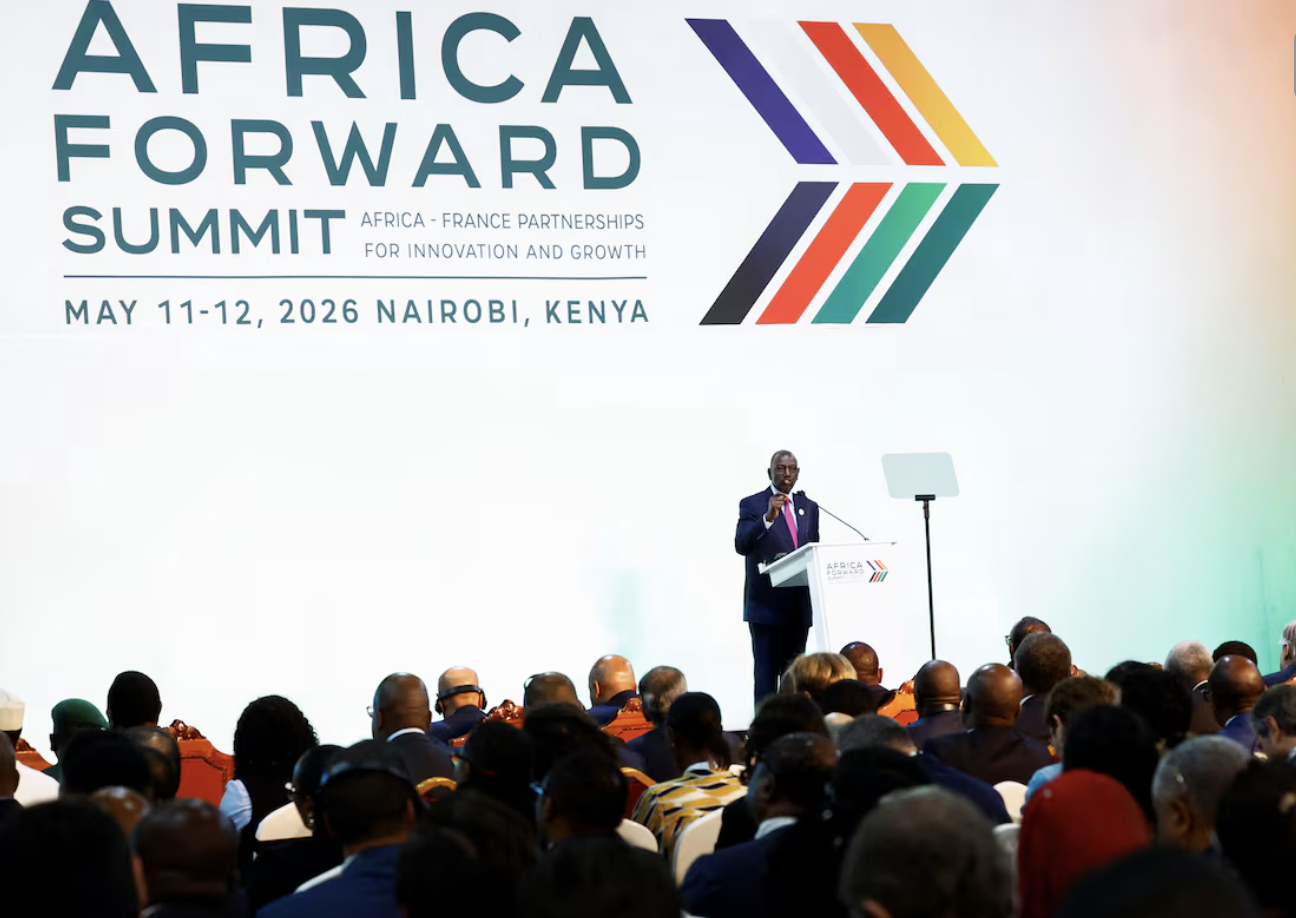
African leaders and France used the 2026 Africa Forward Summit in Nairobi to outline a broad economic agenda that stretches far beyond traditional aid and diplomatic ties.
 Black News
![French President Emmanuel Macron met with African leaders at the France–Africa Summit in Nairobi, Kenya, as both sides seek to redefine trade, migration, and diplomatic ties in a rapidly shifting global landscape. [Photo by Getty Images]](https://ocdn.eu/pulscms/MDA_/214f3df886c8972adbfd4f7e1d67c47e.jpg)
African leaders and France used the 2026 Africa Forward Summit in Nairobi to outline a broad economic agenda that stretches far beyond traditional aid and diplomatic ties.
- African and French leaders have identified seven major sectors expected to drive the next phase of economic cooperation and investment.
- Key focus areas include renewable energy, artificial intelligence, agriculture, healthcare manufacturing, maritime trade, and critical minerals.
- The Nairobi declaration signals a broader shift away from traditional aid models toward industrialisation, co-investment, and regional value chains.
- The partnership also reflects growing geopolitical competition over Africa’s resources, digital infrastructure, and strategic economic position.
The summit declaration placed heavy emphasis on industrialisation, digital infrastructure, energy transition, healthcare manufacturing, and regional trade integration, reflecting a wider shift in how Africa is positioning itself in the global economy.
Rather than focusing solely on development assistance, the declaration framed Africa as a future partner for production, innovation, and investment.
The document repeatedly referenced co-investment, local value addition, strategic autonomy, and private-sector mobilisation as key pillars of future Africa-France relations.
Here are seven sectors emerging as the centrepiece of the proposed partnership.
1. Renewable energy and green industrialisation
![A man is seen near a Solar Power Plant in South Africa on May 8, 2025. [Photo by Ihsaan Haffejee/Anadolu via Getty Images]](https://ocdn.eu/pulscms/MDA_/3c322d400f949ae14d3a68195ad329bc.jpg)
Energy transition featured prominently throughout the declaration, with African leaders and France committing to investments in renewable power, low-carbon systems, hydropower, geothermal projects, green hydrogen, waste-to-energy facilities, and nuclear energy development.
The agreement also highlighted Africa’s ambition to build local value chains for clean energy products rather than remain primarily an exporter of raw materials. Governments pledged to support local manufacturing, technology transfer, and workforce training tied to green industries.
The push comes as African economies face mounting pressure to expand electricity access while also navigating global climate commitments.
According to the declaration obtained by Business Insider Africa, expanding interconnected energy markets and improving national grids are now seen as essential to industrial growth and economic competitiveness.
2. Artificial intelligence and digital infrastructure
![France's President Emmanuel Macron (R) and Kenya's President William Ruto (L) look at an Artificial Intelligence (AI) film made by film-makers from the Creation Africa program during the Africa Forward summit in Nairobi on May 11, 2026. [Photo by Ludovic MARIN / AFP via Getty Images]](https://ocdn.eu/pulscms/MDA_/9722511da08767d1fd3628d4dfeeb0ef.jpg)
Artificial intelligence emerged as one of the summit’s most forward-looking priorities. The declaration called for public and private investment in broadband networks, regional data centres, cloud infrastructure, compute capacity, and trusted data systems.
African governments also pushed for “digital sovereignty,” including greater African ownership and hosting of data and AI systems, as well as support for African language models and locally developed datasets.
The emphasis reflects growing concern among policymakers that Africa risks becoming dependent on foreign-controlled digital infrastructure during the global AI race.
The declaration also warned about risks associated with misinformation, AI-generated abuse, cyber threats, and online manipulation.
3. Agriculture and agro-processing
![A woman sells tomatoes to a costumer at her stand at the Agbogbloshie market, Accra. [Photo by CRISTINA ALDEHUELA/AFP via Getty Images]](https://ocdn.eu/pulscms/MDA_/aa0404bd4112834bc5143db78eec5ff0.jpg)
Agriculture was presented not only as a food-security issue but also as a pathway toward industrialisation and export diversification.
The declaration backed investments in agro-processing, cold-chain logistics, fertiliser supply systems, precision agriculture, climate-smart farming, and integrated agricultural value chains under the African Continental Free Trade Area (AfCFTA).
The document also highlighted youth-focused agricultural financing, agri-fintech tools, and rural industrial development as priorities for future partnerships.
The renewed attention on agriculture comes as many African economies continue to grapple with food inflation, climate shocks, fertiliser shortages, and heavy dependence on commodity exports.
4. Healthcare manufacturing and pharmaceutical production
![A person receives a dose of the Oxford/AstraZeneca coronavirus disease (COVID-19) vaccine at the Cacovid isolation centre, Mainland Infectious Disease Hospital, Yaba, in Lagos, Nigeria. [Photo by: Emmanuel Osodi/Majority World/Universal Images Group via Getty Images]](https://ocdn.eu/pulscms/MDA_/bf3233418d2e7d2224354a0197e8045a.jpg)
The summit declaration placed strong emphasis on “health sovereignty,” particularly after lessons from the COVID-19 pandemic exposed Africa’s dependence on imported vaccines, medicines, and diagnostics.
African and French leaders pledged support for regional manufacturing of vaccines, pharmaceuticals, diagnostics, and medical technologies through partnerships tied to the Africa Centres for Disease Control and Prevention and the African Medicines Agency.
The agreement also supported the African Pooled Procurement Mechanism, designed to leverage collective purchasing power to improve access to healthcare products and create sustainable markets for African manufacturers.
5. Critical minerals and local manufacturing
![Ugandan gold bars stacked at a trading facility, reflecting the country’s record $5.8 billion exports in 2025. [Stock Photo via Getty Images]](https://ocdn.eu/pulscms/MDA_/c2a2e10526d0f6cece8345295bf95999.jpg)
Critical minerals were another major focus, reflecting Africa’s growing strategic importance in global supply chains tied to electric vehicles, batteries, semiconductors, and clean energy technologies.
The declaration stressed that African countries should maintain sovereignty over natural resources while expanding local beneficiation, processing, and manufacturing linked to mineral extraction.
Leaders are also committed to strengthening “Made in Africa” regional value chains and reducing dependence on extractive economic models.
The issue has become increasingly geopolitical as global powers compete for access to African mineral reserves critical to the energy transition.
6. Maritime trade and the blue economy

The declaration identified the blue economy as a strategic frontier for trade, jobs, climate resilience, and food security.
Areas targeted for investment include maritime infrastructure, coastal economies, renewable marine energy, shipping decarbonisation, fisheries management, and blue carbon ecosystems.
The agreement additionally called for stronger cooperation against piracy, illegal fishing, trafficking, and maritime insecurity, particularly as African trade routes become increasingly important to global commerce.
7. Infrastructure and regional trade integration
![A general view of Abuja city gate in Abuja, on May 20, 2025. [Photo by OLYMPIA DE MAISMONT/AFP via Getty Images]](https://ocdn.eu/pulscms/MDA_/f78789b5209d1263d08d14d86aaaffcf.jpg)
Transport, energy, and digital infrastructure were repeatedly identified as essential for unlocking Africa’s industrial and trade ambitions.
The declaration reaffirmed support for the African Continental Free Trade Area and regional value chains aimed at increasing intra-African trade and improving market integration.
Leaders also stressed the importance of mobilising private capital through blended finance, guarantees, risk-sharing tools, and public-private partnerships.
The document referenced several financing initiatives, including a €100 million cross-financing operation between BOAD and Proparco.
Despite the ambitious language, many of the proposals will ultimately depend on political stability, regulatory reforms, debt sustainability, and governments’ ability to attract long-term investment at scale.