GALA gives NAWEC ultimatum to end electricity, water shortage
“For far too long, Gambians have endured recurring blackouts, water shortages, voltage fluctuations, and service disruptions that have crippled homes, businesses, hospitals, schools and entire communities,” said Omar Saibo Camara, GALA spokesperson. “Families live in discomfort and uncertainty, businesses incur losses, students are deprived of conducive learning conditions, healthcare delivery is compromised, and economic activity is severely disrupted.” Camara said the recent deterioration in electricity supply, with its impact on water production and distribution, has further worsened citizens’ suffering and undermined livelihoods. He stressed that access to electricity and clean water is a basic necessity, not a privilege. “Citizens pay for these services and are therefore entitled to expect that they will be delivered efficiently, reliably, and consistently,” he stated. Despite billions of Dalasis in public funds and hundreds of millions of dollars in donor support invested in the energy sector since 2017, Camara said services remain unreliable and inadequate. “A review of records from NAWEC, government and development partners shows 2017-2026 witnessed the largest investment in the utility sector in The Gambia’s history. The continued deterioration therefore cannot be attributed to lack of funding or external support,” he said. Camara blamed “persistent governance failures, poor planning, weak management and lack of accountability.” He cited audit reports, parliamentary proceedings and public inquiries that repeatedly highlighted deficiencies in internal controls, procurement, financial oversight and project implementation. “Despite these findings, citizens continue to bear the burden while those responsible face little or no accountability,” he added. Camara argued that NAWEC is not just a commercial enterprise but a state-owned utility managing strategic national infrastructure. He referenced Section 1(2) of the Constitution, which states that sovereignty resides in the people, and that the State must promote welfare and ensure efficient management of national resources. He said Directive Principles of State Policy also require public institutions to advance citizens’ social and economic welfare. As a company incorporated to supply electricity and water nationwide, NAWEC is bound by the Constitution, Companies Act, Public Finance Act, Public Procurement Act, PURA Act and other laws. “These legal obligations impose on NAWEC a duty to act with competence, transparency, integrity, efficiency and accountability. Citizens therefore have both the right and civic duty to demand accountability where there is negligence, waste, mismanagement or poor performance,” he said. During the protest, GALA issued a 10-day ultimatum for NAWEC to “take all necessary measures to restore and normalise reliable electricity and water supply across The Gambia.” “We are not seeking further promises, excuses, timelines, or public relations statements. We are demanding tangible action and measurable results,” Camara told protesters. He said Gambians have shown “extraordinary patience for decades” but patience must not be mistaken for acceptance. “Should NAWEC fail to demonstrate concrete and substantial improvement within the stipulated ten-day period, GALA reserves the right to pursue all lawful, peaceful, and constitutional means of public action to hold NAWEC, its management, and relevant authorities accountable,” Camara warned.
 Black News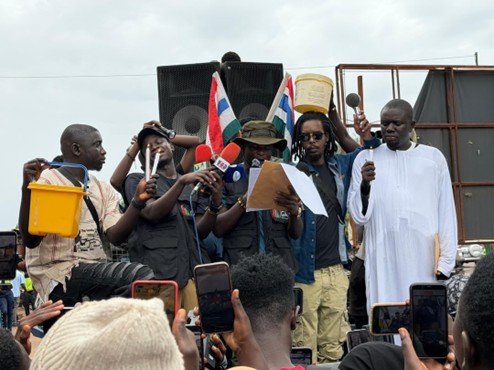
“For far too long, Gambians have endured recurring blackouts, water shortages, voltage fluctuations, and service disruptions that have crippled homes, businesses, hospitals, schools and entire communities,” said Omar Saibo Camara, GALA spokesperson. “Families live in discomfort and uncertainty, businesses incur losses, students are deprived of conducive learning conditions, healthcare delivery is compromised, and economic activity is severely disrupted.”
Camara said the recent deterioration in electricity supply, with its impact on water production and distribution, has further worsened citizens’ suffering and undermined livelihoods.
He stressed that access to electricity and clean water is a basic necessity, not a privilege. “Citizens pay for these services and are therefore entitled to expect that they will be delivered efficiently, reliably, and consistently,” he stated.
Despite billions of Dalasis in public funds and hundreds of millions of dollars in donor support invested in the energy sector since 2017, Camara said services remain unreliable and inadequate.
“A review of records from NAWEC, government and development partners shows 2017-2026 witnessed the largest investment in the utility sector in The Gambia’s history. The continued deterioration therefore cannot be attributed to lack of funding or external support,” he said.
Camara blamed “persistent governance failures, poor planning, weak management and lack of accountability.” He cited audit reports, parliamentary proceedings and public inquiries that repeatedly highlighted deficiencies in internal controls, procurement, financial oversight and project implementation.
“Despite these findings, citizens continue to bear the burden while those responsible face little or no accountability,” he added.
Camara argued that NAWEC is not just a commercial enterprise but a state-owned utility managing strategic national infrastructure. He referenced Section 1(2) of the Constitution, which states that sovereignty resides in the people, and that the State must promote welfare and ensure efficient management of national resources.
He said Directive Principles of State Policy also require public institutions to advance citizens’ social and economic welfare. As a company incorporated to supply electricity and water nationwide, NAWEC is bound by the Constitution, Companies Act, Public Finance Act, Public Procurement Act, PURA Act and other laws.
“These legal obligations impose on NAWEC a duty to act with competence, transparency, integrity, efficiency and accountability. Citizens therefore have both the right and civic duty to demand accountability where there is negligence, waste, mismanagement or poor performance,” he said.
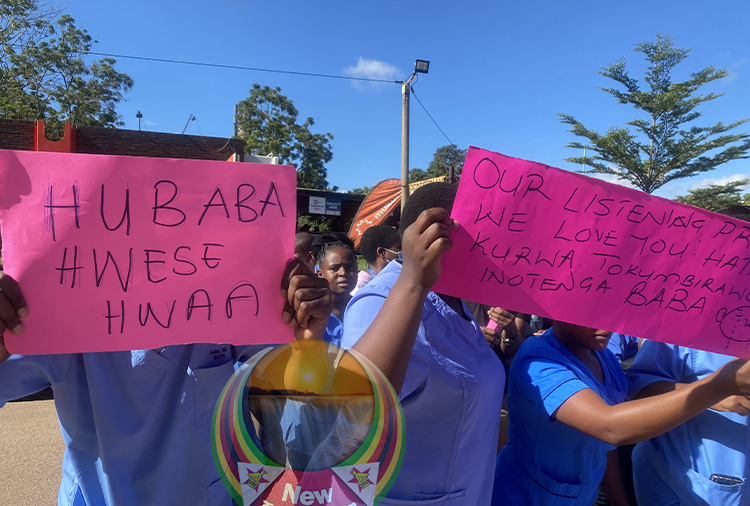
During the protest, GALA issued a 10-day ultimatum for NAWEC to “take all necessary measures to restore and normalise reliable electricity and water supply across The Gambia.”
“We are not seeking further promises, excuses, timelines, or public relations statements. We are demanding tangible action and measurable results,” Camara told protesters.
He said Gambians have shown “extraordinary patience for decades” but patience must not be mistaken for acceptance.
“Should NAWEC fail to demonstrate concrete and substantial improvement within the stipulated ten-day period, GALA reserves the right to pursue all lawful, peaceful, and constitutional means of public action to hold NAWEC, its management, and relevant authorities accountable,” Camara warned.