Gambian-Brit contests UK councillor seat under Green Party
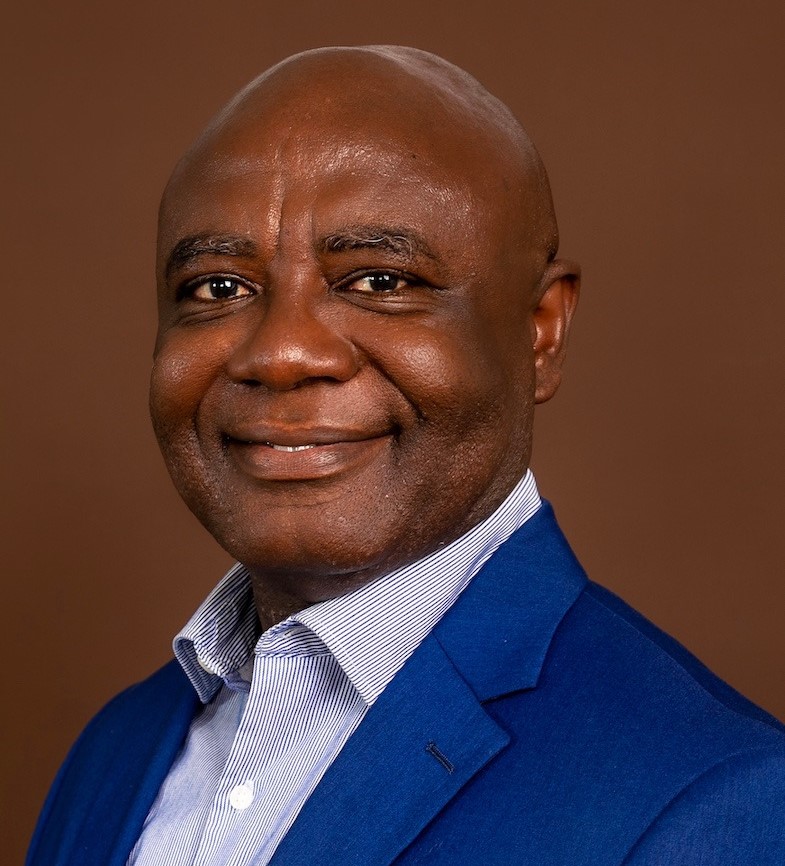
By Omar Bah Yobba Baldeh, born in The Gambia and now a Green Party candidate for the Harden, West Yorkshire, councillor election, in UK, has said his campaign is forged by transformation, not geography. In a personal statement shared with The Standard yesterday, Baldeh described his run as the product of an intellectual, moral, and […]
 Black News

By Omar Bah
Yobba Baldeh, born in The Gambia and now a Green Party candidate for the Harden, West Yorkshire, councillor election, in UK, has said his campaign is forged by transformation, not geography.
In a personal statement shared with The Standard yesterday, Baldeh described his run as the product of an intellectual, moral, and personal journey that began in West Africa and was tested through migration, study, and work in Britain.
“This is not merely a political act,” Baldeh stated. “It is the culmination of a long journey shaped by struggle, sharpened by migration, and sustained by an enduring belief in justice, dignity, and collective progress.”
Baldeh says his Gambian upbringing taught him a core truth: “Society is strongest when it functions collectively, not competitively.” He points to unwritten systems of mutual support where one person’s hardship was never theirs alone. But he refuses to romanticise the past.
“Opportunities were not evenly distributed. Access to education, economic advancement, and institutional support often depended on circumstance, not merit,” he said. “These were not simply personal observations. They were structural realities. Inequality is not accidental. It is produced, maintained, and normalised by systems.”
Baldeh rejects the dominant narrative around migration. “It is spoken of in terms of opportunity, but rarely in terms of its demands,” he wrote. “To migrate is to begin again, not from zero, but often from below it.” He calls the constant negotiation of identity and the navigation of unfamiliar systems a process of reconstruction, not relocation.
Green Party
Baldeh said his academic work in governance, development, and social justice fused theory with lived experience adding that he has seen how reactive policies miss root causes, how short-term political thinking sabotages long-term progress, and how shutting communities out of decisions produces solutions that do not work.
“This is not about personal advancement. It is about responsibility,” Baldeh said. “I chose the Green Party because its focus on social justice, environmental sustainability, and grassroots democracy matches my experience and convictions.”
Baldeh is unequivocal in his message to Gambians at home and abroad: “Our journeys are not isolated stories. They are part of a broader narrative of movement, adaptation, and contribution.” He argues that Gambians in the diaspora are bridges between Banjul and Birmingham who understand that the fight against inequality is the same fight in different contexts.
Baldeh defines his candidacy as a continuation of the principle that drove him to education. “Progress is not given. It is pursued. Systems do not change on their own. They are changed by people willing to engage with them critically and constructively.”
Baldeh said he is running to apply that principle in Harden, West Yorkshire, where he says the test of politics is whether it translates experience into action for the communities that need it most.
Gambians among half a million migrants being considered for legal status in Spain
Spain’s government has approved plans to give legal status to 500,000 undocumented migrants including Gambians, allowing them to be integrated formally into the workforce.
It is estimated that between 17,000 and 25,000 Gambians live in Spain, with significant concentrations in Catalonia.
While official 2020 data indicated about 23,617, other sources suggest that including undocumented migrants could place the number higher. A large portion of this population is young males between 20 and 50 years old.
Spain Prime Minister Pedro Sánchez described his government’s decision as both “an act of justice” and a necessity for Spain.
In a letter to Spaniards posted on social media, Sánchez, a socialist, said the mass legalisation sought “to acknowledge the reality of nearly half a million people who already form part of our everyday lives”.
Spain’s conservative opposition People’s Party (PP) has pledged to attempt to block the legalisation, which it said rewards illegal migrants and would encourage more to come.
The government’s plan will offer a one-year, renewable residence permit to undocumented migrants. In order to be eligible, applicants must prove that they have already spent five months living in Spain and have a clean criminal record. They have between 16 April and the end of June to apply.
Sánchez said migrants helped “build the rich, open and diverse Spain that we are and to which we aspire”.
The prime minister said these migrants are needed to sustain the economy and public services in a country whose population is ageing. He also said it was the right course of action for a nation which in the past had seen many of its own nationals emigrate in search of better opportunities.
The Funcas think-tank estimates that there are around 840,000 undocumented migrants in Spain, the vast majority of whom are Latin American.
“This is going to benefit a lot of people, give them access to work and to a better quality of life,” said Ricardo, a Bolivian graphic designer who has been unable to maintain stable employment and plans to apply for the scheme. “And it means more money for the Spanish state and more workers will be legally available for employers.”
The opposition has said that the government’s estimates are wrong and that about one million migrants could apply for the scheme, with PP describing the plan as an “outrage”.
The Catholic Church, by contrast, has supported the government’s legislation.
The scheme comes as many of Spain’s European neighbours tighten controls on immigration.
Both Socialist and PP governments have implemented migrant amnesties in the past. The most recent one was in 2005, when 577,000 people received residency under a Socialist administration.