Global oil supply squeeze deepens as markets fluctuate amid Strait of Hormuz disruption, IMF warns of mounting risks
Global energy markets are under renewed strain after the International Monetary Fund (IMF), alongside the International Energy Agency (IEA), World Bank Group and World Trade Organization (WTO), warned that oil inventories are being depleted at a record pace following major supply disruptions linked to the Strait of Hormuz. In a joint statement issued after high-level […] The post Global oil supply squeeze deepens as markets fluctuate amid Strait of Hormuz disruption, IMF warns of mounting risks appeared first on Daily Star.
 Black News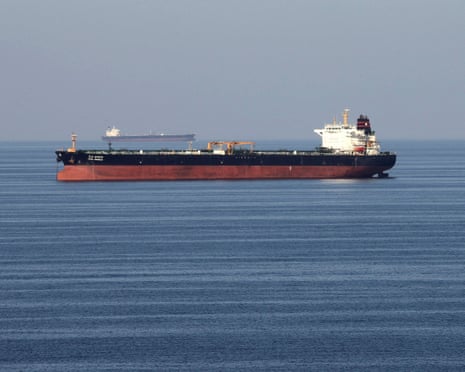
Global energy markets are under renewed strain after the International Monetary Fund (IMF), alongside the International Energy Agency (IEA), World Bank Group and World Trade Organization (WTO), warned that oil inventories are being depleted at a record pace following major supply disruptions linked to the Strait of Hormuz.
In a joint statement issued after high-level coordination meetings in Washington on May 28, the institutions said the ongoing conflict in the Middle East is creating “highly asymmetric impacts” on global energy supplies, food security and economic activity, with the sharpest consequences being felt in vulnerable economies.
At the centre of the warning is the accelerating drawdown of global oil reserves. The agencies noted that the loss of supply flowing through the Strait of Hormuz — one of the world’s most critical oil transit chokepoints — is forcing countries to rely heavily on stored inventories. If shipping routes do not normalize soon, they cautioned that continued depletion ahead of peak summer demand in the Northern Hemisphere could destabilize fuel markets and undermine global economic resilience.
The IMF and its partners emphasized that while the global economy has so far remained resilient, the shock is increasingly visible in rising fuel costs, tighter energy markets, and growing uncertainty for trade and investment flows. Fertilizer prices were also highlighted as a major concern, particularly as many developing countries enter planting seasons and face the risk of reduced agricultural productivity.
Global oil markets are meanwhile showing mixed signals despite the broader supply risks. According to information sourced from oilprice.com (as of late May 2026), WTI crude is trading at $87.36 per barrel, down 1.73%, while Brent crude stands at $91.12 per barrel, down 1.70%. Murban crude is priced at $90.05 per barrel, slightly lower, and natural gas is trading at $3.290 per MMBtu, up marginally. Analysts attribute recent price declines to expectations of a possible U.S.–Iran diplomatic breakthrough, even as structural supply concerns persist due to ongoing disruptions and falling inventories.
Over the past month, crude oil prices have dropped by 16.86%, although they remain 43.71% higher than a year earlier, underscoring sustained volatility in global energy markets.
Information sourced from the International Energy Agency (IEA) indicates that oil flows through the Strait of Hormuz have collapsed dramatically since the outbreak of conflict between the United States and Iran in late February 2026. Reports from the IEA note that shipments have fallen from a pre-conflict baseline of 15–21 million barrels per day—about one-fifth of global oil trade—to around 1 million barrels per day during the conflict, representing a 95–98% decline. The agency further reports that flows may have fallen as low as 500,000 barrels per day at certain points, while tanker traffic dropped from around 3,000 vessels per month to just 154 vessels in March, a decline of about 95%.
Reports from the International Energy Agency also indicate that Iranian crude exports have continued at roughly 1.2 million barrels per day, slightly below pre-war levels of 1.5 million barrels per day, accounting for most remaining shipments from the Persian Gulf. However, the IEA further notes that exports from other regional producers have reportedly fallen sharply from about 14 million barrels per day under normal conditions to just 400,000 barrels per day during the conflict period. Overall, reports from the agency suggest that traffic through the Strait of Hormuz has averaged only about 5% of pre-war levels over the past two months, raising concerns that flows may not fully recover even after hostilities ease.
The joint statement comes as Iran and the United States are intensifying diplomatic efforts to find a peaceful resolution to the conflict, with negotiations ongoing over maritime security arrangements in the region, while the critical trade artery—the Strait of Hormuz—remains under a naval blockade and subject to severe restrictions on shipping traffic.
In Uganda, the impact of global oil disruptions is already feeding directly into the economy through fuel price pressures at the pump. Current fuel prices range between UGX 5,200 and UGX 6,619 per litre for petrol and UGX 5,000 and UGX 6,490 per litre for diesel, with national averages hovering around UGX 6,250 and UGX 6,105 respectively. These elevated prices are increasing transport and logistics costs across the country, with taxi, bus, and freight operators passing on higher operational expenses to consumers.
The rising fuel costs are also affecting the prices of essential goods, as transport remains a key component in Uganda’s supply chains. Food markets, manufacturing inputs, and small businesses reliant on generators are all experiencing upward cost pressures, contributing to broader household budget strain. The situation is tightening disposable incomes and increasing the cost of doing business, particularly for informal sector operators and small enterprises.
The IMF-led statement noted that governments around the world are already responding with a range of policy measures, including strategic stock management, energy subsidies in some jurisdictions, and efforts to diversify supply chains. However, the institutions warned that fragmented responses could worsen inefficiencies and called for coordinated monitoring of energy and fertilizer markets.
They stressed the importance of transparency in tracking policy actions and supply chain developments, arguing that shared data and coordinated analysis are essential to managing emerging risks. The four institutions said they would remain in close contact to support countries most affected and to safeguard global economic stability.
The warning also underscores the strategic importance of the Strait of Hormuz, a narrow waterway between the Persian Gulf and the Gulf of Oman through which a significant share of global oil exports pass. Any disruption in the corridor has historically triggered immediate spikes in global oil prices due to concerns over supply security.
The IEA said its monitoring systems are tracking inventory levels and shipping disruptions closely, reaffirming its mandate to respond to global oil supply shocks, while the World Bank cautioned that rising energy costs could deepen vulnerabilities in low-income countries already grappling with debt and climate pressures.
The WTO warned that disruptions in energy flows could spill over into global trade, affecting shipping, manufacturing, and supply chains, and urged member states to maintain predictable trade conditions to avoid further weakening global growth.
The IMF and its partners concluded by pledging continued coordination and real-time monitoring of energy and commodity markets as global attention turns to the stability of key shipping routes and the broader resilience of the global economy amid rising uncertainty.
The post Global oil supply squeeze deepens as markets fluctuate amid Strait of Hormuz disruption, IMF warns of mounting risks appeared first on Daily Star.