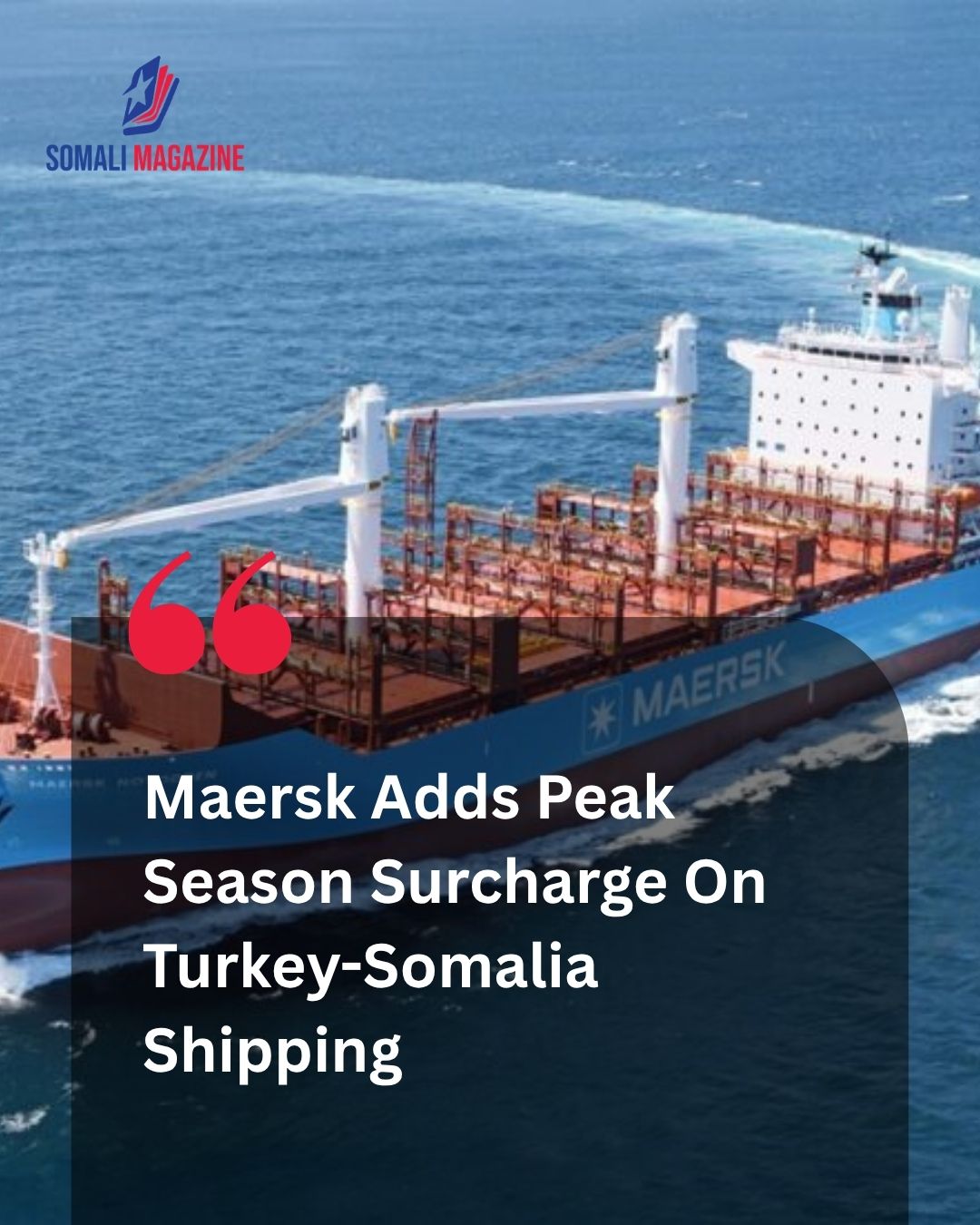
The cost of importing goods into East Africa is set to experience a notable increase following a major policy update from one of the world’s premier container logistics providers. In an official rate circular issued to global logistics operators, Maersk adds peak season surcharge on Turkey-Somalia cargo shipments, introducing fresh financial hurdles for businesses relying on this busy maritime corridor. The global shipping giant confirmed that the new fees will take effect on July 28, 2026, directly affecting all newly placed container bookings traveling between Turkish export terminals and Somali ports of entry. This regulatory adjustment serves as an indicator of broader systemic changes within current global supply chain pressures, where shipping lines regularly modify pricing structures to offset rising operating costs.
According to the official tariff data released by the carrier, the peak season surcharge implementation will follow a standardized pricing tier calculated by container dimensions. Importers utilizing standard 20-foot dry freight containers will face an additional out-of-pocket premium of $200 per box. Meanwhile, larger 40-foot and 45-foot dry freight units will be subject to a fixed $300 surcharge collected under the standard freight-paid destination terms. Company representatives clarified that these updated fees will apply strictly to standard, non-spot market bookings based on the final price calculation date, meaning that previous logistical agreements secured before the late-July deadline will remain insulated from the sudden rate hike.
While Maersk’s corporate statement did not explicitly single out a lone geopolitical or environmental trigger for the decision, the adjustment reflects the increasing complexities of navigating modern maritime logistics pricing. In global shipping, carriers traditionally deploy temporary surcharges during seasonal demand spikes, periods of heavy port congestion, or when prolonged rerouting forces vessels to consume significantly more fuel. Over the past several years, Turkey and Somalia have established a highly integrated bilateral trade infrastructure, with Turkish manufacturers supplying bulk quantities of textiles, medical goods, construction materials, and processed foods directly to expanding markets in Mogadishu and surrounding regional states.
The financial ripple effects of this tariff revision will likely be felt most acutely by small-scale commercial cooperatives and everyday consumers within Somalia. Because the local economy relies heavily on external consumer commodities, local retail merchants often have no choice but to pass these elevated freight costs directly down to the public, potentially driving up inflation for essential household items. As major carriers continue to re-evaluate their regional risk management strategies and fuel allocations, maritime analysts expect that other prominent container lines operating within the Red Sea and western Indian Ocean may soon introduce similar financial mechanisms to safeguard their own profit margins.


 Black News