ICJ sets next phase of South Africa’s Gaza genocide case
The Presidency announced on Tuesday that the ICJ has given South Africa until 22 November 2027 to file its Reply to Israel's Counter-Memorial, submitted in March this year
 Black News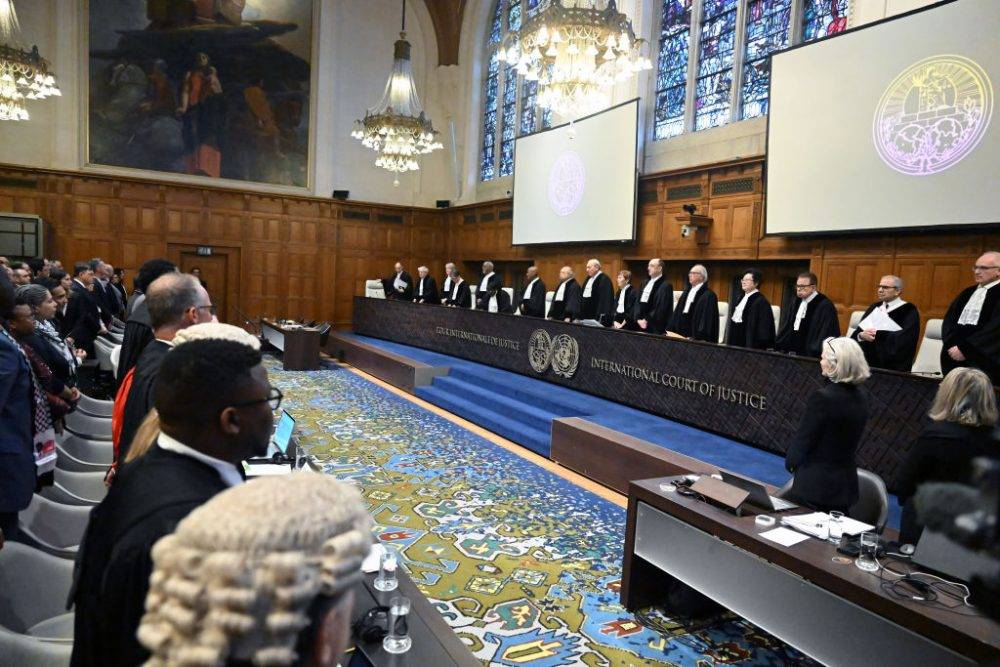
Nearly three years after South Africa launched its genocide case against Israel at the International Court of Justice, the court has set a new timetable that will keep proceedings before judges in The Hague until at least 2029, while the death toll in Gaza continues to climb and the court’s binding provisional measures remain in force.
The Presidency announced on Tuesday that the ICJ has given South Africa until 22 November 2027 to file its Reply to Israel’s Counter-Memorial, submitted in March this year. Israel will then have until 22 May 2029 to file a Rejoinder.
The order follows consultations between representatives of the two countries and the President of the Court on the next procedural steps in the case.
South Africa instituted proceedings against Israel in December 2023 under the Genocide Convention, arguing that Israel’s military campaign in Gaza amounts to genocide against Palestinians. The case has since become one of the most significant international legal challenges arising from the war.
While the latest order deals with procedure rather than the substance of the allegations, it confirms that the case is moving into a second round of written pleadings. According to the Presidency, such a process is standard in cases brought under the Genocide Convention and has featured in all previous disputes heard by the court under the treaty.
The lengthy timetable also highlights the tension between the pace of international justice and the reality of an ongoing war.
According to Gaza’s Health Ministry, 933 Palestinians have been killed, 2,868 injured and 781 bodies recovered since the ceasefire came into effect in October 2025,.
The cumulative death toll since the start of Israel’s military campaign in October 2023 now stands at 72,942 Palestinians killed and 172,967 injured.
Against that backdrop, South Africa used Tuesday’s announcement to emphasise that the court’s provisional measures remain legally binding while the case proceeds.
Since January 2024, the ICJ has issued three sets of provisional measures after finding that Palestinians in Gaza face a “real and imminent risk of irreparable prejudice” to rights protected under the Genocide Convention.
Those orders require Israel, among other things, to prevent acts prohibited under the convention, facilitate the delivery of humanitarian assistance and basic services, preserve evidence and allow access to investigative bodies operating under United Nations mandates.
The Presidency said those obligations remain in force regardless of the latest procedural developments.
It also disclosed that Israel has objected to the court’s jurisdiction in its Counter-Memorial, meaning South Africa will have to address those arguments in its Reply.
However, Pretoria’s central response remains unchanged.
“Self-defence is not a defence to genocide,” the Presidency said.
The contents of Israel’s legal filing remain confidential under ICJ rules and the court has yet to consider the merits of South Africa’s allegations.
No date has been set for oral hearings and a final judgment may still be years away.
What the latest order makes clear is that South Africa’s legal challenge will remain before the world’s highest court well into the next decade, even as the humanitarian consequences of the war continue to unfold.
The question facing the international community is no longer only what the court will eventually decide. It is whether international law can provide meaningful protection while the conflict that gave rise to the case is still underway.