Ghost Note Creative Agency’s Steven Jumper on Navigating DEI Rollbacks, AI, and the Future of Black Creative Work
Ghost Note CEO Steven Jumper on building a Black-owned creative agency, navigating DEI rollbacks, AI, and why culture is never a nice to have. The post Ghost Note Creative Agency’s Steven Jumper on Navigating DEI Rollbacks, AI, and the Future of Black Creative Work appeared first on The Quintessential Gentleman.
 Black News
Steven Jumper doesn’t talk about culture the way most people in advertising do. He doesn’t reach for buzzwords or lean on trend reports. When the co-founder and CEO of Ghost Note Creative Agency talks about what his company does, he keeps coming back to one word: belonging.
That word, simple as it sounds, is the foundation of an agency that has grown from a basement in Washington, D.C. into one of the most respected Black-owned creative agencies in the country, working with Nike, Adidas, the NBA, Apple, Google, the Obama Foundation, Hyatt, and more.
The Quintessential Gentleman sat down with Jumper to talk about how Ghost Note got started, what the creative industry looks like right now, and why the brands that truly understand authenticity and culture are the ones that will win long term.
Ghost Note didn’t begin with a business plan or a pitch deck. It began with a friendship and a feeling that something was missing.
“It started from not seeing another agency like Ghost Note in D.C.,” Jumper said. “We started in a very untraditional way. None of us came out of one of the big advertising firms or had any proximity to a global holding company or anything like that. We just knew that the place that we wanted to work didn’t exist in the city. And so we set out to create it.”
Jumper founded the company alongside his business partners Brandon Ellis and Reggie Snowden, friends who had grown up together in Washington, D.C. and attended Florida A&M University.
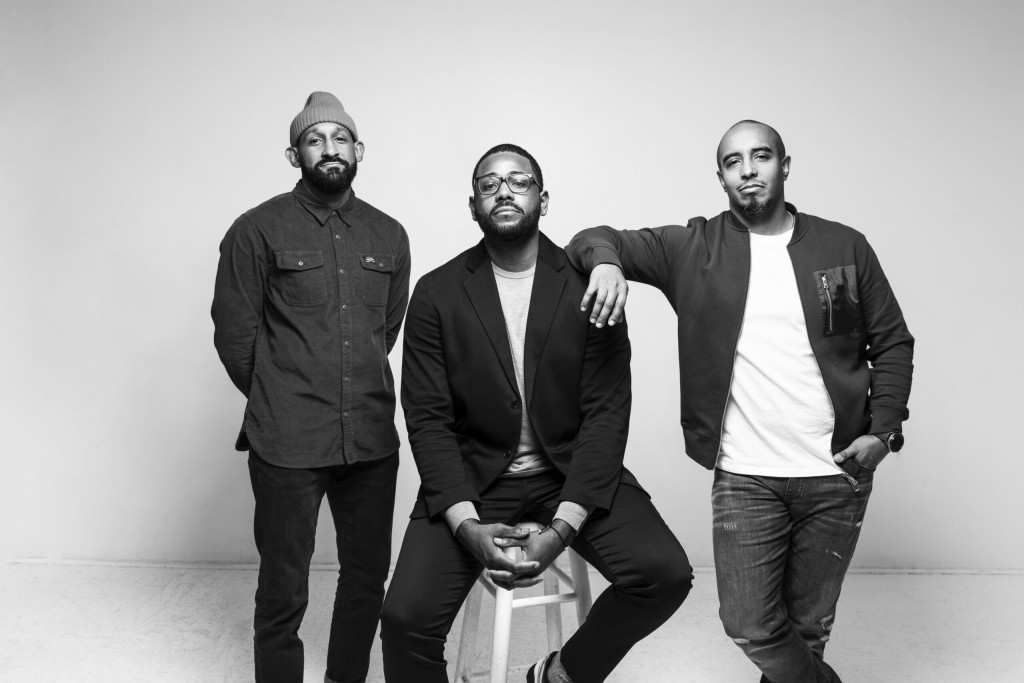
The early days were as real as it gets. “The thing literally started in my business partner Brandon’s basement,” Jumper said. “We started kind of cooking up the idea of leaving our much more safe full-time jobs to set out and create a thing of our own.”
Their earliest clients were small nonprofits in the DMV, organizations willing to give three young creatives an audience and take a chance on the spirit behind what they were building.
“It’s a brick by brick, step by step kind of thing,” he said. “It’s everything from Myers Foundation on K Street in D.C. to Nike. And each one of those feel like these transformational moments where the ambition of what we set out to do sort of meets the moment.”
Nearly 12 years into building Ghost Note, Jumper has watched the creative industry shift in ways both expected and jarring. The murder of George Floyd in 2020 brought a wave of brands scrambling to find proximity to Black creatives and Black culture, and then, just as quickly, that wave died.
“You see kind of the topic du jour being Blackness and DEI and these brands sort of scrambling to figure out some ways to have some proximity to Black folks and to Black creatives and strategists who’ve really earned the credibility to be in these spaces,” he said. “We also see how quickly that becomes taboo again and where folks start running for the hills.”
But Jumper isn’t bitter about it; he’s strategic. “I think we’re at a place right now where we are a little bit less susceptible to that pendulum swing,” he said. “In this latest iteration of the Trump administration, there seems to be a bit of a pivot back by brands to understand that these conversations around culture and identity and intersection, these are not nice to haves. These are the core foundations of understanding a human experience.”
His point is about business. “What I do know, business is always going to respond to is the tailwinds,” he said. “They’re going to respond to the behaviors of the audiences that they’re trying to compel to buy their product, watch their show, buy a ticket to that movie, put on this pair of sneakers, eat at this restaurant. That’s what they care about. That’s how those businesses and brands stay in business.”
No conversation about the future of any creative agency is complete without addressing artificial intelligence, and Jumper doesn’t shy away from it. He sees the tools. He uses them. But he also knows exactly what they can’t do.
“A machine doesn’t have taste,” he said plainly. “We use any number of tools to maybe support some early ideation or help us condense copy we’ve written on a tight timeline. But if I ask any one of these tools to take a campaign we’ve developed and give me five titles for this content franchise, my experience is that what comes out of that is always going to be mid. And some of it is almost even cringeworthy.”
For Jumper, there’s a distinction. “That’s how we understand subculture. That’s how we understand language and rituals, it’s through the human experience. And that’s something that a machine cannot do. We’ve got to find that right balance of how to leverage these things to move faster, to move more efficiently, to move in a more data-informed way, but without taking out the soul and the spirit of these things that move people to make decisions.”
Learn more about Ghost Note. Check out the full conversation below.
The post Ghost Note Creative Agency’s Steven Jumper on Navigating DEI Rollbacks, AI, and the Future of Black Creative Work appeared first on The Quintessential Gentleman.