New format further sidelines associate nations
The International Cricket Council (ICC) on Wednesday announced a new format for next year’s Cricket World Cup that Namibia will co-host with South Africa and Zimbabwe. The number of competing teams has been increased to 14 – four more than at the previous world cup in 2023. However, the new format has now made it […] The post New format further sidelines associate nations appeared first on The Namibian.
 Black News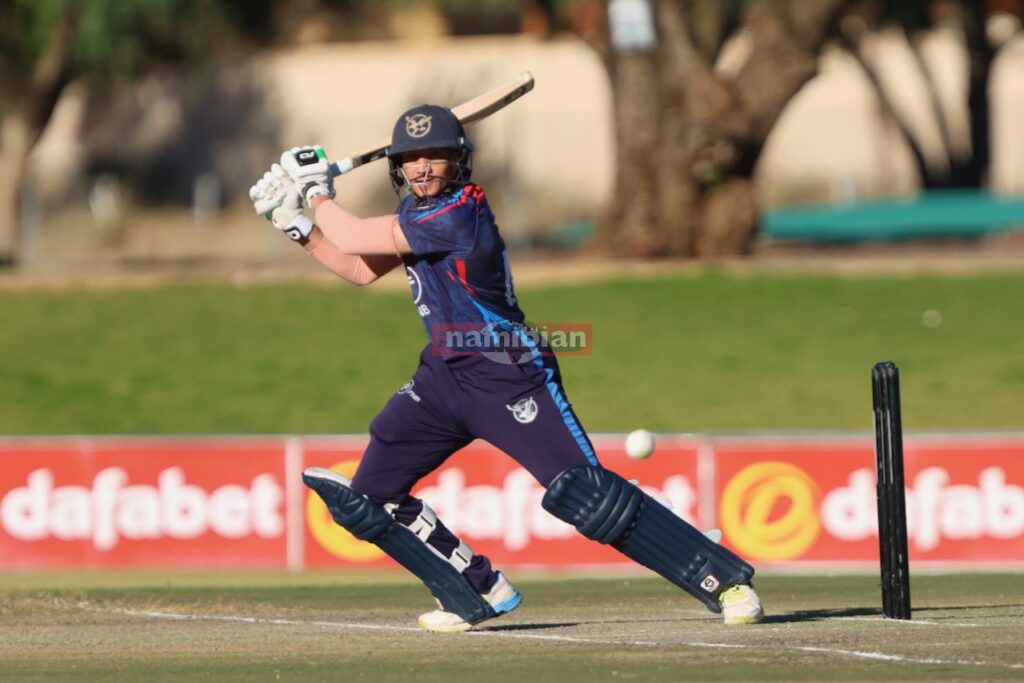
The International Cricket Council (ICC) on Wednesday announced a new format for next year’s Cricket World Cup that Namibia will co-host with South Africa and Zimbabwe.
The number of competing teams has been increased to 14 – four more than at the previous world cup in 2023.
However, the new format has now made it virtually impossible for associate nations like Namibia to compete against the world’s leading teams.
Furthermore, the limited platform stands in stark contrast to the highly successful Fifa World Cup with 48 nations, while there is even talk of expanding it further to 64 nations.
South Africa and Zimbabwe have automatically qualified as ICC full members, and will be joined by the top eight ranked nations in the world by September this year.
The other four spots will be determined via a lengthy qualifying process that already started two years ago, and includes Namibia, which despite being a co-host, still needs to qualify since it is not a ICC full member.
Namibia and seven other associate nations are competing in the ICC World Cup League Division 2 (WCL D2) tournament, where the top four teams will progress to the final World Cup qualifier, which will include two ICC full members (ranked below the top eight) and four other teams from another qualifier play-off tournament.
After this lengthy process four teams will qualify for next year’s World Cup. However, according to the ICC’s new format these four teams will now basically have to play another qualifying round just to be able to reach the main stage at the World Cup.
The first round of the World Cup will begin with a ‘Super Series’ featuring the three lowest ranked of the 14 teams, which will compete in a round robin tournament.
Only the winner of the Super Series will progress to round 2 of the competition, which will feature the top 12 teams divided into two groups of six, playing on a round robin basis.
The top three teams from each group, along with the best next-placed team, will then progress to round 3, or the ‘Super 7’ round robin stage of the tournament, where the top four teams will qualify for the semi-finals.
“The changes were introduced to create more meaningful contests, elevate competitive standards, strengthen the competitive structure of both events, and enhance the tournament experience for athletes and fans,” the ICC said on its website.
The changes, however, have been roundly criticised on social media, especially among Associate nations, with The Netherlands opening batter Max O’ Dowd being particularly vocal about it.
“So you’re telling me associate sides have to play in a three-year 50 over tournament, to qualify for a qualifier, to qualify for another tri-series qualifier to then qualify for the world cup,” he writes on his X account.
Namibia, meanwhile, are currently in The Netherlands, preparing for a crucial WCL D2 series against the Dutch and Nepal that starts next week.
Namibia are currently seventh and second last on the log on 22 points, and well behind the front runners.
The United States lead the log on 43 points and have already qualified for the final World Cup qualifier. They are followed by Scotland (38), The Netherlands (32) and Oman (31).
Nepal (24), Canada (24), Namibia (22) and the United Arab Emirates (14) make up the rear.
The post New format further sidelines associate nations appeared first on The Namibian.