Indian auto giant Mahindra eyes $31bn push to expand South Africa factory amid rising demand
India’s second-largest automaker, Mahindra & Mahindra, is assessing plans to upgrade its South African assembly operations as it seeks to capitalise on growing demand for affordable vehicles and intensifying competition.
 Black News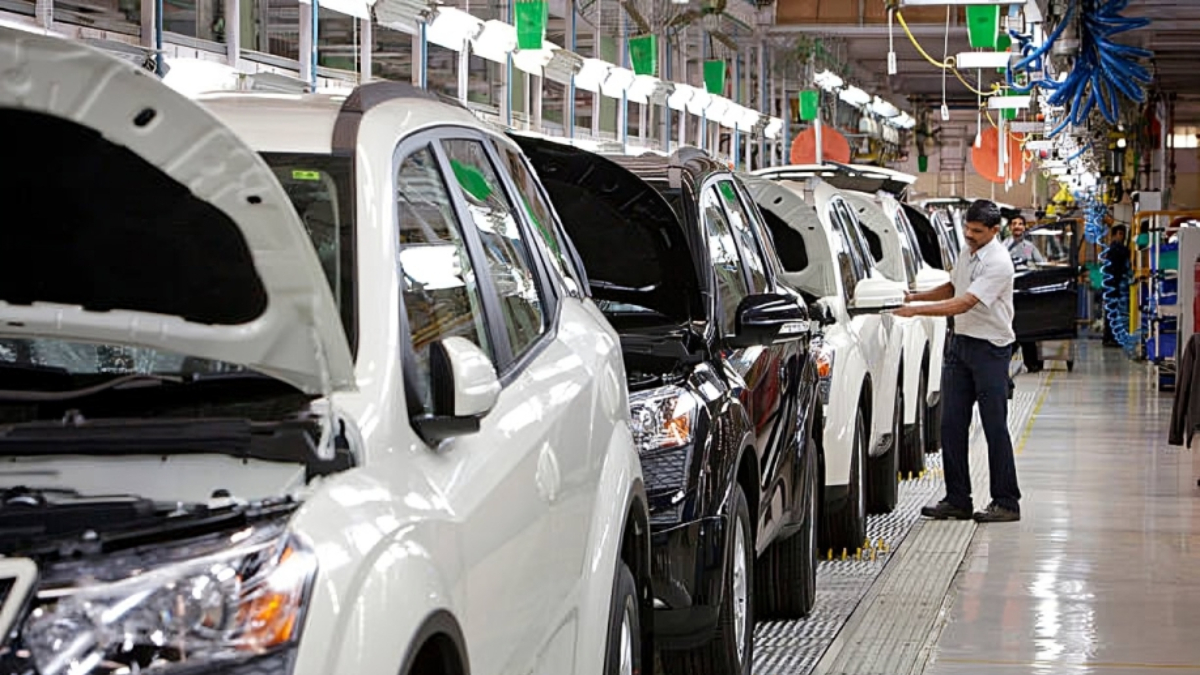
![Mahindra & Mahindra Ltd. XUV 500 sport utility vehicles (SUV) stand on the production line at the company's factory in Chakan, Maharashtra, India. [Photo by Kuni Takahashi/Bloomberg via Getty Images]](https://ocdn.eu/pulscms/MDA_/436edc1a533f66375ca6b384b8ab6392.jpg)
India’s second-largest automaker, Mahindra & Mahindra, is assessing plans to upgrade its South African assembly operations as it seeks to capitalise on growing demand for affordable vehicles and intensifying competition.
- Mahindra is assessing a shift to full-scale vehicle manufacturing in South Africa amid rising demand for affordable cars.
- The upgrade could see the company move from SKD to CKD production, deepening local supply chains.
- Industry experts say the move may boost jobs, skills transfer, and supplier development.
- The decision comes amid intensifying competition and growing concerns over high vehicle imports.
The company, which has a market capitalisation of about 3.8 trillion rupees, equivalent to roughly $45 billion, is exploring a shift to more advanced manufacturing at its facility near Durban. Discussions are underway in collaboration with the Industrial Development Corporation, according to people familiar with the matter, as cited in Bloomberg reports. Both parties have declined to comment publicly.
Mahindra currently operates a semi-knocked-down, or SKD, assembly process in South Africa, where pre-assembled vehicle components are imported and put together locally. However, the company is now considering transitioning to completely knocked-down, or CKD, production, a move that would significantly expand local manufacturing by assembling vehicles from more basic imported parts.
Such a shift would allow Mahindra to deepen its local supply chain while potentially shielding it from import tariffs the government is considering to encourage domestic production.
The move comes at a time of mounting competition in South Africa’s mid-range vehicle segment. Indian and Chinese brands have steadily gained market share, challenging long-established players such as Ford Motor Company and Mercedes-Benz. Mahindra also faces pressure from rivals, including Chery and Suzuki, while Toyota remains the country’s top-selling automotive brand.
Industry stakeholders say Mahindra’s potential expansion reflects its rapid growth in the South African market. Renai Moothilal, chief executive of the National Association of Automotive Component and Allied Manufacturers, said the company’s consistent presence among the country’s top-selling brands strengthens the case for further investment.
“It is clear that there’s a very strong domestic consumer appetite for their products,” he said, noting that Mahindra has operated its KwaZulu-Natal assembly facility for several years.
Potential job gains and economic impact of CKD production
![Employees assemble components to a Mahindra & Mahindra Ltd. sport-utility vehicle (SUV) on the production line at the company's facility in Chakan, Maharashtra, India. [Photo by Udit Kulshrestha/Bloomberg via Getty Images]](https://ocdn.eu/pulscms/MDA_/1ffd314cbfa5519f141534218fa9f815.jpg)
Moothilal added that industry consultations have focused on how the company could transition to CKD manufacturing and expand its local supplier network.
“They look to investigate how they can get to what we call CKD manufacturing and deepen the supplier base,” he said.
The potential employment impact is also significant. According to Moothilal, CKD production can support up to eight jobs for every one created under SKD operations, reflecting the broader labour and skills requirements of more advanced manufacturing.
Beyond job creation, he pointed to wider economic benefits, including technology transfer and opportunities for smaller businesses to enter the automotive supply chain.
“With CKD, you get skills, technology, and a host of new, smaller business entrant opportunities,” he said.
A final decision on the upgrade is expected later this year. While concerns persist about increased competition from new market entrants, Moothilal argued that the greater risk lies in rising vehicle imports.
South Africa’s import penetration rate approached 70% last year, a trend he warned could undermine the domestic industry if left unchecked.
Stronger local manufacturing, he said, would help counter this shift by anchoring supply chains within the country and supporting long-term industrial growth.