Is AI An Existential Threat To Humanity?
By Bob Topper Photos: Wikimedia Commons With artificial intelligence, we are entering an era where information that is owned by the public can be manipulated to benefit special interests and at the expense of the common good. Far worse, Stephen Hawking, perhaps the brightest mind of this generation, warned that AI could bring about the end of the human race. That prospect has also concerned AI developers including Sam Altman, Dario Amodei, Elon Musk, and the “godfather of AI,” Geoffrey Hinton. If AI is an existential threat as it appears to be, government must act. The primary responsibility of government, especially American democracy, is to safeguard the public. To simply stand by is irresponsible. Yet, government has taken a hands-off approach, allowing the AI industry to write the rules by which AI uses information in the public domain, that is, information that belongs to the people, which is essentially all the knowledge mankind has accumulated over 300,000 years. When government took a hands-off approach to the internet, the consequences for democracy were devastating. Developers promoted unregulated cyberspace, and internet use spread rapidly. Scientific research, medical care, and education benefited, but a few major platforms soon dominated the online landscape. At the same time, viruses, data breaches, misinformation, disinformation, and cybercrime became widespread, with global cybercrime costs estimated at up to $10.5 trillion annually. In 2017, when pressed to explain why the administration would put forward an obvious falsehood concerning the crowd size at Trump’s inauguration, Kellyanne Conway famously said the administration was simply giving “alternative facts.” Conway was not delusional. She knew her remark was nonsense. She was intentionally gaslighting, a kind of disinformation that flourishes on social media creating a world in which truth and fantasy are valued equally. The spread of online disinformation (intentionally incorrect with an agenda serving a person or organization) and misinformation (sloppy lack of factchecking) is a consequence of a key design feature of social media. Using psychological mechanisms such as confirmation bias, platforms monetize user engagement by rewarding rapid, emotional sharing over factual accuracy. People are more likely to accept and share information that agrees with their personal beliefs. By undermining truth, social media undermines democracy, for democracy depends upon an electorate that is truthfully informed and elected representatives who openly and honestly debate facts. The internet has compromised our democracy. AI, with its deep fake capabilities, poses an even greater threat. Governments worldwide explore regulatory frameworks to protect user privacy and curb monopolistic practices, but effective regulation may no longer be possible. Leaving the internet to its own devices was a failure. We cannot make the same mistake with Artificial Intelligence. Dubius Proposals AI developers recognize the need for a set of rules to govern AI. In 2016 Sam Altman, CEO of Open AI, in an interview with the New Yorker said, “We’re planning a way to allow wide swaths of the world to elect representatives to a new governance board…Because if I weren’t in on this, I’d be, like, Why do these fuckers get to decide what happens to me?”- well said, Mr. Altman. Classy. In a more recent New Yorker article by Yale Historian and writer Jill Lapore, “Does AI need a constitution?,” she argues that private tech firms are improperly adopting the language of constitutionalism to avoid accountability. Anthropic, for example, has introduced Constitutional AI as a training method for large language models, which force agents to conform to a set of human-written rules. Lapore contends that such corporate constitutions transfer moral and democratic responsibilities from public institutions to executives of private corporations who are obligated to shareholders, not the public. Constitutions set out the basic rules to which a society agrees to comply. There is something fundamentally wrong, backwards, when private corporations write rules that govern the use of public information. Training AI agents to comply with the existing rules of society makes far more sense. AI enjoys access to our constitution, laws, and customs. AI knows the rules. Is conformance too much to ask? The solution? Public Oversight. In an earlier essay I proposed a Federal Artificial Intelligence Commission following the Radio Act of 1927 paradigm, which declared the airwaves to be a public asset and created the Federal Radio Commission, the forerunner of the Federal Communications Commission. This new Commission would regulate the AI industry by writing the rules by which AI can use public information, to ensure consistency with rules that govern our society, not some arbitrary guidelines written by executives of private companies. In a 1 June
 Black News
By Bob Topper
Photos: Wikimedia Commons
With artificial intelligence, we are entering an era where information that is owned by the public can be manipulated to benefit special interests and at the expense of the common good. Far worse, Stephen Hawking, perhaps the brightest mind of this generation, warned that AI could bring about the end of the human race. That prospect has also concerned AI developers including Sam Altman, Dario Amodei, Elon Musk, and the “godfather of AI,” Geoffrey Hinton.
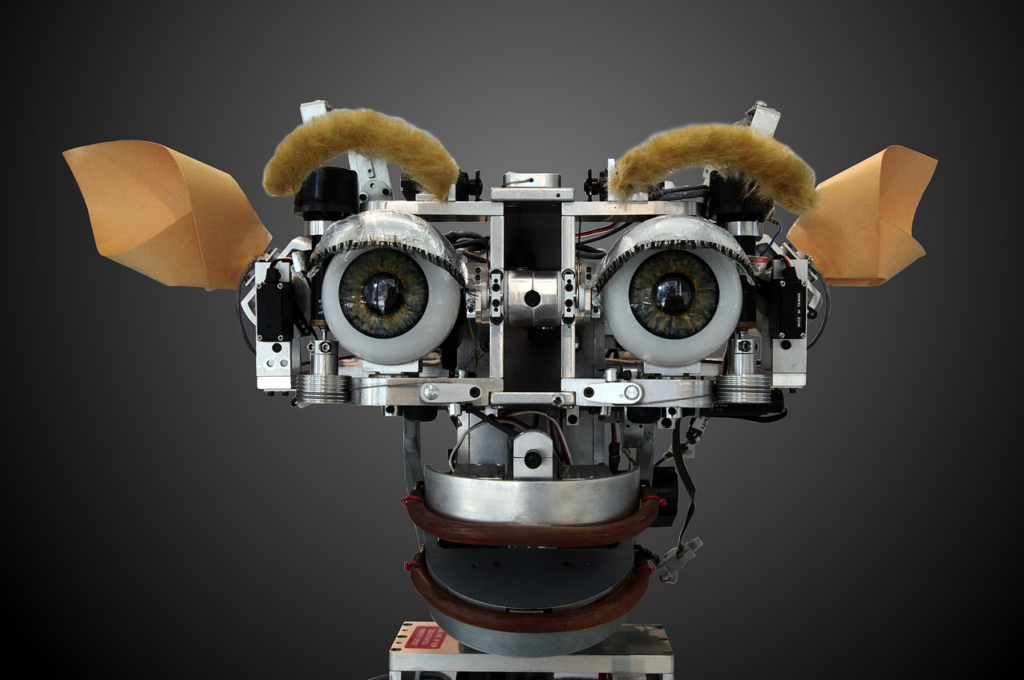
If AI is an existential threat as it appears to be, government must act. The primary responsibility of government, especially American democracy, is to safeguard the public. To simply stand by is irresponsible.
Yet, government has taken a hands-off approach, allowing the AI industry to write the rules by which AI uses information in the public domain, that is, information that belongs to the people, which is essentially all the knowledge mankind has accumulated over 300,000 years.
When government took a hands-off approach to the internet, the consequences for democracy were devastating. Developers promoted unregulated cyberspace, and internet use spread rapidly. Scientific research, medical care, and education benefited, but a few major platforms soon dominated the online landscape. At the same time, viruses, data breaches, misinformation, disinformation, and cybercrime became widespread, with global cybercrime costs estimated at up to $10.5 trillion annually.
In 2017, when pressed to explain why the administration would put forward an obvious falsehood concerning the crowd size at Trump’s inauguration, Kellyanne Conway famously said the administration was simply giving “alternative facts.” Conway was not delusional. She knew her remark was nonsense. She was intentionally gaslighting, a kind of disinformation that flourishes on social media creating a world in which truth and fantasy are valued equally.
The spread of online disinformation (intentionally incorrect with an agenda serving a person or organization) and misinformation (sloppy lack of factchecking) is a consequence of a key design feature of social media. Using psychological mechanisms such as confirmation bias, platforms monetize user engagement by rewarding rapid, emotional sharing over factual accuracy. People are more likely to accept and share information that agrees with their personal beliefs.
By undermining truth, social media undermines democracy, for democracy depends upon an electorate that is truthfully informed and elected representatives who openly and honestly debate facts. The internet has compromised our democracy. AI, with its deep fake capabilities, poses an even greater threat.
Governments worldwide explore regulatory frameworks to protect user privacy and curb monopolistic practices, but effective regulation may no longer be possible. Leaving the internet to its own devices was a failure. We cannot make the same mistake with Artificial Intelligence.
Dubius Proposals
AI developers recognize the need for a set of rules to govern AI. In 2016 Sam Altman, CEO of Open AI, in an interview with the New Yorker said, “We’re planning a way to allow wide swaths of the world to elect representatives to a new governance board…Because if I weren’t in on this, I’d be, like, Why do these fuckers get to decide what happens to me?”- well said, Mr. Altman. Classy.
In a more recent New Yorker article by Yale Historian and writer Jill Lapore, “Does AI need a constitution?,” she argues that private tech firms are improperly adopting the language of constitutionalism to avoid accountability. Anthropic, for example, has introduced Constitutional AI as a training method for large language models, which force agents to conform to a set of human-written rules. Lapore contends that such corporate constitutions transfer moral and democratic responsibilities from public institutions to executives of private corporations who are obligated to shareholders, not the public.
Constitutions set out the basic rules to which a society agrees to comply. There is something fundamentally wrong, backwards, when private corporations write rules that govern the use of public information. Training AI agents to comply with the existing rules of society makes far more sense. AI enjoys access to our constitution, laws, and customs. AI knows the rules. Is conformance too much to ask?
The solution? Public Oversight.
In an earlier essay I proposed a Federal Artificial Intelligence Commission following the Radio Act of 1927 paradigm, which declared the airwaves to be a public asset and created the Federal Radio Commission, the forerunner of the Federal Communications Commission. This new Commission would regulate the AI industry by writing the rules by which AI can use public information, to ensure consistency with rules that govern our society, not some arbitrary guidelines written by executives of private companies.
In a 1 June New York Times essay, Senator Bernie Sanders proposed a more novel plan that would also ensure oversight and provide compensation for the use of the public asset. Sanders plans to introduce legislation that would establish an American AI Sovereign Wealth Fund, which will impose a one-time 50% equity tax on AI companies that would be paid in corporate stock. A federal commission would then control half of the voting shares in each company, thus ensuring public input.
And there would be a huge financial benefit as well because the public will share the profits generated by AI, potentially trillions of dollars. Shares owned by the public could, in the long term, pay off our national debt, now at nearly $40 trillion.
The justification for Sanders’ bill is that AI technology is built upon humanity’s collective knowledge, creativity, and accumulated labor, rather than the isolated efforts of a few developers. But the stronger reason is that information in the public domain belongs to the people. AI agents are mining information, which is a public asset. The public should have a say in how that is done and be compensated.
Unfortunately, the Trump administration opposes AI regulation. One of its first moves was to repeal the Biden administration’s landmark Executive Order on AI, wiping away several existing federal guidelines and protections. And in January 2025 Trump issued Executive Order 14179, titled “Removing Barriers to American Leadership in Artificial Intelligence.” Later he signed Executive Order 14365 (Ensuring a National Policy Framework for Artificial Intelligence,) which preempted regulations at the state level.
Mankind has faced monumental problems for its entire existence. But the existential threats confronting this generation – nuclear war, global warming, and now artificial intelligence are fundamentally different. They are anthropogenic—of our own making. To deal with these threats, the world needs strong democracies, for democracy is the only form of government that is dedicated to the common good.
If we are to preserve our rights to life, liberty, and the pursuit of happiness, we must preserve and rebuild our American democracy, once the world’s greatest. We can do that by electing capable, patriotic Americans to the House and Senate in the mid-terms and rid our country of the Trump-MAGA theocrats who have so little respect for the Constitution.
Establishing a Commission to regulate AI must be at the top of their agenda. Rules governing AI are too important to be left to executives of private companies whose first concern is increasing shareholder value.

Bob Topper, syndicated by PeaceVoice, is a retired engineer.