African oil giants Nigeria, Algeria and Angola watch as Russia turns to India for fuel after Ukrainian strikes hit refineries
Russia has turned to fuel imports from India after Ukrainian strikes disrupted its refineries, a rare reversal for one of the world’s biggest fuel exporters that could bring African oil giants into focus if Moscow widens its search for alternative suppliers.
 Black News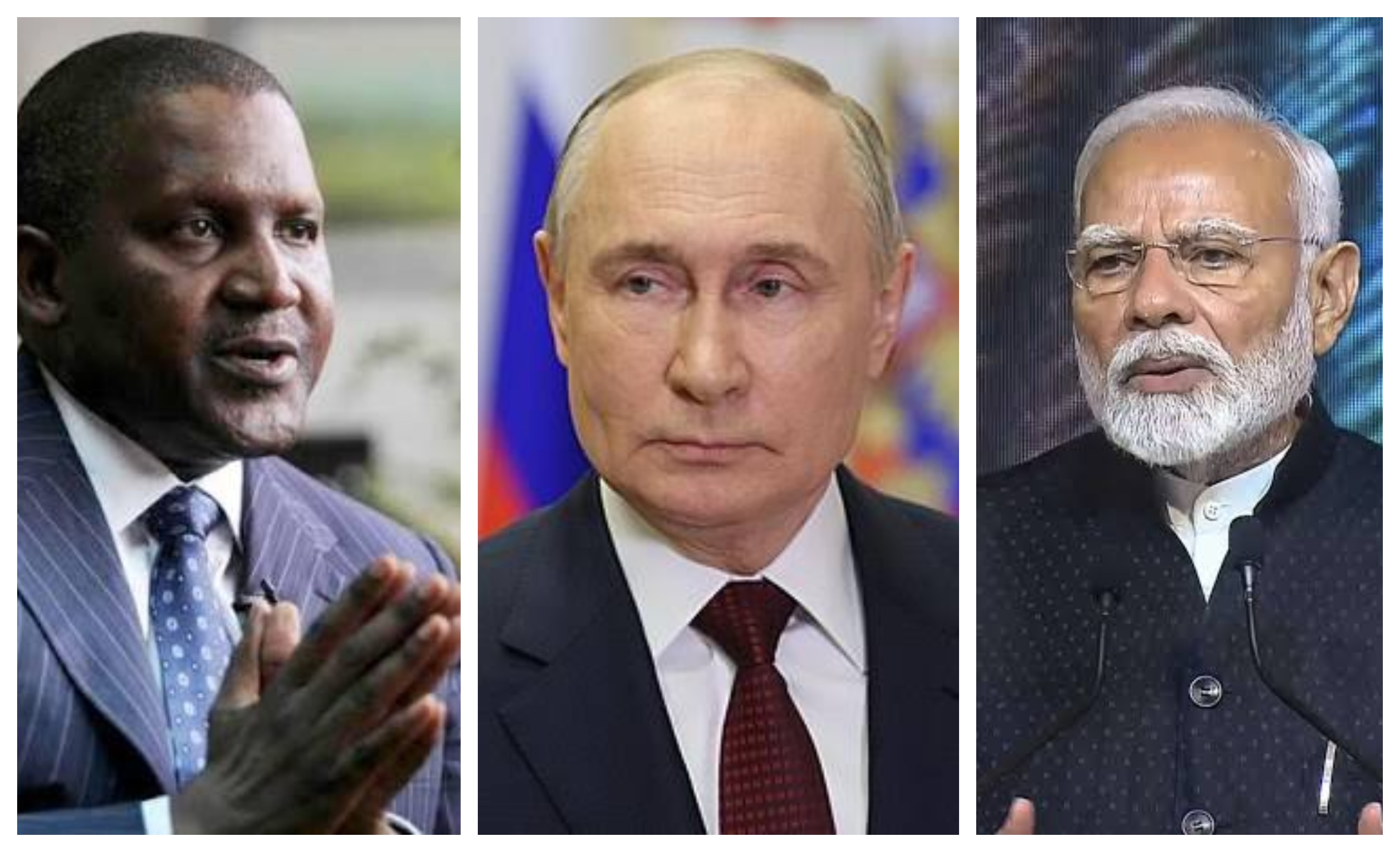

Russia has turned to fuel imports from India after Ukrainian strikes disrupted its refineries, a rare reversal for one of the world’s biggest fuel exporters that could bring African oil giants into focus if Moscow widens its search for alternative suppliers.
- These shortages have led to rationing, long queues, and record price increases, prompting Russia to seek fuel imports from countries like India and Belarus.
- The crisis highlights the growing strategic importance of Africa's expanding refining capacity, particularly Nigeria's Dangote Refinery.
- Supplying fuel to Russia from Africa faces barriers such as sanctions, shipping costs, and regulatory approvals.
- Russia has begun importing gasoline from India due to fuel shortages caused by Ukrainian attacks on its refineries.
The crisis has triggered rationing, long queues at filling stations and record gasoline price increases across Russia’s 11 time zones, forcing Moscow to seek fuel from other countries.
For African oil producers such as Algeria, Angola, Nigeria, Libya and Egypt, Russia’s fuel crisis could open a new window for countries with active refineries, as global markets seek more secure supplies after US-Iran tensions and disruptions around the Strait of Hormuz reshaped fuel trade.
That possibility has gained attention because Russia, one of the world’s biggest energy producers, is now turning to foreign fuel imports to ease domestic shortages, an unusual step for a country that normally relies on its own refining system.
DON'T MISS: Russia discusses production plan to ensure that Africa feeds itself
Russia turns to India for gasoline
Meanwhile, Russia has not traditionally depended on African crude, but its worsening fuel shortages could make Africa’s oil producers more strategically important as Moscow looks for ways to stabilise supply while sanctions pressure complicates access to Venezuelan and Iranian oil network
According to Reuters, at least 60,000 metric tonnes of gasoline have been dispatched from India to Russia, citing an industry source. Another source said two tankers carrying parcels of 30,000 to 40,000 tonnes each had been sent.
Separately, a third source said Russia plans to import 400,000 tonnes of gasoline from various countries each month, including neighbouring Belarus, which has already been exporting fuel to Russia.
The Kremlin also confirmed that Russia was in contact with other countries and was discussing fuel imports at acceptable prices.
DON'T MISS: African country named among Russia’s top 3 largest military-technical cooperation partners
![Aerial view of an oil refinery for Oil or gas, chemical, and Petrochemical plant Industry. [Stock Photo/Getty Images]](https://ocdn.eu/pulscms/MDA_/2b2f740ac4fd98758938b4796350d18d.jpg)
Ukraine targets Russia’s energy system
The fuel crunch follows months of Ukrainian attacks on Russia’s energy infrastructure, including refineries, depots and fuel terminals.
Kyiv has described the strikes as part of efforts to weaken Moscow’s military logistics and pressure Russia to end the war.
President Vladimir Putin has acknowledged the disruption, saying “problems persist for both motorists and businesses,” and “there are still queues at petrol stations, and finding the right grade of petrol isn’t always easy.”
He, however, insisted the shortages are “not critical” and “temporary.”
In Crimea, pressure has been sharper, with reports showing gasoline prices in Sevastopol rose 30% in one week as Ukraine targeted Russian supply lines in the peninsula, which Moscow annexed in 2014.
Gov. Sergey Aksyonov, the Kremlin-appointed head of Crimea, said petrol would be reserved for state needs.
"Fuel will be sold only to government agencies that ensure the functioning and security of the Republic of Crimea," Aksyonov said. "I ask everyone to remain calm and to only trust official sources of information."
Meanwhile, Ukrainian President Volodymyr Zelenskyy described the attacks as part of Ukraine’s "long-range sanctions" against Russia’s energy infrastructure.
He also mocked Moscow’s struggle, saying “Putin can go on and on, claiming on TV that he supposedly has everything under control,” but Russians can see the war “has reached the point where even an oil state -- a gas station, as Russia used to be called -- is now facing gas shortages.”
DON'T MISS: Nigeria escapes UK’s new Russian oil crackdown
Dangote and Africa’s refineries enter the conversation
Russia’s fuel crisis has drawn attention to Africa’s expanding refining capacity, led by Nigeria’s Dangote Refinery, the continent’s largest refinery, which is being expanded from 650,000 barrels per day to 1.4 million barrels per day, far above Russia’s largest refinery, Omsk, which processes about 425,000 barrels per day.
The refinery has become an important outlet for African and global fuel supply, especially as disruptions in the Strait of Hormuz and wider energy market pressures force countries to rethink supply security.
Business Insider Africa reported that Europe has seen record jet fuel inflows from Nigeria and the United States after Gulf imports were disrupted, with markets such as the UK and the Netherlands among the key European destinations.
Beyond Nigeria, other operational refining centres in Africa include Algeria’s Skikda refinery, Egypt’s refinery network, Angola’s Luanda refinery, Libya’s refining assets and South Africa’s Sasol-linked operations.
This wider refining base matters because Libya’s crude continues to flow mainly to European buyers such as Italy and Spain, Angola remains heavily tied to Chinese demand, while Algeria’s light crude is largely positioned for Mediterranean and European refiners.
However, any move to supply Russia would depend on sanctions exposure, shipping costs, product specifications, payment channels, insurance cover and government approvals.
Still, countries such as Algeria, which has deep diplomatic, military and energy ties with Russia, give Moscow one of its strongest long-standing links to Africa’s energy sector.