Kenya receives a $750 million loan from the World Bank to combat domestic loans
Kenya has received more financial assistance from the World Bank to relieve strain on its public finances, decrease borrowing rates, and support crucial economic reforms.
 Black News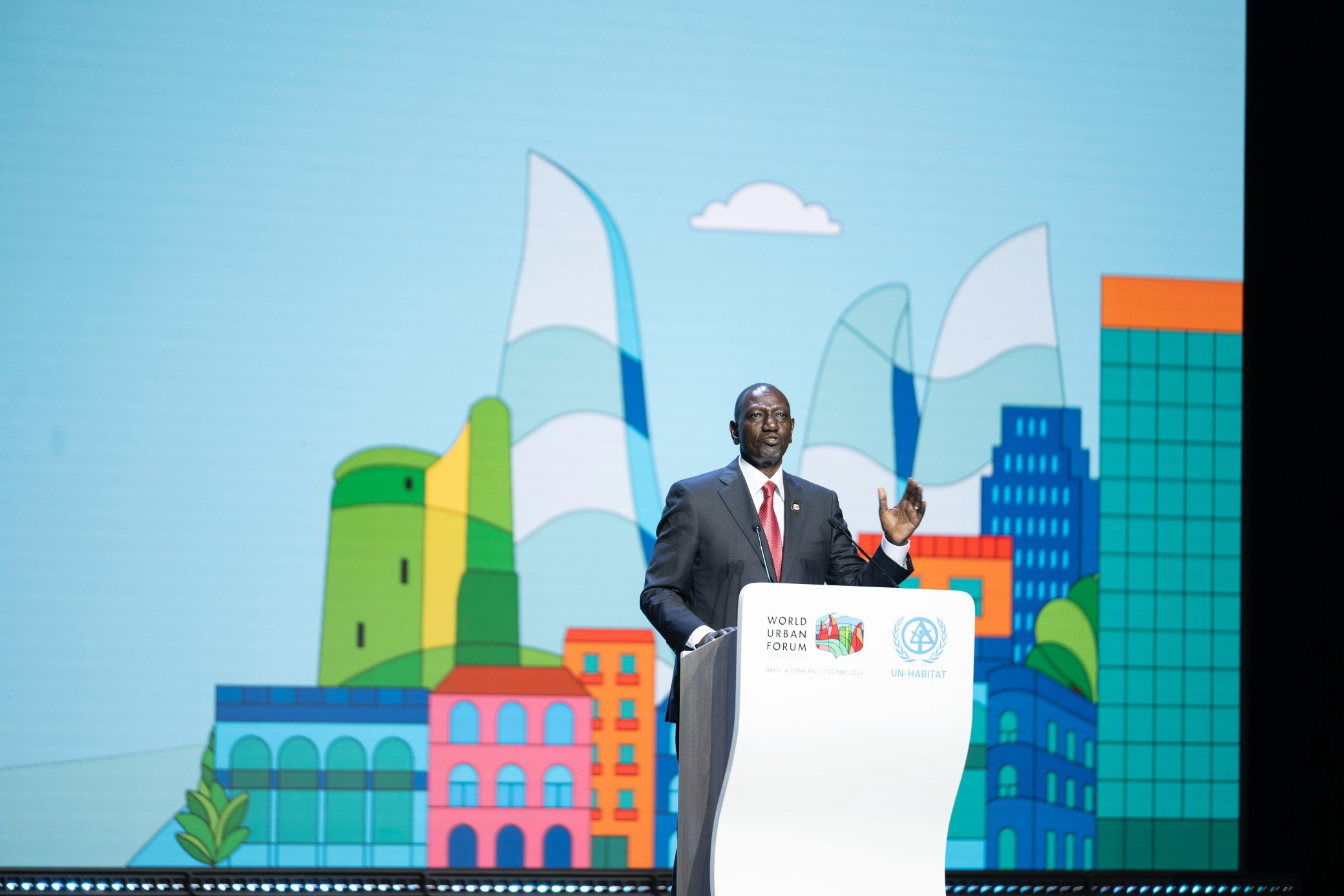
![The president of Kenya, William Ruto, at the Leader’s Summit of the 13th session of the World Urban Forum (WUF13) [Source: X@WilliamsRuto]](https://ocdn.eu/pulscms/MDA_/bd09924f405eab0f9aa28c1c8c9fa25e.jpg)
Kenya has received more financial assistance from the World Bank to relieve strain on its public finances, decrease borrowing rates, and support crucial economic reforms.
- Kenya received a $750 million budget support package from the World Bank to ease fiscal strain and support economic reforms.
- The financial assistance includes $340 million from the IBRD and $410 million from the IDA, under Kenya's seventh Development Policy Operation since 2018.
- Kenya's public debt has risen to 68.8% of GDP, with domestic debt comprising over half of that amount, largely due to infrastructure, social spending, and debt servicing.
- The sustainability-linked facility aims to reduce borrowing costs and includes measures such as minimizing deforestation and expanding rural electricity access.
On Tuesday, the global lender announced the approval of a $750 million budget support package as well as a sustainability-linked credit facility aimed at reducing Kenya's reliance on costly domestic borrowing while boosting fiscal stability.
DON’T MISS THIS: Kenya gains an extra $250 million after converting $5 billion loan to Yuan
The fiscal support is supplied through a Development Policy Operation (DPO), which includes $340 million from the International Bank for Reconstruction and Development (IBRD) and $410 million in concessional financing from the International Development Association (IDA).
Kenya's latest clearance represents the country's seventh Development Policy Operation since joining the program in 2018.
Kenya has been dealing with escalating debt commitments and recurring budget deficits, putting further strain on government resources.
In November last year, the World Bank, via the Kenya Economic Update, noted that Kenya’s public debt rose to 68.8 % of GDP in FY 2024/25, up from 67.5 % in the previous year, as the country’s domestic debt accounted for 53.6 % of that figure.
Per the report, net domestic borrowing reached about 5 % of GDP during the review period, mainly driven by infrastructure investment, social‑programme spending, and debt‑servicing obligations.
Via the new loan, Kenya is expected to receive critical fiscal support while also pushing changes aimed at improving economic management.
In addition to the loan, the World Bank is financing a sustainability-linked syndicated deal worth around $500 million, as seen on Reuters.
The facility would contain a credit enhancement mechanism designed to reduce investor risk and allow Kenya to get finance at cheaper borrowing costs.
These include minimizing deforestation and increasing electrical availability in rural areas.
The combined finance package is projected to enhance Kenya's fiscal situation, increase access to cheaper borrowing, and help the government achieve its long-term economic and sustainability goals.
This loan is coming one year after Kenya was stated to be at risk of losing access to a Sh96.9 billion loan from the World Bank following the refusal by the country’s president to assent to a key anti-corruption law, citing concerns over its dilution by Parliament.
At the time, the East African country delayed in passing the Conflict of Interest Bill, 2023, which not only postponed the release of the World Bank loan but also created a significant funding gap for the National Treasury.
The Conflict of Interest Bill, 2023, aims to strengthen ethical conduct in Kenya’s public service by curbing self-dealing, contract manipulation, and the pursuit of unregulated business interests by officials.
According to the World Bank, sustainability-linked finance aims to diversify Kenya's funding sources while linking financial incentives to environmental and development objectives.