NCOPT president calls for clear fare formula after fuel price hike
Godfrey Ferdinand, President of the National Council on Public Transport (NCOPT), says the recent fuel price increase in Saint Lucia should lead to renewed talks about creating a clear, automatic way to adjust public transportation fares. He spoke after the Government announced new fuel prices starting June 1. Gasoline and diesel both went up from […] The article NCOPT president calls for clear fare formula after fuel price hike is from St. Lucia Times.
 Black News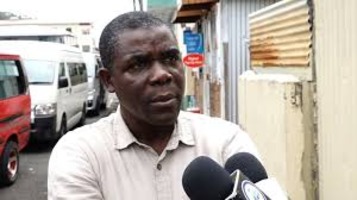
Godfrey Ferdinand, President of the National Council on Public Transport (NCOPT), says the recent fuel price increase in Saint Lucia should lead to renewed talks about creating a clear, automatic way to adjust public transportation fares.
He spoke after the Government announced new fuel prices starting June 1. Gasoline and diesel both went up from $16.00 to $16.75 per imperial gallon, and kerosene increased from $9.66 to $10.41 per gallon. These changes reflect shifts in international oil prices under Saint Lucia’s updated pricing system.
Ferdinand said the increase was expected and thinks officials should have discussed it with transport operators before making the change.
“When I heard that news, I said, ‘Here we go again’,” Ferdinand stated.
He said the problem is bigger than just fuel prices and shows there is not enough planning between the government and the transport sector.
He argued that instead of holding public debates and making requests each time fuel prices change, Saint Lucia should create a formal formula linking bus fares to fuel costs.
“We should maybe automatically receive an increase,” Ferdinand said. He explained that this kind of system would help both commuters and operators understand the process and would cut down on repeated arguments.
He suggested that fare changes could be linked to certain fuel price levels.
“That would say if fuel is 14, it should be that in bus fares, and if it is 17, it should be that in bus fares,” Ferdinand explained. “Then we know we have reached a place where everybody is operating professionally.”
Ferdinand rejected suggestions that the transport sector feels betrayed by the fuel increase despite earlier efforts to keep prices steady.
He said that, instead, operators are often portrayed in a negative light whenever fuel prices go up.
“The public watches us, and they have demonised us,” he said, noting that operators are usually among the first to speak publicly because transportation businesses absorb a significant portion of fuel-related costs.
He also mentioned how long it has been since operators last got a fare increase.
“The increase that we have now was promised. We received a 2013 increase. We got that in 2022. And now, July will be six years since the last increase,” Ferdinand said.
Ferdinand said that while some operators are already asking for higher bus fares, the council plans to monitor developments over the next few weeks before making a decision.
“The position that we have is: we will have a wait-and-see for the first three weeks and see what shifts. And if it shifts more to our disadvantage, we’re definitely going to make a request.”
He stressed that any fare change must follow the proper process, starting with establishing a fare committee, gathering input from associations, reviewing and making recommendations, and finally obtaining legislative approval.
Ferdinand also talked about past government support, such as transport rebates meant to help with rising fuel prices.
He said operators have not found much value in that approach in the past.
“A rebate is five cents a day the government is giving us not to raise the bus fare. There is nothing, not even a sweet you can buy at five cents a day anyway in Saint Lucia.”
He said public transport operators are not looking for a fight, but just want to keep their businesses going.
“We have a business to operate, we have to run and maintain the vehicles. So we need something that is substantial to be able to do that.”
Ferdinand said the NCOPT has not yet contacted the Department of Transport after the latest price change, but he believes government ministries should have started those discussions earlier.
He also mentioned a past study that aimed to develop a more evidence-based approach to setting bus fares.
Ferdinand said the study was part of recommendations in a Caribbean Development Bank report that examined factors such as terrain, inflation, and how transport really works.
“It would have been interesting if the government come and abstract from the report and say to the public their findings,” he said.
The article NCOPT president calls for clear fare formula after fuel price hike is from St. Lucia Times.