Nigerian banks approve more loans, but small businesses still face tougher borrowing costs
A new Central Bank of Nigeria survey shows that credit became easier to obtain in the second quarter, but borrowing costs moved in different directions for households, small businesses and larger companies.
 Black News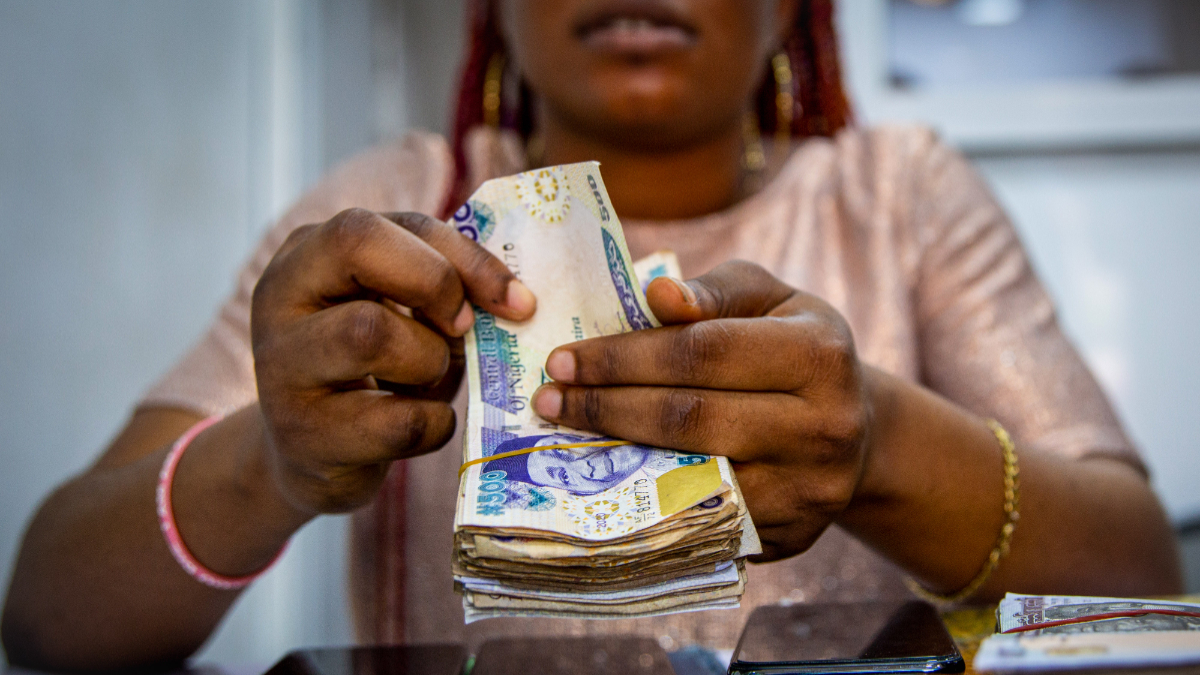
![Nigerian banks reported higher loan approval rates in the second quarter, but lending costs moved differently across borrower categories. [Getty Images]](https://ocdn.eu/pulscms/MDA_/0b477b934604f85231b56a2db3047569.jpeg)
A new Central Bank of Nigeria survey shows that credit became easier to obtain in the second quarter, but borrowing costs moved in different directions for households, small businesses and larger companies.
- Banks reported higher approval rates for secured, unsecured and corporate loan applications in the second quarter of 2026.
- Demand from small businesses rose by 26.5 index points, while consumer-loan demand increased by 11.2 points.
- The lending-rate spread widened for small businesses even as it narrowed for some medium and large corporate borrowers.
Nigerian banks approved a greater share of household and business loan applications in the second quarter of 2026, but the cost of borrowing did not improve equally for every customer.
The Central Bank of Nigeria’s latest Credit Conditions Survey found that credit availability increased across secured, unsecured and corporate lending.
Demand also rose for mortgages, consumer loans, personal loans and business credit, while lenders reported lower default rates across the main household and corporate categories.
The mixed result comes as Nigeria’s monetary policy continues to shape the cost of credit for small businesses and households.
It also follows the completion of a major recapitalisation exercise that strengthened bank balance sheets but left the industry under pressure to convert larger capital bases into productive lending.
Across Africa, the number of adults borrowing from formal financial institutions remains uneven, making loan access and affordability an important measure of financial inclusion.
The expansion of mobile-money lending and fintech credit has also increased competition in Nigeria’s lending market, particularly for smaller unsecured loans.
More applications are being approved

Banks reported an increase in the proportion of applications approved for secured household loans, unsecured household loans and corporate credit, according to BusinessDay’s analysis of the CBN survey.
The result suggests that borrowers had a better chance of receiving a loan than in the previous quarter.
Credit availability improved alongside lower reported default rates. Lenders said defaults declined across secured and unsecured household lending and among small, medium and large companies.
The survey records the views of participating lenders. It does not mean that every bank approved more loans or that every borrower received a lower interest rate.
Small-business demand rises fastest
Demand from small businesses increased by 26.5 index points during the quarter. Demand from medium-sized private non-financial companies rose by 25.5 points, while demand from large companies increased by 8.9 points.
Lenders identified inventory financing, capital investment and balance-sheet restructuring as important reasons for corporate borrowing.
The lending-rate spread for small businesses widened to minus 3.8 index points. The survey uses a diffusion-index method, so the figure describes the direction reported by lenders rather than an actual loan interest rate of minus 3.8 percent.
Spreads narrowed for some medium and large corporate borrowers. The result shows that greater credit availability did not produce the same pricing movement for every type of business.
Households seek mortgages and consumer loans
Demand for consumer loans increased by 11.2 index points. Demand for house-purchase lending rose by 9.6 points, while mortgage and remortgage demand increased by 13.3 points.
Demand for overdrafts and personal loans rose by 7.9 points. Credit-card demand fell by 2.0 points.
The spread on unsecured household lending narrowed to 7.8 index points, while the spread on secured household lending widened to minus 4.5 points.
These figures should not be read as the interest rates paid by borrowers. They show how lenders said their pricing moved relative to the benchmark policy rate.
What borrowers should check
A higher approval rate does not necessarily make a loan affordable.
Households should compare the annual interest rate, management fees, insurance charges, repayment schedule and penalties before accepting a facility.
Businesses need to compare the total financing cost with the income expected from inventory, equipment or expansion funded by the loan.
The CBN says its Credit Conditions Survey is conducted quarterly and covers household secured and unsecured lending, small businesses, non-financial companies, loan pricing and defaults.