
Nigerian meat traders face uncertainty as cattle cost more than cars
Cattle prices in Lagos State have surged sharply, with traders reporting that the cost of cows has now reached levels higher than some vehicles, intensifying pressure on butchers and consumers in Nigeria’s commercial capital.
 Black News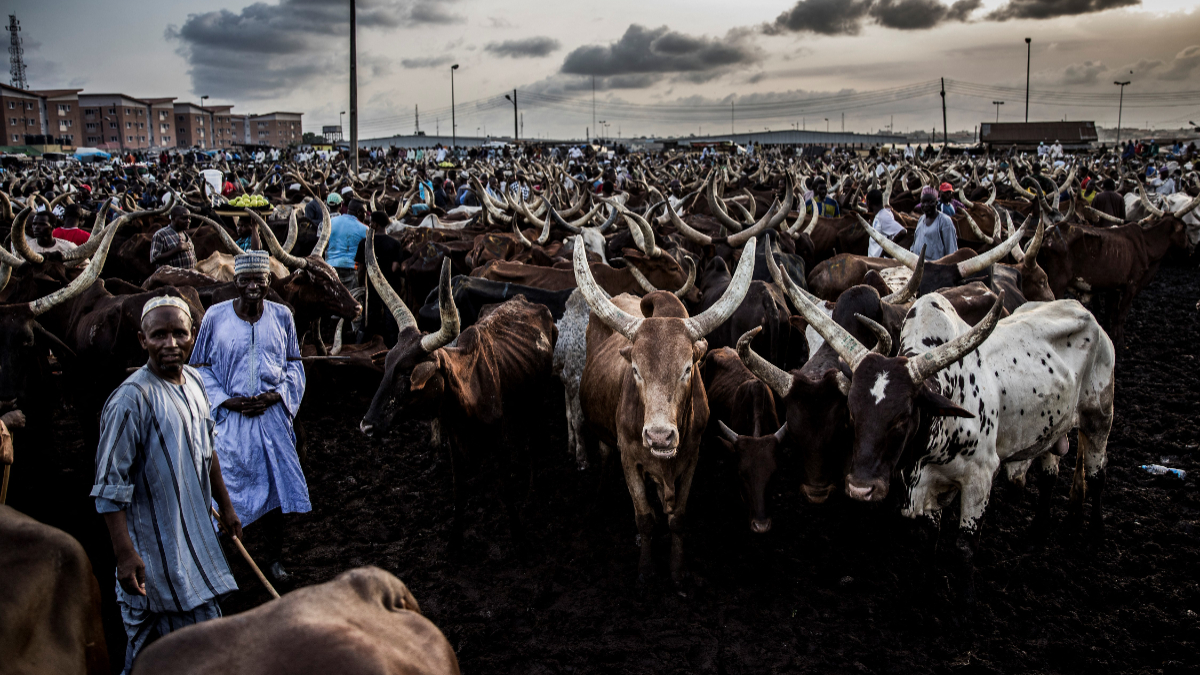


![Herdsmen along with their cows wait for buyers at Kara Cattle Market in Lagos, Nigeria. Kara cattle market in Agege, Lagos is one of the largest of West Africa receiving thousands of cows weekly due to the massive consumption of meat in Lagos area. [Photo by LUIS TATO/AFP via Getty Images]](https://ocdn.eu/pulscms/MDA_/41da371cb2c7cbb44b967bd5ba2ecc92.jpg)
Cattle prices in Lagos State have surged sharply, with traders reporting that the cost of cows has now reached levels higher than some vehicles, intensifying pressure on butchers and consumers in Nigeria’s commercial capital.
- Cattle prices in Lagos have climbed to as high as $1,613 per cow, surpassing the value of some vehicles and straining butchers and consumers.
- The Lagos State Butchers Association links the surge to insecurity, higher fuel costs, and delayed ranching projects.
- Reduced supply from northern Nigeria and rising logistics expenses have intensified market pressure.
- Stakeholders are calling for the faster rollout of local ranching schemes to stabilise prices and improve supply.
The Lagos State Butchers Association says the price of a cow has risen to as much as N2.5 million (about $1,613), compared with around N1.7 million (about $1,097) in 2025. The group attributes the increase to insecurity across livestock routes, higher transport costs, and delays in implementing local ranching projects intended to boost supply.
Speaking to the News Agency of Nigeria, the association’s Patron, Alhaji Bamidele Kazeem, said prices have climbed steadily over the past year, with most cattle now selling between N2.3 million and N2.4 million ($1,484 to $1,548).
“There was even a time a cow was priced at N2.5 million in the market,” Kazeem said, describing the situation as increasingly unsustainable for traders.
He added that the cost escalation has pushed meat retailers into financial strain, with many struggling to remain in business amid weakening consumer demand.
![Herdsmen along with their cows wait for buyers at Kara Cattle Market in Lagos, Nigeria. [Photo by LUIS TATO/AFP via Getty Images]](https://ocdn.eu/pulscms/MDA_/b2417d3a41bfe37f069cd4127671dc6a.jpg)
Kazeem drew attention to the widening gap between livestock and asset prices, noting that some durable goods have become relatively cheaper.
“The car I bought in 2020 for N2.1 million is now cheaper than the price of a cow,” he said, highlighting the scale of inflation in the livestock market.
He also said that cows priced around N1 million (about $645), once common in the market, have become rare.
“If you see a cow of N1 million now, you will be surprised. What we complained about last year is child’s play compared to the current prices,” he said.
According to him, insecurity affecting cattle movement from northern Nigeria, the country’s main livestock supply region, has reduced availability in southern markets. Rising fuel and diesel prices have further compounded logistics costs, pushing up retail prices in Lagos.
“The supply has reduced because of insecurity in the country and, most recently, the increase in fuel pump price, which has made the cost of transportation skyrocket,” Kazeem said.
![Hausa-Fulani pastoralists and cattle buyers wait for cattle transactions while sitting on a metallic fence at Kara Cattle Market in Lagos, Nigeria. [LUIS TATO/AFP via Getty Images]](https://ocdn.eu/pulscms/MDA_/e83f373f68e2d138e2cc8ea161ca6576.jpg)
He added that planned state-backed livestock initiatives, including feedlot and ranching schemes, have yet to commence, leaving the market heavily dependent on long-distance supply chains.
“The local producers are not meeting demand because the feedlots and ranching programme of the state government have not started yet,” he said.
Kazeem urged authorities to accelerate the Eko Ranching project in Gbodu, Epe, arguing that local production could ease transport pressures, stabilise supply, and help moderate meat prices.
“The gains of the ranch are enormous. It will provide job opportunities for our teeming youths and probably bring down the cost of meat,” he said.











.png)


