Air France Has an Under-the-Radar Nonstop Flight From Miami to a Caribbean Island Filled With Beaches, Rainforests, and Volcanoes
You board in Miami, settle into your seat, and a few hours later you’re stepping out into a part of the Caribbean that feels entirely different from the usual circuit. French language on the signs. Boulangeries near the airport. A coastline split between white-sand stretches and volcanic black-sand coves. This is Guadeloupe — and right […] The post Air France Has an Under-the-Radar Nonstop Flight From Miami to a Caribbean Island Filled With Beaches, Rainforests, and Volcanoes appeared first on Caribbean Journal.
 Black News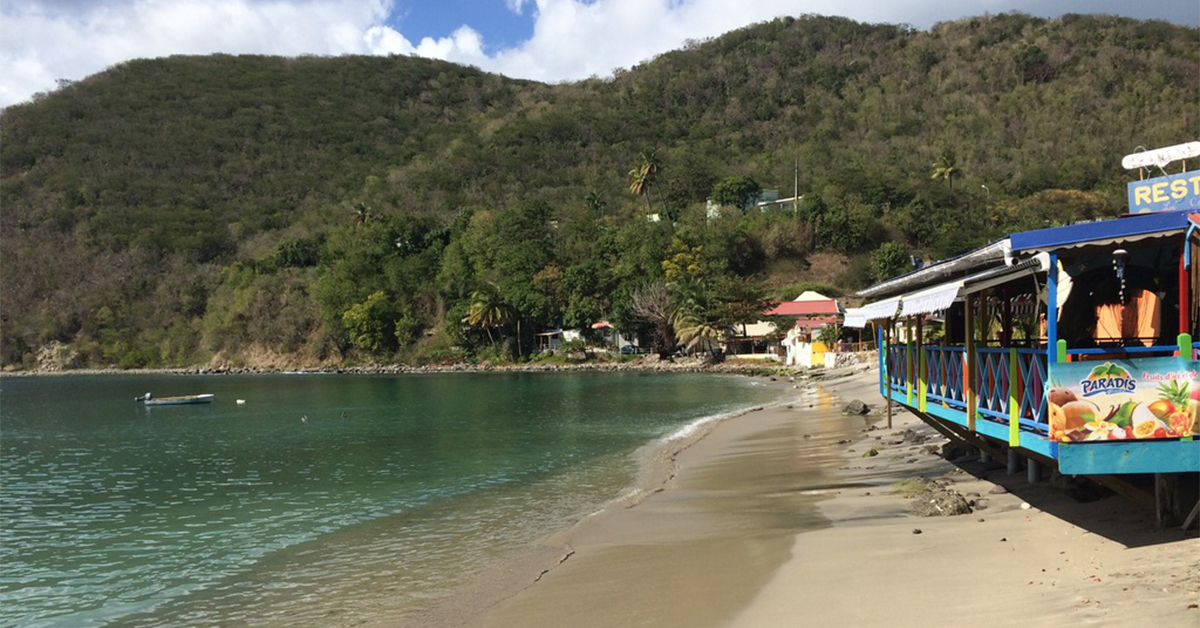
You board in Miami, settle into your seat, and a few hours later you’re stepping out into a part of the Caribbean that feels entirely different from the usual circuit. French language on the signs. Boulangeries near the airport. A coastline split between white-sand stretches and volcanic black-sand coves. This is Guadeloupe — and right now, there’s only one way to get here nonstop from the United States.
Air France is operating a once-weekly flight between Miami and Pointe-à-Pitre, linking the U.S. directly with the French Caribbean department. It’s the only nonstop route of its kind between the United States and Guadeloupe, and it runs just once a week, on Fridays.
That alone makes it one of the most distinctive air routes in the wider Caribbean. And it almost feels like a secret flight.
The Route: Miami to Pointe-à-Pitre
The flight departs Miami International Airport and lands at Pointe-à-Pitre Le Raizet Airport, Guadeloupe’s main gateway. It’s a direct connection into a destination that, for most U.S. travelers, has traditionally required connections through Paris or other Caribbean hubs.
Operating once weekly gives the route a certain rhythm. You leave on a Friday and arrive ready for a long weekend or a full week on the island before circling back the following Friday. It’s a schedule that works cleanly for both short escapes and longer stays, particularly for travelers who want something beyond the usual Caribbean lineup.
Air France’s involvement adds another layer. Even on a relatively short regional flight, the airline brings a different feel from what you typically get on intra-Caribbean routes — from onboard service to the mix of passengers, which often includes travelers continuing on broader itineraries within the Air France network.
Why Guadeloupe Feels Different
Guadeloupe isn’t one island; it’s an archipelago shaped like a butterfly, with two main wings: Grande-Terre and Basse-Terre. Each side delivers a completely different experience.
On Grande-Terre, you get long arcs of white sand, calm water, and beach towns like Sainte-Anne and Le Gosier. The coastline here is easy to navigate, with clear water and a steady line of beach bars, local restaurants, and small hotels.
Cross the narrow channel to Basse-Terre, and the terrain changes quickly. The road climbs into dense rainforest, waterfalls appear along hiking routes, and the silhouette of La Soufrière volcano rises above the island. This is where Guadeloupe shows its wilder side, with trails inside Guadeloupe National Park leading through thick vegetation and mist.
The contrast between these two halves is immediate. You can spend the morning on a calm beach and the afternoon hiking toward a waterfall, all without leaving the main island.
A French-Caribbean Culture
Guadeloupe operates as an overseas department of France, which shapes almost every part of the experience.
You’ll notice it first in the food. Bakeries serve fresh baguettes, croissants, and pastries early in the day, often alongside local specialties like bokit — a fried sandwich filled with meats, fish, or vegetables. Restaurants blend French technique with Caribbean ingredients, turning out dishes that lean into seafood, spices, and seasonal produce.
Lunch might be grilled fish with rice and lentils. Dinner could include colombo, a spiced stew with roots in Indian cuisine, reflecting the island’s layered cultural history.
The language is another shift. French is the official language, with Creole widely spoken, and English, well, not that much. That adds to the sense of stepping into a different Caribbean environment — one that feels closer to Europe in some ways while remaining unmistakably rooted in the region.
What You Can Do Once You Arrive
With a nonstop flight dropping you directly into Pointe-à-Pitre, you can start exploring almost immediately.
You can drive to Sainte-Anne for one of the island’s most accessible beaches, where white sand meets shallow water and small restaurants line the shore. The town’s market is a good entry point into local flavors, with spices, rum, and prepared foods on display.
On Grande-Terre, you can continue east to Pointe des Châteaux, a dramatic peninsula where the land narrows and the Atlantic stretches out in front of you. The coastline here is rugged, with waves hitting rock formations and long views across the water.
On Basse-Terre, the experience shifts quickly. You can head into the rainforest for hikes that lead to waterfalls like Carbet Falls, where water drops through dense green surroundings. The trails vary in difficulty, giving you options whether you want a short walk or a longer climb.
Here, my favorite is Deshaies, where I first fell in love with the destination, with super beaches, a wonderful little village and some seriously good food. (Sensing a theme?)
There’s also the option to take a boat out to Les Saintes, a smaller island group south of Guadeloupe’s main landmass. The harbor at Terre-de-Haut curves around turquoise water, with boats anchored just offshore and small streets lined with cafes and shops.
You can also take a ferry to one of the Caribbean’s great rum destinations, Marie Galante, where there are more distilleries per capita than anywhere else on earth.
The Practical Advantage of Nonstop
For U.S. travelers, Guadeloupe has often felt just out of reach compared to other Caribbean islands. That’s largely been a function of access. Getting here typically meant routing through Europe or stitching together multiple regional flights.
American Airlines sometimes operates this route, but not all year around. And not right now.
A single flight reduces travel time and removes the uncertainty that can come with connections. It also opens up Guadeloupe to travelers who might not have considered it before — people looking for something different without adding complexity to their itinerary.
The once-weekly schedule adds a layer of planning. You have to build your trip around a Friday departure and return, but that structure can work in your favor. It creates a clean travel window, especially for weeklong stays.
Air France’s Role in the Caribbean
Air France has long maintained connections between mainland France and its Caribbean departments, including Guadeloupe and Martinique. Miami strengthens that network and brings the French Caribbean closer to the U.S. market.
The airline’s presence also signals something broader: a continued interest in linking less traditional Caribbean destinations with major U.S. gateways. While many airlines focus on high-volume routes to well-known islands, this kind of service highlights a different approach — one centered on unique destinations with strong cultural identities.
That translates into access to places that feel less familiar, even within a region as well-traveled as the Caribbean.
Where To Stay
Guadeloupe’s hotel scene leans toward smaller properties and boutique-style stays, with a few standout options depending on where you want to base yourself.
On Grande-Terre, La Toubana Hotel & Spa in Sainte-Anne offers direct beach access, private villas, and an on-site restaurant overlooking the water. It’s one of the island’s most polished stays, with a layout that gives you both privacy and easy access to nearby beaches.
This is the best hotel in all of Guadeloupe, and it’s a different level than everywhere else.
For something more intimate, there are also smaller guesthouses and villas throughout the islands, many of them family-run and positioned close to local beaches or tucked into hillside locations.
Prices on Miami-Guadeloupe
Fares on this route fluctuate a lot. I found rates on Google Flights for Miami-Guadeloupe for about $660, but that can go up and down. It’s also the only nonstop option, so there is a premium. And it’s worth it for a place that is one of the Caribbean’s great, still-largely-undiscovered chain of islands.
The post Air France Has an Under-the-Radar Nonstop Flight From Miami to a Caribbean Island Filled With Beaches, Rainforests, and Volcanoes appeared first on Caribbean Journal.