Black Women: You’re not cold, you’re just tired of proving your pain
What happens when Black women are constantly feeling dismissed and unheard — not just in healthcare settings or… View Post The post Black Women: You’re not cold, you’re just tired of proving your pain first appeared on Melan Magazine.
 Black News
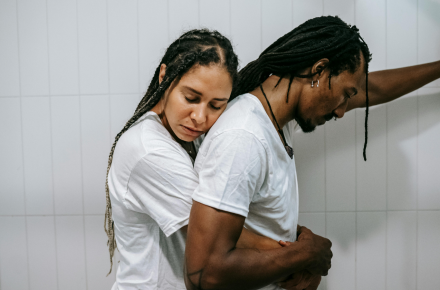
What happens when Black women are constantly feeling dismissed and unheard — not just in healthcare settings or workplaces — but in her most intimate relationships too?
When expressing what you feel is consistently met with dismissal, minimisation, or the demand to prove it first — you learn. You learn that vulnerability is dangerous. That needs are inconvenient. That it is safer to suppress than to speak. Sadly, that suppression doesn’t stay in the doctor’s office or the boardroom. It comes home. It sits in your closest relationships. It shows up as the inability to say what you actually feel to the people you love the most.
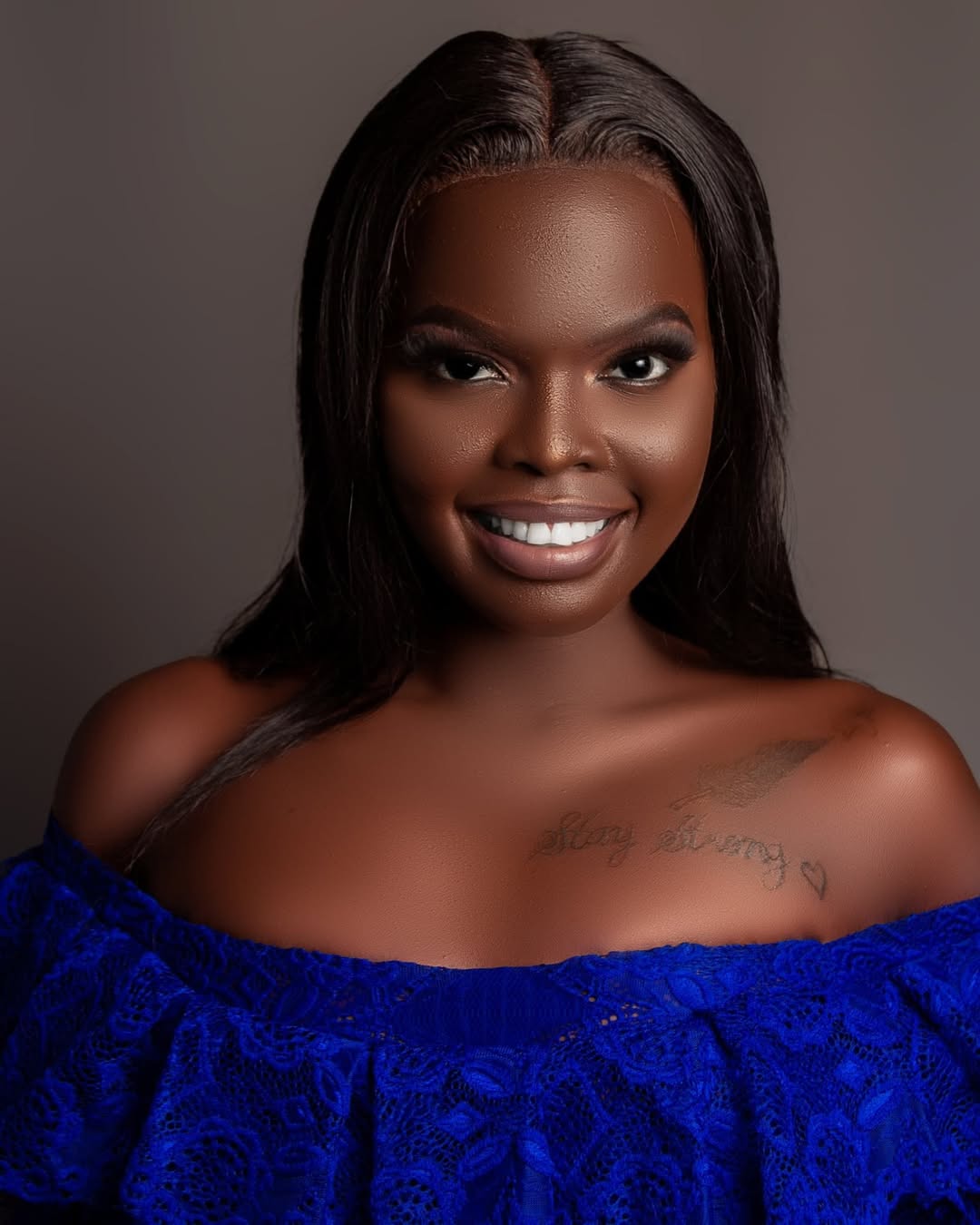
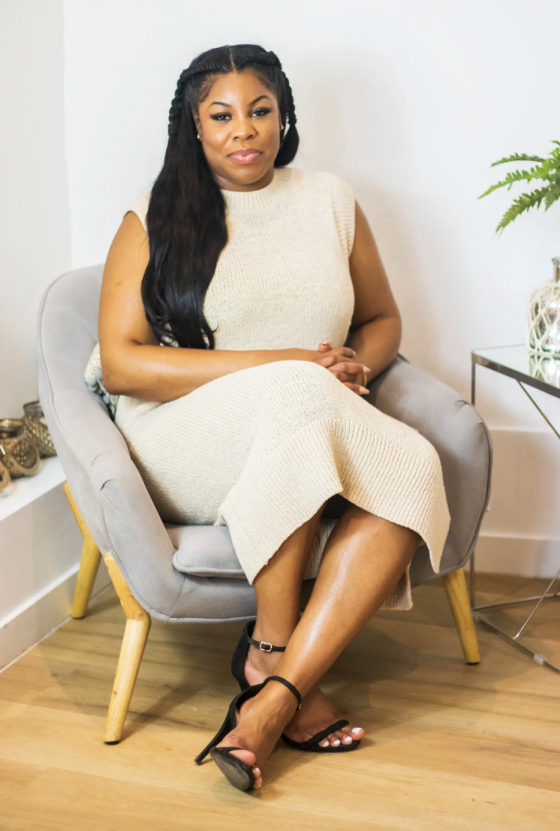
Ayesha Giselle — Clinical Solution-Focused Hypnotherapist, Behaviour Change Coach & Nonviolent Communication Specialist says this is a familiar reality that she sees every week in her clinical practice.
In this piece, Ayesha breaks down what happens when Black women are taught — by systems, by institutions, by repeated experience — that their emotional truth is not safe to express. And it is costing you your peace, your relationships, and your connection to your own inner world.
What do you need right now?
This is a question I ask the women I work with that stops most of them cold. Not a complicated question. Not clinical or confronting. Just… What do you need right now?
The silence that follows says everything. Because for many of the Black women I work with — capable, impressive, high-functioning women — that question lands like a foreign language. A language they were never taught. A language they were, in many ways, specifically trained not to speak.
That silence has a source. And after years of working with individuals, couples, families, and organisations navigating these exact dynamics, I can tell you exactly what it is.
What I see every week
The Black women who come to me are not struggling because they are weak. They are struggling because they have been carrying something that was never theirs to carry alone — and it was never taught, never modelled, so another way was never available to them (Us).
Week after week, I sit with Black women who can advocate fiercely for everyone around them and cannot answer a simple question about what they themselves need. They are extraordinarily emotionally intelligent about other people’s experiences and almost completely cut off from their own. Who perform “okayness” so fluently that even the people closest to them have no idea what is actually happening inside.
And when they do reach for what they need — they reach for a strategy. Not the need itself… but… statements like: “They never check on me”. “They always make me feel like I’m overreacting”. “Nobody ever listens”. “I don’t feel respected”. “I feel like I have to fight for everything”. “I feel invisible”. “Nobody takes me seriously”. Those are not needs. Those are wounds dressed as observations. Hurt and frustrations directed outward instead of truth directed inward. And underneath every single one of those statements is something real, human, and completely unexpressed: “I need to feel heard”. “I need support”. “I need safety”. “I need connection”. “I need rest”. “I need peace”. “I need to feel like I matter”. She is circling the need without ever landing on it. Because landing on it — saying it plainly, without the shield of anger or suppression — would require her to be fully exposed.
This is not coincidence. This is the product of a specific, documentable, repeatable experience — of being a Black woman in systems that were not designed to take her seriously.
I see it confirmed in research and data consistently. But what the data cannot capture is what that dismissal does on the inside. That is what I want to talk about.
She learned. And the learning went deep
The data doesn’t capture what the dismissal actually does to her inside — and why it follows her everywhere she goes. When I work with Black women on this, one of the first things I help them understand is that what they are doing — the shutting down, the self-editing, the inability to name what they feel — is not a character flaw. It is a learned response. And it was learned because it worked.
When expressing what you feel has consistently been met with dismissal, minimisation, or the demand to prove it first — you learn. The nervous system does what it is designed to do: it adapts. It files the conclusion below the level of conscious access, where it becomes not a belief she holds but a truth she operates from:
Vulnerability is dangerous. Needs are inconvenient. It is safer to suppress than to speak.
Most conversations miss entirely the fact that:
suppression does not stay in the doctor’s office. It has no boundary. It moves with her. Into every room she enters. Including the ones where she is loved.
What makes this so hard to shift is that the subconscious mind — the part running our automatic responses, our emotional reactions, the way we protect ourselves — governs the vast majority of our behaviour. By the time she is sitting in a difficult conversation, the decision about how she responds has already been made. Not by her in that moment. By the programme written into her nervous system long before that moment arrived.
Every time her pain was dismissed, the subconscious filed an instruction: “this is not safe to express”. Every time her needs were minimised: “needs are not something you are permitted to have”. Every time she was penalised for speaking — called difficult, labelled angry, reframed as overreacting: “the safest version of you is the quietest one.”
Why it’s time to put to bed the tired stereotype that Black Girls Don’t Cry
She is not choosing to shut down. She has been programmed to. And the Strong Black Woman schema — that cultural inheritance of unrelenting strength, self-sufficiency, and emotional concealment — does not help. It was built to protect her. The problem is that armour does not distinguish between enemies and allies. It holds everyone at the same distance. And the woman wearing it is quietly, specifically, profoundly alone in the places that matter most.
What it is costing her
I see the cost of this across every area of many Black women’s life. In her body and mind: chronic stress, disrupted sleep, hypertension, depression. The body carries what she will not say. It does not separate emotional suppression from physical health. It keeps the score whether she is keeping it or not.
10 facts about hypertension that every Black person needs to know!
In her work: whatever she does in that environment — whether she speaks or stays quiet, pushes back or holds back — the cost is disproportionate. The same communication that reads as confidence in others can read as aggression in her. The ground was not designed to hold her weight equally and she feels that asymmetry in ways that accumulate long before they become visible.
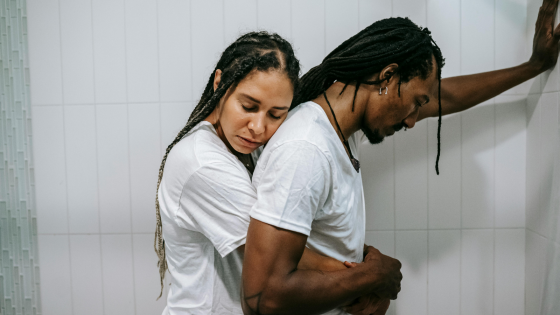
But where I see the cost most acutely is in her closest relationships. She is present but unreachable. Warm but walled. The people closest to her — friends, family, the ones who love her — get a performance of “okayness” rather than the truth of her. And she is lonely inside those relationships in a way that is almost impossible to explain to someone who has not felt it. Not the loneliness of being alone. The specific, acute loneliness of being known by someone and remaining fundamentally unreached.
In intimate relationships the cost is most acute. She may be fully present in every practical sense — showing up, giving, caring — and still be somewhere else entirely when it comes to the parts of herself she has never learned to offer. Not because she does not want to. Because she does not know yet that she is allowed to — or how to.
And then there is the cost to her relationship with herself — the one that goes most unnamed. After years of having her emotional truth questioned by external systems, she begins to question it herself. She becomes her own most rigorous cross-examiner. Before she can allow herself to feel something fully, she audits it first.
Is this reasonable? Am I overreacting? Can I prove this?
She has become — in the most private sense — the very system that dismissed her.
What changes when she finally feels safe?
I was working with a young Black woman. Confident, self-aware, building her life with intention. We were working on expressing feelings and needs.
What became clear almost immediately was that when she tried to name what she felt, she expressed it as a thought. Instead of “I feel scared, I feel uncertain or I feel alone” — she said things like “I feel like it’s not working, or I feel like nobody understands”. Those statements sound like feelings. They are not. They are observations about a situation. The feeling underneath — the real one — is something far simpler and far more exposing. And because they describe a situation rather than exposing what is actually happening inside her, they keep her protected. The real feeling — the one that would allow her to be truly seen — never enters the room.
And when I asked her “What do you need right now?” Instead of describing what she needed, she described what she did not want. Not “I need reassurance. I need connection. I need to feel safe”. But she instead said: “I don’t want to keep feeling invisible. I don’t want to feel like I have to fight for everything. I don’t want to feel like I’m too much.” Everything was framed as what needed to stop rather than what she actually needed to receive.
Because naming a need requires something far harder than describing a problem. It requires her to be vulnerable enough to admit the truth of her reality. To say out loud — to herself and to another person — this is what is actually happening inside me. This is what I am lacking. This is what I need. That level of honesty requires dropping the shield entirely. And for a woman who has spent years learning that her inner world is not safe to expose, that is not a small ask. That is everything.
As a Black woman, this is why I would only use a Black therapist …
And stepping out from behind it — even in a therapy room, even with someone whose entire purpose is to hold what she brings — felt like too much.
Because to be truly heard, you have to allow yourself to be truly seen. And being seen requires vulnerability. Not the performance of it. The real thing. Which is exactly what years of suppression had taught her was not safe.
When I asked her how it would feel to express her feelings and needs fully — without the translation, without the edit — she paused. “It would feel scary, and vulnerable.” Not because she lacked the desire. But because she did not yet have the words — and beneath that, something more foundational. She looked at me and said:
“I don’t feel deserving or worthy of expressing my feelings and needs.”
Sit with that for a moment. Unworthy of expressing what she feels. Unworthy of naming what she needs. A woman who could not give herself permission to simply say — to herself, let alone to anyone else — this is how I feel. This is what I need.

That is what years of suppression produces. Not silence. A woman who has internalised the dismissal so completely that she is now the one doing the dismissing — of her own inner life, before anyone else gets the chance.
We worked. Carefully, consistently. And in one session she said something she arrived at alone. Unprompted. Unrehearsed:
“I am worthy of my needs. I’m worth articulating my feelings and needs. My feelings and needs are powerful.”
That statement did not come from me. It came from her. Which is the only way it counts.
The distance between where she started and where she ended was not crossed by effort or further performance. It was crossed by safety. By the experience, for the first time in a long time, of being in a space where her truth was not met with dismissal. Where her feelings did not require justification. Where she did not have to prove her pain before it was permitted.
That space was a therapy room. For someone else it will be a trusted friend, a community circle, a woman who has walked the same path. The point is not where the safety comes from. The point is that when it exists — genuine, consistent, non-negotiable — something changes in her. Not for anyone else. For herself.
She learns that vulnerability is not the opposite of strength. It is the access point to everything the strength was protecting.
What you feel is real
If you are reading this and something landed — if something named a feeling you have been carrying without language for it — I want to say this directly:
What you feel is real. It does not require a committee to validate it. It does not need to be proven before it is permitted. It is not too much.
The silence you learned was not your failure. It was an adaptation to conditions that required it. And adaptations can be unlearned — not through effort, but through the slow, patient, revolutionary act of choosing spaces safe enough to practise being honest in.
Refuse to keep the promise you never consciously made. The promise to hold it together. To need nothing. To endure without complaint. To be strong in a way that costs you your peace.
You were not built to endure. You were built to live. And living — fully, softly, connected to your own inner world — starts with one thing. Believing you are worth it.
You are.
The post Black Women: You’re not cold, you’re just tired of proving your pain first appeared on Melan Magazine.