
Nigeria’s Digital Payment Revolution: Is Cash Becoming Obsolete?
Exploring the rapid growth of fintech platforms, mobile payments, and digital banking in 2026 Nigeria is undergoing one of the fastest financial transformations in Africa, and by 2026, the shift toward a cashless economy is no longer theoretical—it is visible in everyday life. From street vendors accepting transfers via mobile apps to large corporations processing […]
 Black News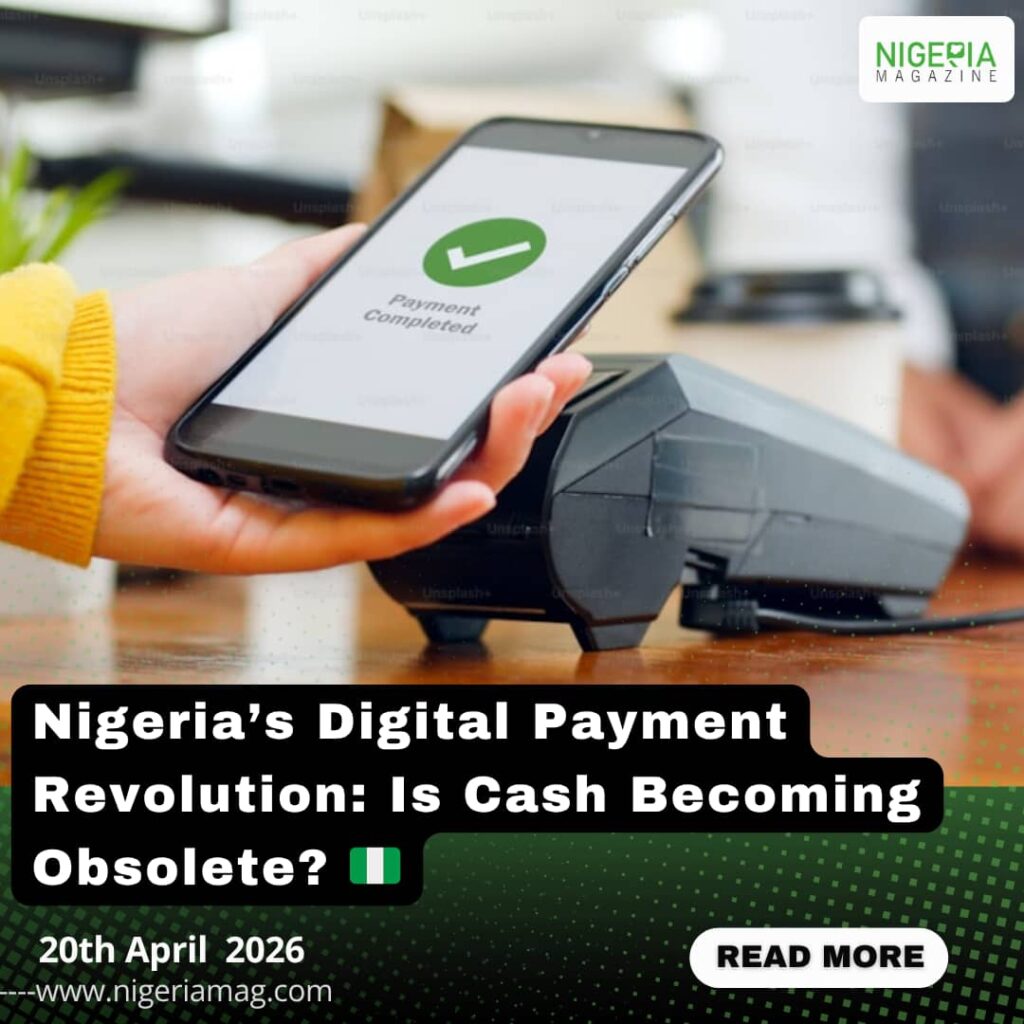


Exploring the rapid growth of fintech platforms, mobile payments, and digital banking in 2026
Nigeria is undergoing one of the fastest financial transformations in Africa, and by 2026, the shift toward a cashless economy is no longer theoretical—it is visible in everyday life. From street vendors accepting transfers via mobile apps to large corporations processing billions in digital transactions, the country’s payment ecosystem is being redefined by fintech innovation, mobile banking, and real-time payment infrastructure.
Yet the question remains: is cash becoming obsolete, or is Nigeria evolving into a hybrid financial system where cash and digital payments coexist?
The Rise of a Cashless Economy
Nigeria’s digital payments landscape has expanded dramatically over the past few years. According to industry data, electronic transactions reached hundreds of trillions of naira in value, driven by instant transfers, point-of-sale (POS) systems, and mobile wallets. In Q1 2025 alone, digital payments in Nigeria hit about N295.5 trillion in transaction value, reflecting strong year-on-year growth and increasing reliance on electronic channels for everyday commerce. (itweb.africa)
This growth is powered by a combination of factors:
Rapid smartphone penetration across urban and semi-urban areas
Expansion of mobile internet infrastructure (4G/5G rollout)
Regulatory push from the Central Bank of Nigeria (CBN) toward cashless policies
Increased trust in fintech platforms due to improved security and reliability
By 2026, digital payments are no longer limited to tech-savvy users in major cities like Lagos and Abuja—they are now embedded in informal markets, transport systems, and small-scale retail.
Fintech Platforms Driving the Revolution
Nigeria’s fintech ecosystem has become the backbone of the country’s payment transformation. Companies such as OPay, PalmPay, Moniepoint, Flutterwave, and Kuda have reshaped how money moves across the economy.
Fintech firms are winning for several reasons:
Speed and convenience: Instant transfers have replaced long bank queues and ATM dependence
Low transaction costs: Many platforms offer cheaper fees than traditional banks
Agent networks: POS agents are widely available even in rural communities
User-friendly mobile apps: Designed for first-time digital users
Some fintech platforms now serve tens of millions of users. For example, PalmPay alone reports over 16 million monthly active users in Nigeria, reflecting how deeply embedded these services have become in daily financial activity. (- Fintech eyes in africa)
In addition, fintech companies are no longer just payment processors—they are evolving into full financial ecosystems offering savings, credit, insurance, and business tools.
The Banking Sector’s Digital Shift
Traditional banks in Nigeria are also undergoing rapid digital transformation. Rather than competing directly with fintech startups, many banks are integrating digital payment systems into their core services.
Key developments include:
Expansion of mobile banking apps and USSD services
Investment in AI-driven fraud detection and cybersecurity
Collaboration with fintech firms for payment infrastructure
Growth of instant interbank transfer systems supported by national settlement platforms
Nigeria’s financial system is increasingly built around instant payment rails, enabling near real-time settlement between banks, fintech apps, and merchants.
This shift is significant because it reduces friction in financial transactions and supports economic activities ranging from small retail purchases to large-scale corporate payments.
Government Policy and the Push Toward Cash Reduction
Government policy has played a central role in accelerating digital adoption. The Central Bank of Nigeria has consistently introduced measures aimed at reducing reliance on physical cash, including withdrawal limits and reforms to encourage electronic payments.
In early 2026, stricter cash withdrawal limits were introduced as part of a broader strategy to reduce money laundering risks and promote digital financial inclusion. (Reuters)
These policies have had a direct impact:
Increased POS usage across urban and rural markets
Higher adoption of mobile wallets for everyday transactions
Growth in agent banking networks serving underserved communities
However, these policies also highlight a tension in Nigeria’s economy: while digital adoption is rising, cash remains essential for many informal-sector workers.
Is Cash Becoming Obsolete?
Despite rapid digitisation, cash is not disappearing. Instead, Nigeria is developing a dual economy where cash and digital payments coexist.
Evidence shows that:
Millions of Nigerians still rely on cash for daily transactions, especially in rural areas
Infrastructure challenges such as network outages can temporarily push users back to cash
Trust issues remain, particularly for high-value digital transactions
Inflation and informal trade still reinforce the need for physical currency
Even in 2026, cash circulation remains significant, with billions of naira still moving outside the banking system. (Reddit)
This means cash is not obsolete—it is becoming less dominant, particularly in urban and formalized sectors.
The Real Transformation: Financial Inclusion
The most important outcome of Nigeria’s digital payment revolution is not the elimination of cash, but the expansion of financial inclusion.
Millions of previously unbanked Nigerians now have access to:
Digital wallets
Micro-loans and credit services
Instant payment systems
Savings and investment tools
POS agents in markets, roadside kiosks, and rural areas have effectively become “mini-banks,” bridging the gap between formal banking systems and everyday economic activity.
Nigeria’s digital payment revolution is one of the most significant financial shifts in the country’s modern history. Fintech platforms, mobile banking, and regulatory reforms have created a fast-growing ecosystem where digital transactions dominate in urban commerce and continue expanding into rural communities.
However, cash is not yet obsolete. Instead, Nigeria is transitioning into a hybrid financial system, where digital payments lead growth while cash remains a vital fallback.
In 2026, the real story is not the death of cash—but the rise of choice. Nigerians are increasingly deciding how to pay based on convenience, trust, and access. And in that flexibility lies the true power of Nigeria’s evolving digital economy.












.png)


