Parris Goebel- cover 2
Parris Goebel – The Architect of a New Movement words by Teneshia Carr Parris Goebel has never choreographed movement; she has architected a vocabulary. One built from the tension between grit and grace, and a fierce softness that collapses binaries. Her movement comes from a lifelong understanding that dance is not ornament but language. Over […] The post Parris Goebel- cover 2 appeared first on Blanc Magazine.
 Black News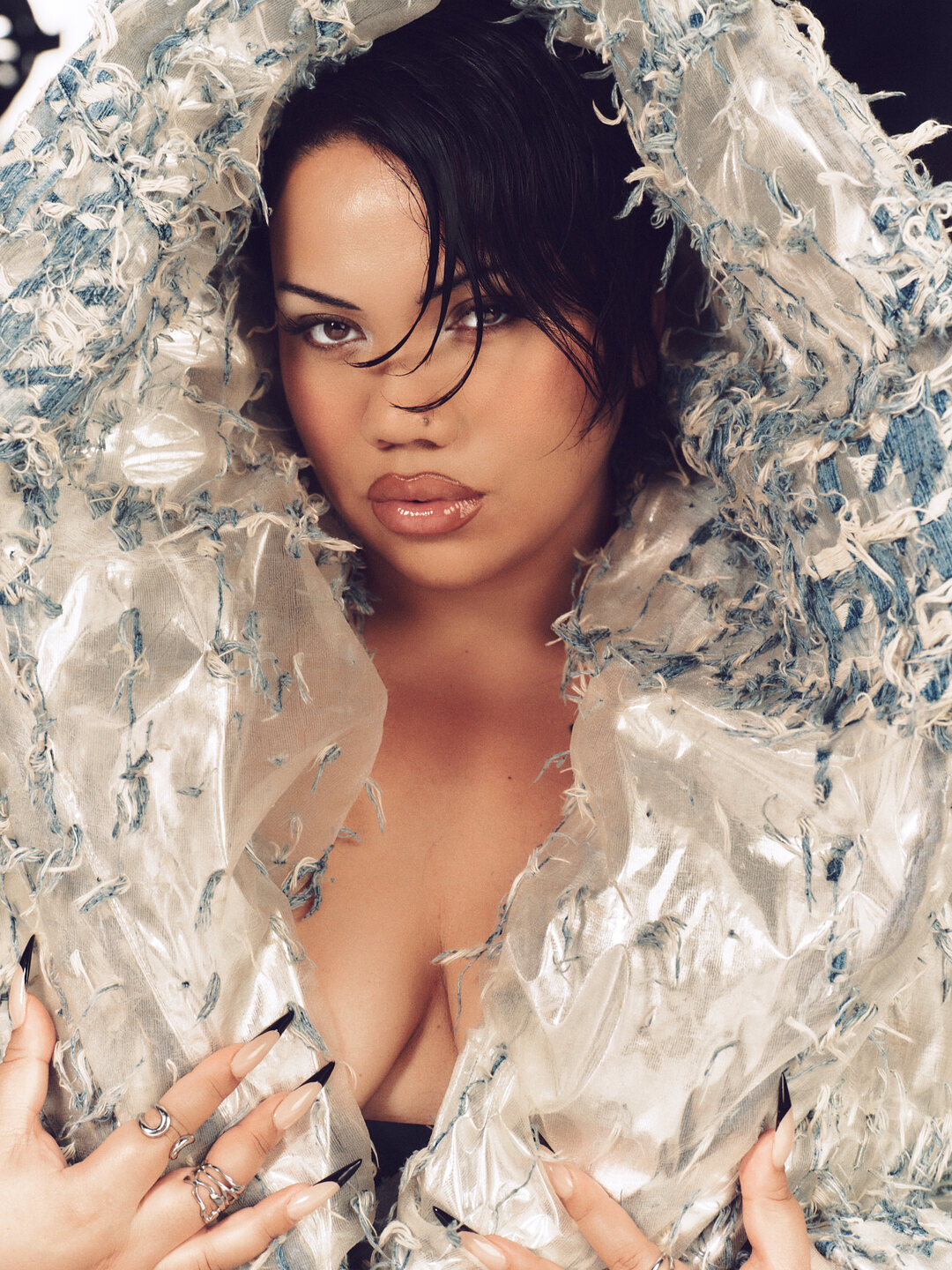


Parris Goebel – The Architect of a New Movement
words by Teneshia Carr
Parris Goebel has never choreographed movement; she has architected a vocabulary. One built from the tension between grit and grace, and a fierce softness that collapses binaries. Her movement comes from a lifelong understanding that dance is not ornament but language. Over the past decade, the world has watched her transform from a prodigious talent in Auckland into one of the most influential creative forces of her generation. Yet even as stages expand, budgets swell, and cultural stakes rise, her work continues to feel deeply personal and rooted in something interior, ancestral, and defiantly feminine.
When asked what internal space she creates from, Goebel often returns to instinct. But instinct, for her, is not impulsive; it is cultivated. The emotional worlds of her choreography are shaped by memory, discipline, and an almost spiritual relationship to the body. ”It depends on how I’m feeling that day. I tap into the mood I’m in and it’s the magic of being a creative, you can pull from a place, whether it’s joy or sadness. Either really spiritual or pure fun. One or the other.” Her pieces, whether performed in a stadium or captured in a stripped-down rehearsal studio, carry the unmistakable pulse of someone who trusts her inner terrain more than any external expectation.
That trust has allowed her to build a global language of movement, one that young dancers around the world absorb through Instagram loops, tour footage, and the gravitational pull of her viral megaworks. “I used to be a lot more protective,” she says. “I used to be really hurt when I saw people copy me or the vocabulary that I’ve tried to build with my style. As I’ve matured, I’ve realized it’s not mine to keep. I’m just a vessel. It’s meant to move through me. I don’t look at my artistry as something to gate keep. My job is to channel and release it. “ She learns from the echoes her work generates across the culture, but she refuses to chase them. Her power lies in staying attuned to the version of herself she has yet to meet.
Goebel’s devotion to women—especially women of color—runs deeper than aesthetics. It is autobiographical. Growing up in New Zealand, she speaks proudly of her Polynesian family and of her childhood, filled with memories of dancing in the living room for them. She understood early the fractures between how the world saw women like her and how she saw them. Strength, sensuality, audacity, tenderness. These were not contradictions; they were birthrights. Her choreography reframes the feminine not as vulnerability but as voltage. The women who move through her universe do so with their whole being: hips, hair, breath, past, possibility.
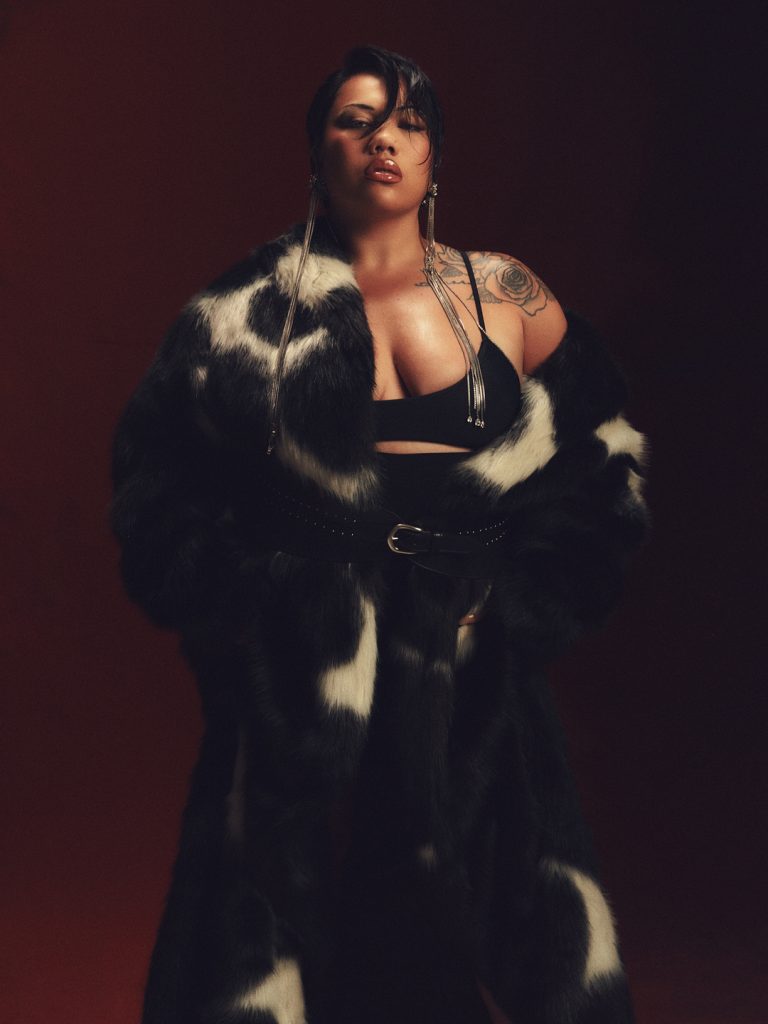
The expansiveness of her career mirrors this philosophy. She is not only a choreographer but a director, recording artist, fashion collaborator, entrepreneur, and cultural builder. Reinvention is not an escape from one discipline to another; it is the natural evolution of an artist whose imagination is too large for a single lane. Still, Goebel acknowledges that parts of her creative identity remain unexplored. “ I can make an impact on the world and make history in my own way.” The future, for her, is not a pivot but a widening.
There is a spiritual electricity that runs through her work—visible in the unison of bodies moving as if pulled by the same unseen force, in the way her dancers seem to channel emotion rather than perform it. Intuition plays a central role in her process, guiding everything from casting to musicality to the emotional temperature of a piece. Technical precision matters—every angle is intentional, every transition engineered—but the magic emerges when precision dissolves into feeling.
Balancing discipline with emotion is one of Goebel’s greatest gifts. Trained rigorously yet guided by instinct, she understands that choreography must breathe. Her dancers are given structure, but also permission to access rage, sensuality, tenderness, and joy. “It’s about discipline. I have a way of teaching that allows people to understand the emotion I’m trying to portray.” That’s what makes her work so instantly recognizable: a fusion of the sharp and the fluid, the controlled and the undone.
Collaboration has shaped much of her trajectory, from global pop icons to emerging dancers who find community and courage under her leadership. What makes a collaborator truly great, she says, is about synergy. “The best we can do is be open. Remove a bit of that ego so you can connect with the other people in the room.” In her world, ego has no place; vulnerability, however, is essential. Legacy is a complicated word for any artist whose journey is still unfolding, but Goebel’s impact is already undeniable. She has expanded the visual language of pop culture; reshaped ideas of femininity and power; and opened pathways for dancers who once felt unseen. What she hopes future generations understand about her work is not merely aesthetic, but philosophical. Movement, for her, is a vessel for liberation. A way of remembering who we are beneath the noise—a way of returning home to the body. “ I hate the word legacy, it’s a lot of pressure in my brain. I don’t think about it. The only way I got to where I am today is just by doing it. I do this because I need to. It’s not up to me how people receive it. I recieved the gift, and I put it out in the universe. It’s the most beautiful thing about art. I don’t hope for anything.”
The post Parris Goebel- cover 2 appeared first on Blanc Magazine.