Pope condemns ‘resource colonisation’ as US competes for Africa’s critical minerals
Pope Leo XIV arrived in Equatorial Guinea on Tuesday, delivering a pointed critique of the global scramble for Africa’s natural resources and warning against what he described as the “colonisation” of the continent’s minerals.
 Black News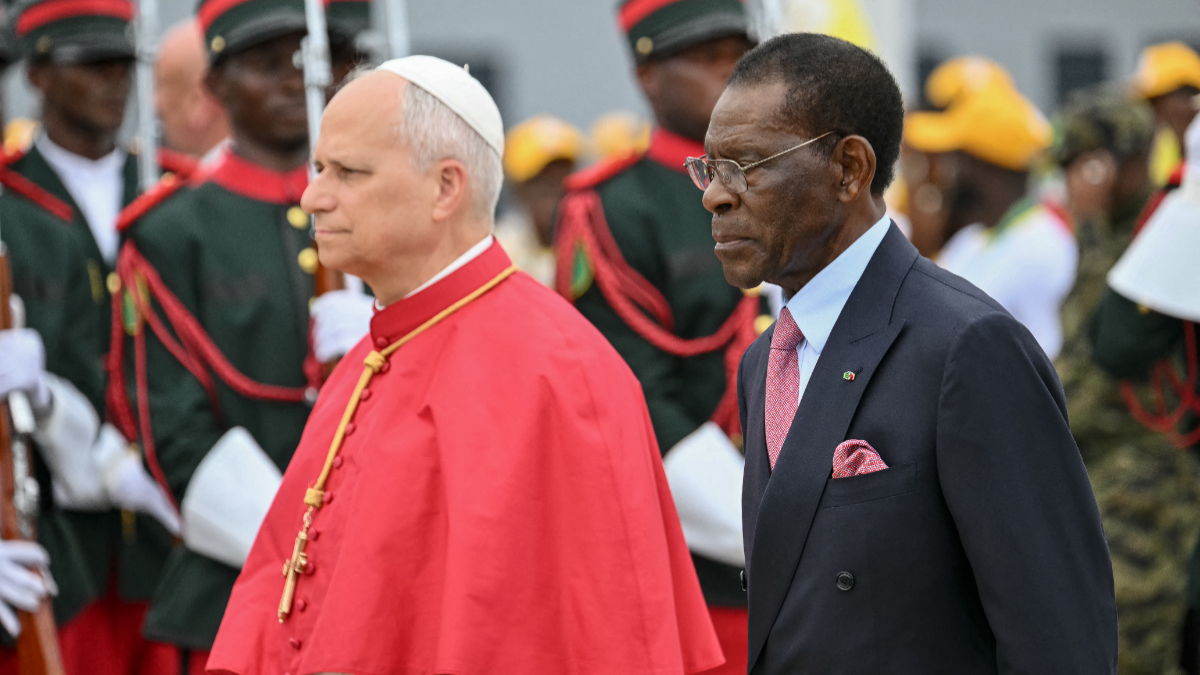


![Pope Leo XIV (L) and Equatorial Guinea's President Teodoro Obiang Nguema Mbasogo (R) inspect a guard of honour upon his arrival at the Malabo International Airport in Malabo on the ninth day of an 11-day apostolic journey to Africa, on April 21, 2026. [Photo by Alberto PIZZOLI / AFP via Getty Images]](https://ocdn.eu/pulscms/MDA_/fc94ab63a0cda8cbf32d86fa6a0780dc.jpg)
Pope Leo XIV arrived in Equatorial Guinea on Tuesday, delivering a pointed critique of the global scramble for Africa’s natural resources and warning against what he described as the “colonisation” of the continent’s minerals.
- Pope Leo XIV used his visit to Equatorial Guinea to condemn the “colonisation” of Africa’s mineral wealth.
- He linked global inequality and armed conflict to the exploitation of natural resources by powerful nations.
- The visit highlighted tensions between vast oil wealth and widespread poverty under President Teodoro Obiang Nguema Mbasogo.
- It comes amid intensifying geopolitical competition, including moves by the United States and China to secure Africa’s critical minerals.
The visit marked the final leg of his Africa tour and the first papal trip to the country since Pope John Paul II visited in 1982.
Crowds lined the streets of the capital, Malabo, as the pope travelled from the airport to the presidential palace, underscoring the significance of the visit in one of Africa’s most Catholic-majority nations. About 75 per cent of the population identify as Catholic, despite the country’s officially secular status.
At the centre of the visit was a meeting with President Teodoro Obiang Nguema Mbasogo, Africa’s longest-serving leader, who has ruled since 1979. His government has long faced allegations of corruption and repression, particularly following the 1990s oil boom that transformed the country’s economy.
According to the African Development Bank, oil accounts for nearly half of Equatorial Guinea’s gross domestic product and more than 90 per cent of its exports. However, this resource wealth has not translated into broad-based prosperity.
More than half of the country’s roughly two million citizens live in poverty, while investigations and legal cases in Europe have alleged that oil revenues disproportionately benefit the ruling elite.
Pope denounces global scramble for Africa’s mineral wealth
![Pope Leo XIV (L) meets with Equatorial Guinea's President Teodoro Obiang Nguema Mbasogo (R) at the Presidential Palace in Malabo on the ninth day of an 11-day apostolic journey to Africa, on April 21, 2026. [Photo by LUCA ZENNARO / POOL / AFP via Getty Images]](https://ocdn.eu/pulscms/MDA_/1d51928f1bd230082bada8572034af94.jpg)
Addressing government officials, diplomats and civil servants, Leo linked global inequality and conflict to the exploitation of natural resources. Quoting his predecessor, Pope Francis, whose anniversary of death coincided with the visit, he criticised an economic system driven by profit at the expense of human dignity.
“Such an economy kills,” Leo said, adding that the expansion of armed conflicts is often fuelled by the race to control oil and mineral deposits, frequently in disregard of international law and local self-determination.
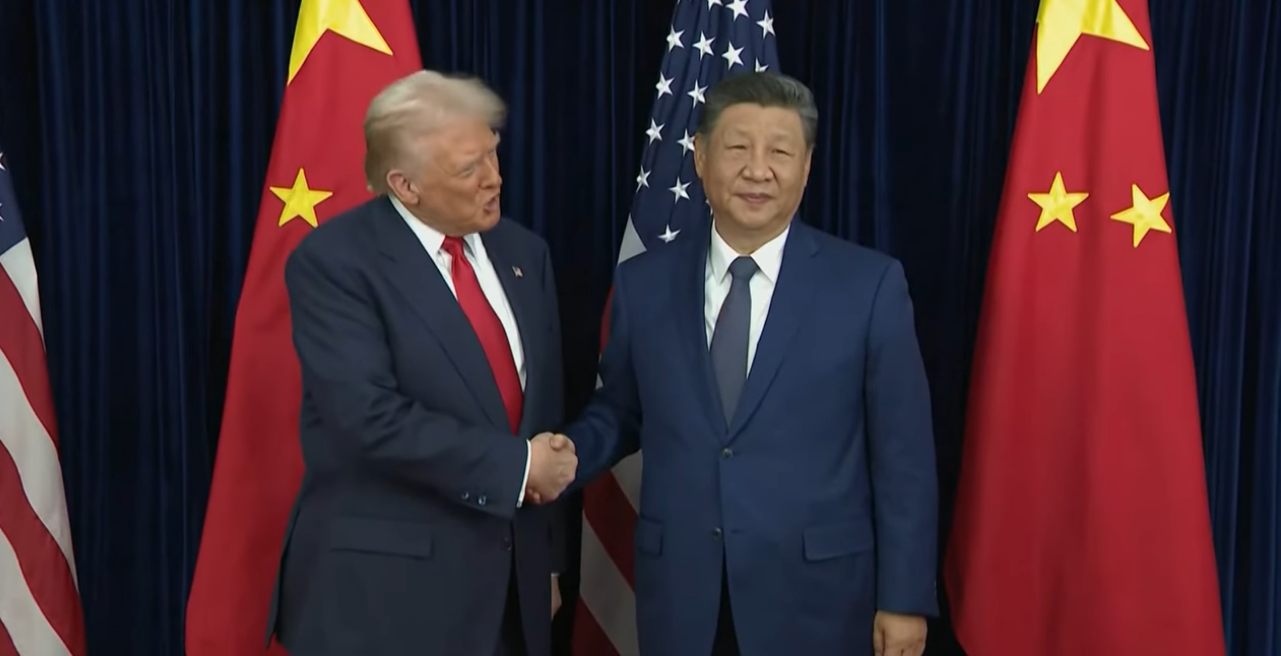
His remarks come amid heightened geopolitical competition over Africa’s critical minerals. The administration of Donald Trump has been pursuing closer ties with resource-rich African countries, aiming to secure access to minerals essential to the technology and defence industries while countering China's long dominance of the sector.
In recent years, Washington has backed infrastructure and mining initiatives, including the Lobito Corridor rail project linking mineral-rich regions in Zambia and the Democratic Republic of the Congo to the Angolan coast. It has also supported agreements granting US firms access to key mineral resources, as well as efforts to develop rare-earth extraction projects in South Africa.
While Leo did not directly reference specific governments, his criticism of “colonisation” was widely interpreted as a rebuke of both historical and contemporary forms of resource exploitation on the continent.
Pope sues for peace and stability
![Pope Leo XIV (R) receives flowers from children as he is welcomed by Equatorial Guinea's President Teodoro Obiang Nguema Mbasogo (C) upon his arrival at the Malabo International Airport in Malabo on the ninth day of an 11-day apostolic journey to Africa, on April 21, 2026. [Photo by Alberto PIZZOLI / AFP via Getty Images]](https://ocdn.eu/pulscms/MDA_/15ac57b66ad266611d627c22d20803ab.jpg)
The pope also alluded to domestic governance issues through a broader moral framework. Referencing Saint Augustine’s concept of the “City of God”, he contrasted societies built on solidarity and justice with those driven by power and material gain.
His remarks appeared to indirectly touch on concerns about the construction of a new administrative capital, Ciudad de la Paz, a project critics say risks deepening inequality.
“The earthly city is centred upon the proud love of self, on the lust for power and worldly glory that leads to destruction,” Leo said, urging leaders to prioritise lasting values over “the pursuit of unjust wealth.”
Equatorial Guinea’s political environment remains tightly controlled, with reports from groups such as Human Rights Watch documenting arrests, harassment and intimidation of opposition figures and journalists. Critics also point to the close relationship between the state and religious institutions, suggesting that financial and political pressures have limited the church’s ability to act independently.
Tutu Alicante, a US-based activist, said the church operates within a constrained space shaped by both fear and incentives. However, Vatican officials maintain that engagement, rather than confrontation, is the church’s guiding principle in such contexts.
The Rev. Fortunatus Nwachukwu, a senior Vatican official, said the church must neither directly oppose governments nor accept injustice as normal. Instead, he said, it should continue advocating for human dignity and the common good.
Migration policy also formed part of the broader context of the visit. Equatorial Guinea is among several African countries that have entered controversial agreements with Washington to accept migrants deported from the US, including individuals with no ties to the country. Investigations have found that some deportees remain in detention in Malabo under restricted conditions.
Leo has previously criticised aspects of US deportation policies, describing them as lacking respect for human dignity. He is expected to visit a prison in the port city of Bata, where issues related to detention conditions and rights are likely to come into focus.
The visit concludes a tour that has seen the pope address themes of inequality, governance and global economic justice across Africa, placing the continent at the centre of ongoing debates about resources, power and development.