Reclaiming The Spirit Of San Francisco And Updating The UN Charter
Dr. Justin Haner Photos: Wikimedia Commons Thunderous applause echoed through the San Francisco Opera House on June 26th, 1945, as diplomats signed the United Nations Charter. It was hailed as a victory over war itself. Eighty-one years later, the UN has many accomplishments to celebrate. But the Charter’s opening pledge to save “succeeding generations from the scourge of war” remains painfully unfulfilled. In 2025, the world experienced the highest number of armed conflicts since World War II, and, in a time when many struggle to make ends meet, governments collectively spent a record $2.9 trillion on their militaries. The UN’s Security Council was charged with the maintenance of international peace and security eight decades ago, yet has little to show for it because of a promise made but never kept. The “San Francisco promise” was the compromise that held the Charter negotiations together. Of the 50 countries present, five of them—the United States, Russia, China, France, and the United Kingdom—secured permanent seats, voting rights, and special veto power for themselves on the Security Council, the UN’s highest governing body. Smaller and middle powers objected fiercely to this proposal by the “P5,” which directly contradicted the Charter’s principle of sovereign equality and relegated them to the indignity of second-class status they continue to endure to this day. Even the US opposed the absolute veto, conceding it only as the Soviet Union’s price for joining the UN. Many delegates feared, rightly, that allowing one country to block the world’s will would hamstring the organization. We still pay that price today, as two P5 members continue to wage illegal wars and wield their veto as a “get out of jail, free” card to shield themselves and their allies from consequences others would face. So a bargain was struck. Delegates would sign the Charter, accepting its faults only temporarily and on the condition that within 10 years a review conference would be held to revisit the debate. As US delegate John Foster Dulles acknowledged it had “only been possible to secure acceptance of the Charter at San Francisco by a provision assuring that there would be an opportunity to review it in the light of experience.” Not content to take them at their word, the smaller powers wrote this compromise directly into the Charter as Article 109. It allows a review conference to be convened by a two-thirds vote of the General Assembly and any nine Security Council Members. Critically, the P5 cannot veto the review, nor use the veto during its proceedings. All 193 Member States would participate on strictly equal footing, with each having the same “one vote in the conference,” regardless of size, wealth, or military might. Yet instead of 10 years, 81 have passed. The political will to convene the conference never materialized. What was accepted as a temporary compromise has hardened into a permanent hierarchy. Promises made became promises broken. Until now. Bolstered by reform commitments at the 2024 Summit of the Future and the launch of the Article 109 Coalition, a growing cohort is reclaiming the spirit of San Francisco. In just the last six weeks, Romania called for invoking Article 109 at the General Assembly, India discussed the mandate for Charter review at the Security Council, and Andorra asked Security Council candidates if it was time to “revise the Charter and try to see what can we do differently?” None of which ruled it out and Germany remarked, “There’s an initiative on it [Article 109] that is interesting, we should think about that.” Kyrgyzstan’s President Zhaparov has told his diplomats to “begin considering possible amendments and proposals now.” The momentum is building. Last September, Kazakh President Tokayev stated that now is the time to have a “serious conversation about UN Charter review.” Kazakhstan and The Gambia officially endorsed Article 109 at that meeting, during which 148 countries, representing 78% of the UN’s Membership, called for the UN to be reformed. Brazil, India, and South Africa have also jointly urged “the convening of a review conference, in accordance with its Article 109.” Detractors insist a review will never happen because it isn’t in the P5’s interest. But that misreads both the Charter and the mood of the world. As Cameroonian Ambassador Ewumbue-Monono noted last year “Article 109 provides a vital pathway… one that is not subject to veto.” While the P5 would still have to ratify an amended Charter, as Türkiye’s President Erdoğan often says, “the world is bigger than five,” and the global majority grows tired of waiting for permission to live in peace and be treated as equals. 81 years is enough. Ours must be the generation that comes together through the Article 109 process, updates the UN for the 21st century, and reignites the spirit of San Francisco by fulfilling its promise. Dr. Justin Haner is a political scientist
 Black News
Dr. Justin Haner
Photos: Wikimedia Commons
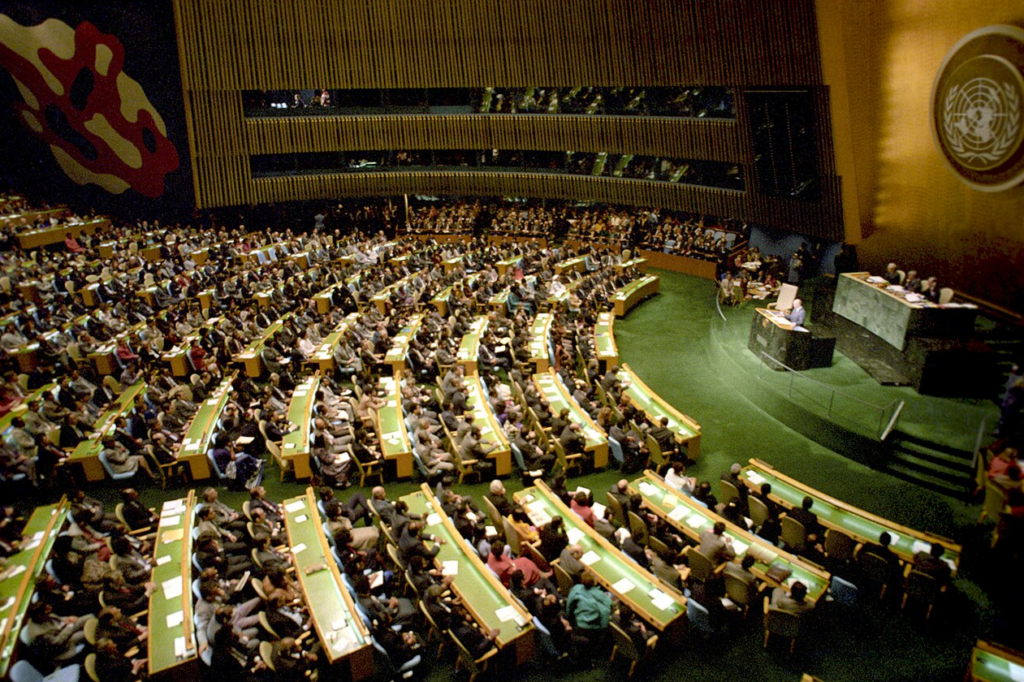
Thunderous applause echoed through the San Francisco Opera House on June 26th, 1945, as diplomats signed the United Nations Charter. It was hailed as a victory over war itself. Eighty-one years later, the UN has many accomplishments to celebrate. But the Charter’s opening pledge to save “succeeding generations from the scourge of war” remains painfully unfulfilled.

In 2025, the world experienced the highest number of armed conflicts since World War II, and, in a time when many struggle to make ends meet, governments collectively spent a record $2.9 trillion on their militaries. The UN’s Security Council was charged with the maintenance of international peace and security eight decades ago, yet has little to show for it because of a promise made but never kept.
The “San Francisco promise” was the compromise that held the Charter negotiations together. Of the 50 countries present, five of them—the United States, Russia, China, France, and the United Kingdom—secured permanent seats, voting rights, and special veto power for themselves on the Security Council, the UN’s highest governing body. Smaller and middle powers objected fiercely to this proposal by the “P5,” which directly contradicted the Charter’s principle of sovereign equality and relegated them to the indignity of second-class status they continue to endure to this day.
Even the US opposed the absolute veto, conceding it only as the Soviet Union’s price for joining the UN. Many delegates feared, rightly, that allowing one country to block the world’s will would hamstring the organization. We still pay that price today, as two P5 members continue to wage illegal wars and wield their veto as a “get out of jail, free” card to shield themselves and their allies from consequences others would face.
So a bargain was struck. Delegates would sign the Charter, accepting its faults only temporarily and on the condition that within 10 years a review conference would be held to revisit the debate. As US delegate John Foster Dulles acknowledged it had “only been possible to secure acceptance of the Charter at San Francisco by a provision assuring that there would be an opportunity to review it in the light of experience.”
Not content to take them at their word, the smaller powers wrote this compromise directly into the Charter as Article 109. It allows a review conference to be convened by a two-thirds vote of the General Assembly and any nine Security Council Members. Critically, the P5 cannot veto the review, nor use the veto during its proceedings. All 193 Member States would participate on strictly equal footing, with each having the same “one vote in the conference,” regardless of size, wealth, or military might.
Yet instead of 10 years, 81 have passed. The political will to convene the conference never materialized. What was accepted as a temporary compromise has hardened into a permanent hierarchy. Promises made became promises broken.
Until now.
Bolstered by reform commitments at the 2024 Summit of the Future and the launch of the Article 109 Coalition, a growing cohort is reclaiming the spirit of San Francisco. In just the last six weeks, Romania called for invoking Article 109 at the General Assembly, India discussed the mandate for Charter review at the Security Council, and Andorra asked Security Council candidates if it was time to “revise the Charter and try to see what can we do differently?” None of which ruled it out and Germany remarked, “There’s an initiative on it [Article 109] that is interesting, we should think about that.” Kyrgyzstan’s President Zhaparov has told his diplomats to “begin considering possible amendments and proposals now.”
The momentum is building. Last September, Kazakh President Tokayev stated that now is the time to have a “serious conversation about UN Charter review.” Kazakhstan and The Gambia officially endorsed Article 109 at that meeting, during which 148 countries, representing 78% of the UN’s Membership, called for the UN to be reformed. Brazil, India, and South Africa have also jointly urged “the convening of a review conference, in accordance with its Article 109.”
Detractors insist a review will never happen because it isn’t in the P5’s interest. But that misreads both the Charter and the mood of the world. As Cameroonian Ambassador Ewumbue-Monono noted last year “Article 109 provides a vital pathway… one that is not subject to veto.” While the P5 would still have to ratify an amended Charter, as Türkiye’s President Erdoğan often says, “the world is bigger than five,” and the global majority grows tired of waiting for permission to live in peace and be treated as equals.
81 years is enough. Ours must be the generation that comes together through the Article 109 process, updates the UN for the 21st century, and reignites the spirit of San Francisco by fulfilling its promise.
Dr. Justin Haner is a political scientist and Research Fellow at Brown University’s Watson School for International and Public Affairs. This article is written in a personal capacity and the views expressed are solely those of the author and do not necessarily reflect the views of the Article 109 Coalition or any affiliated institutions.