Regional drive challenges dangerous pesticide dependency
A MAJOR regional initiative aimed at transforming agricultural practices across East Africa is set to begin through a three-year project focused on reducing dependence on Highly Hazardous Pesticides (HHPs) and promoting safer, more sustainable agroecological farming systems. The project will officially be launched in Dar es Salaam during an inception workshop bringing together key stakeholders, … The post Regional drive challenges dangerous pesticide dependency first appeared on Daily News. The post Regional drive challenges dangerous pesticide dependency appeared first on Daily News.
 Black News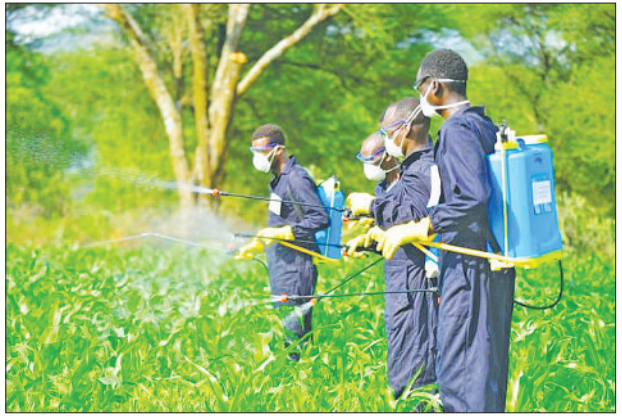
A MAJOR regional initiative aimed at transforming agricultural practices across East Africa is set to begin through a three-year project focused on reducing dependence on Highly Hazardous Pesticides (HHPs) and promoting safer, more sustainable agroecological farming systems.
The project will officially be launched in Dar es Salaam during an inception workshop bringing together key stakeholders, development partners, and participating organisations from across the region. The initiative unites nongovernmental organisations from Tanzania, Kenya, and Ethiopia in a coordinated effort to support smallholder farmers, particularly those involved in cotton and vegetable production.
These farmers are among the most exposed to the harmful impacts of toxic pesticides due to the intense pest pressure affecting their crops and the limited access to safer pest control alternatives.
The project emerges at a time of growing concern over the widespread use of hazardous agricultural chemicals in East Africa. Across many farming communities, chemical pesticides have become heavily relied upon as farmers struggle to protect crops and maintain productivity.
However, limited awareness of environmentally friendly alternatives and inadequate access to sustainable pest management solutions have contributed to the continued use of dangerous substances that threaten both human health and the environment. Through this initiative, participating organisations aim to bridge these gaps by promoting practical, affordable, and sustainable agricultural approaches.
The project seeks to equip farmers with knowledge, skills, and access to safer alternatives that can reduce dependence on harmful chemicals while maintaining agricultural productivity and improving resilience to climate-related challenges. Implementation of the project will be coordinated through a strong regional partnership.
In Tanzania, AGENDA will oversee overall implementation and stakeholder engagement activities. In Kenya, the Centre for Environmental Justice and Development (CEJAD) will lead national coordination and field activities, while PAN Ethiopia will manage implementation efforts within Ethiopia.
The project will also benefit from the technical expertise of the Pesticide Action Network (PAN) International and PAN UK, both of which have extensive experience supporting communities and governments in reducing reliance on hazardous chemicals and promoting safer agricultural systems.
Their involvement is expected to strengthen the project’s technical foundation and ensure effective knowledge sharing across participating countries. Additionally, Rainforest Alliance will contribute by helping farmers strengthen their capacity to access organic certification systems and improve opportunities for sustainably produced crops in premium markets.
This component is expected to create economic incentives for farmers transitioning to agroecological farming methods by improving access to better-paying and environmentally conscious markets. Beyond East Africa, the initiative forms part of a broader global learning and action framework focused on reducing harmful pesticide use and advancing agroecological transformation.
Similar projects are currently being implemented in several West African countries, including Benin, Burkina Faso, Guinea, and Senegal. The East and West African initiatives are expected to share experiences, lessons learned, and practical strategies that can strengthen the effectiveness of sustainable agriculture interventions across the continent.
The project specifically targets smallholder farmers in selected districts that will be identified later. Cotton and vegetable farming communities have been prioritised because these sectors often experience high pest infestations that drive heavy pesticide use. Despite these challenges, there is growing evidence that some farmers are already beginning to adopt agroecological practices, reflecting a gradual shift toward more sustainable and environmentally responsible farming systems.
ALSO READ: Key road projects gain funding boost
Project activities will focus on addressing the root causes behind continued dependence on Highly Hazardous Pesticides. These include limited awareness of safer alternatives, weak access to sustainable agricultural inputs, and insufficient technical training on nonchemical pest management approaches.
To respond to these challenges, the initiative will invest in farmer training, demonstration farms, capacitybuilding programmes, and the strengthening of supply chains for safer agricultural products. By promoting safer pest management systems and agroecological practices, the project is expected to significantly reduce reliance on harmful chemicals while improving farm productivity, environmental sustainability, and long-term agricultural resilience. Organisers believe that empowering farmers with practical alternatives will create healthier farming communities and more secure food systems.
The urgency of the intervention is reinforced by alarming global health statistics related to pesticide exposure. According to the World Health Organisation, approximately 77,000 people died globally in 2016 due to unintentional poisoning, with many of those deaths linked to pesticide exposure. During the same year, more than 155,000 deaths associated with self-harm involved pesticide use. These figures demonstrate the serious public health risks posed by unsafe pesticide practices and underline the need for coordinated international and regional responses.
The environmental consequences of Highly Hazardous Pesticides are also severe. Toxic agricultural chemicals contribute to soil degradation, water contamination, biodiversity loss, and damage to food systems. They can also worsen climate-related challenges by weakening ecosystems and reducing the resilience of agricultural landscapes.
Smallholder farmers and rural communities are particularly vulnerable because they often lack protective equipment, training, and access to safer farming technologies. In response, the project aligns itself with several major international environmental and chemical safety frameworks.
These include the Global Framework on Chemicals (GFC), the Convention on Biological Diversity (CBD), and resolutions adopted under the United Nations Environment Assembly (UNEA).
These international commitments emphasise the importance of safer chemical management, sustainable production systems, and stronger institutional coordination to protect human health and the environment. At the centre of the initiative is the goal of empowering at least 3,000 smallholder farmers across East Africa to transition away from Highly Hazardous Pesticides and adopt agroecological farming methods.
Organisers believe this transition will not only reduce health risks but also restore ecological balance, improve soil fertility, and strengthen farmers’ resilience to climate change. The project is also expected to contribute to safer food systems by encouraging the production of crops with fewer harmful chemical residues. At the same time, it aims to improve livelihoods by helping farmers access premium markets that increasingly favour sustainably and responsibly produced agricultural products.
Funding for the initiative is being provided through the Global Framework on Chemicals Fund, administered under the United Nations Environment Programme (UNEP). The fund supports developing countries in implementing projects that reduce the harmful impacts of chemicals and waste on human health, vulnerable populations, workers and the environment.
As East Africa continues to confront the interconnected pressures of climate change, environmental degradation, and food system vulnerability, the initiative is being viewed as a timely and strategic intervention. Supporters believe the project represents a growing recognition that agricultural productivity must be pursued alongside environmental protection and public health considerations.
By combining policy support, technical expertise, regional collaboration, farmer training, and sustainable market opportunities, the initiative seeks to contribute to a broader transformation of agricultural systems in East Africa. The long-term vision is to create farming systems that are more sustainable, resilient, environmentally responsible, and capable of supporting both current and future generations.
Ultimately, the project places smallholder farmers at the centre of agricultural transformation. Through knowledge sharing, access to safer alternatives, and strengthened regional cooperation, the initiative aims to build a healthier and more sustainable agricultural future for East Africa while reducing the dangerous impacts associated with Highly Hazardous Pesticides.
The post Regional drive challenges dangerous pesticide dependency first appeared on Daily News.
The post Regional drive challenges dangerous pesticide dependency appeared first on Daily News.