Rostam calls for unified commercial system to broaden the Kenya-Tanzania trade ties
DAR ES SALAAM: TANZANIA’S mega investor and the Chairman of Taifa Group, Rostam Azizi has called for the establishment of a unified commercial system to accelerate investment, mobilise capital, and unlock existing trade opportunities between Kenya and Tanzania. Speaking at a Tanzania–Kenya Business Forum held on May 4 in Dar es Salaam—on the sidelines of … The post Rostam calls for unified commercial system to broaden the Kenya-Tanzania trade ties first appeared on Daily News. The post Rostam calls for unified commercial system to broaden the Kenya-Tanzania trade ties appeared first on Daily News.
 Black News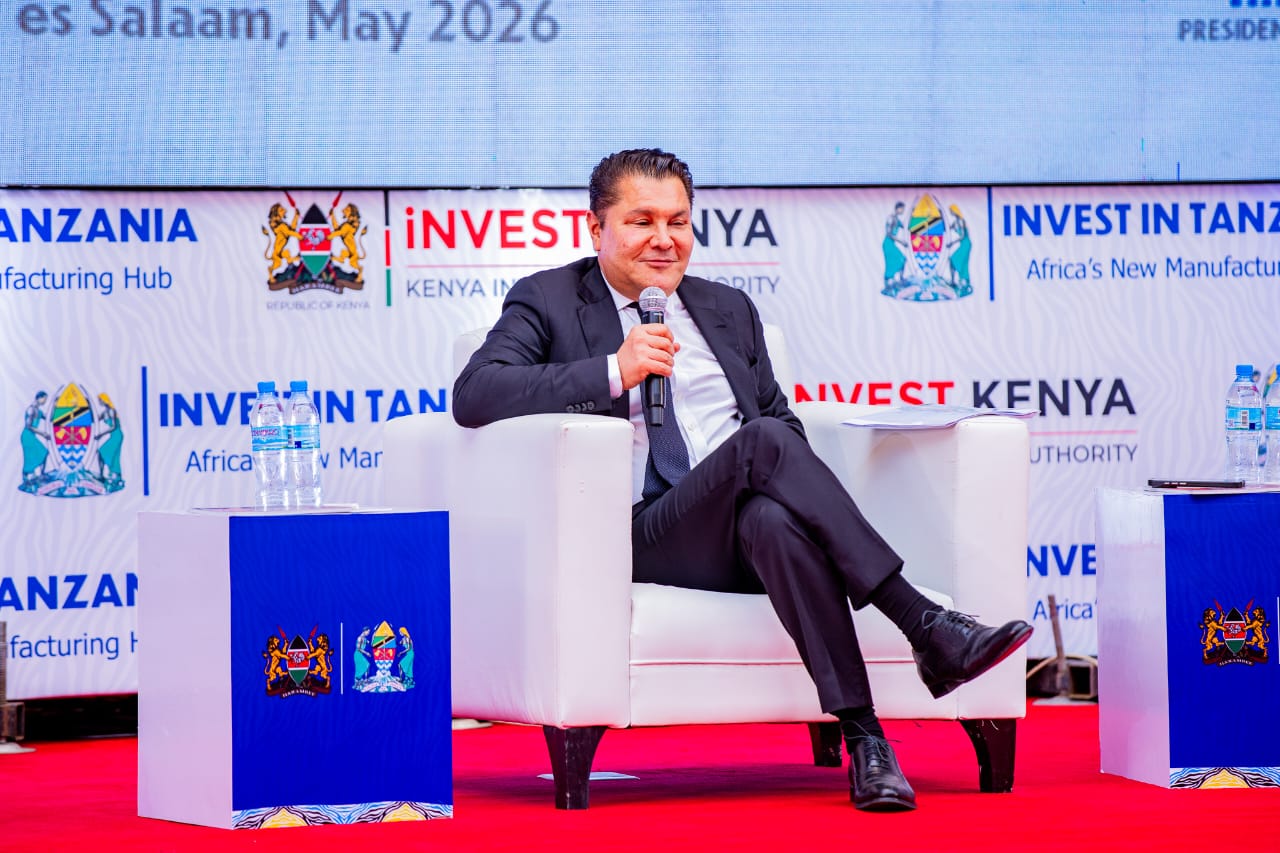
DAR ES SALAAM: TANZANIA’S mega investor and the Chairman of Taifa Group, Rostam Azizi has called for the establishment of a unified commercial system to accelerate investment, mobilise capital, and unlock existing trade opportunities between Kenya and Tanzania.
Speaking at a Tanzania–Kenya Business Forum held on May 4 in Dar es Salaam—on the sidelines of the state visit by William Ruto—Azizi urged the business communities of both countries to fast-track economic integration to enhance trade and attract large- and medium-scale investments.
“We should now emphasise public-private partnerships (PPP) to build a unified commercial system that will pave the way for attracting large-scale investments between Kenya and Tanzania,” he said.
He noted that the private sector played a critical role in mobilising capital, opening new market opportunities, and strengthening manufacturing capacity in both countries. He stressed the importance of deeper and more deliberate economic integration.
“Let us harmonise the private sectors of our two countries through joint projects, and unlock potential opportunities for mutual benefit and expand access to global markets,” he added.
He went on to said that by 2050, Tanzania will have a population of 140 million and Kenya 100 million.
“This is not just data. This is a combined market of 240 million people, largely young, a dynamic market with strong consumption power, productivity, and long-term growth potential. By 2050, Tanzania is projected to build a one trillion-dollar economy, while Kenya is projected to reach approximately eight hundred billion dollars,”
“But these projections are not automatic. They are dependent on how we choose to work,” he noted .
“Finally, I invite our esteemed Presidents to the opening of a large gas terminal in Mombasa in the coming months, That Taifa Gas terminal will be the largest on the African continent from Cape to Cairo.
We also have other terminals in Dar es Salaam and Zanzibar,” he stressed.
He underscored that that project is exemplary, consisting of three terminals — Mombasa, Dar es Salaam, and Zanzibar — which serve countries , including Somalia, South Sudan, Uganda, Rwanda, Burundi, Zambia, Congo, Malawi, and Mozambique.”
The Tanzanian tycoon made the remarks during a panel discussion on the role of the private sector in unlocking economic potential and accelerating performance at the forum. The event was attended by Tanzanian President Samia Suluhu Hassan and her Kenyan counterpart William Ruto.
ALSO READ: Fresh chapter for Tanzania, Kenya
During the two-day state visit, President Ruto expressed optimism about deepening economic ties between the two nations through trade and investment agreements worth about $500 million. The initiative signals a renewed push for strengthening one of East Africa’s most dynamic economic corridors.
The agreements are expected to emerge from the Tanzania–Kenya Business Forum 2026, covering key sectors such as energy, transport, ICT, and agriculture. More than 200 business-to-business meetings have been scheduled to enhance private sector collaboration between the two economies.
Analysts view this engagement as a shift towards implementation-driven economic diplomacy in East Africa.
Trade between Kenya and Tanzania has grown steadily over the years, reflecting strong economic ties between the neighboring countries. As key members of the East African Community (EAC), both nations benefit from reduced trade barriers and improved regional integration, which have significantly boosted the movement of goods and services.
Kenya remains one of Tanzania’s largest trading partners, exporting manufactured goods such as processed foodstuffs, cement, plastics, and machinery. In return, Tanzania supplies Kenya with agricultural products, minerals, and raw materials, including maize, rice, and gold. This complementary trade relationship contributes to a steady rise in bilateral trade volumes.
In recent years, trade between the two countries reached billions of dollars annually, driven by infrastructure improvements such as upgraded road networks, modernised border posts, and enhanced port facilities. The introduction of one-stop border posts—particularly at Namanga and Holili/Taveta—has reduced delays and improved efficiency, making cross-border trade faster and more predictable.
Despite this progress, challenges persist. Periodic trade disputes, regulatory differences, and non-tariff barriers have occasionally disrupted the smooth flow of goods. However, ongoing dialogue within the EAC framework continues to address these issues and strengthen economic cooperation.
Looking ahead, the outlook for Kenya–Tanzania trade remains promising. Continued investment in infrastructure, harmonisation of trade policies, and the expansion of emerging sectors such as digital trade and services position both countries to deepen their economic partnerships.
Trade volumes between Tanzania and Kenya have shown consistent growth. In 2024, Kenya’s exports to Tanzania reached Sh67.20 billion, reflecting a generally upward trend despite a slight decline in 2020. Imports stood at Sh58.72 billion, resulting in a trade surplus of Sh8.48 billion.
This narrowing trade balance suggests a need for Kenya to enhance competitiveness and diversify its export base. Both countries, however, remain committed to regional trade agreements that support economic growth and integration.
Bilateral trade has already surpassed $1 billion, underscoring the strategic importance of Kenya and Tanzania as key drivers of East Africa’s economic landscape.
Taifa group was the main sponsor of the Tanzania and Kenya business forum which among other things business men and communities in two countries had an opportunity to discuss the role of the private sector in fostering trade , economic integration.
The post Rostam calls for unified commercial system to broaden the Kenya-Tanzania trade ties first appeared on Daily News.
The post Rostam calls for unified commercial system to broaden the Kenya-Tanzania trade ties appeared first on Daily News.