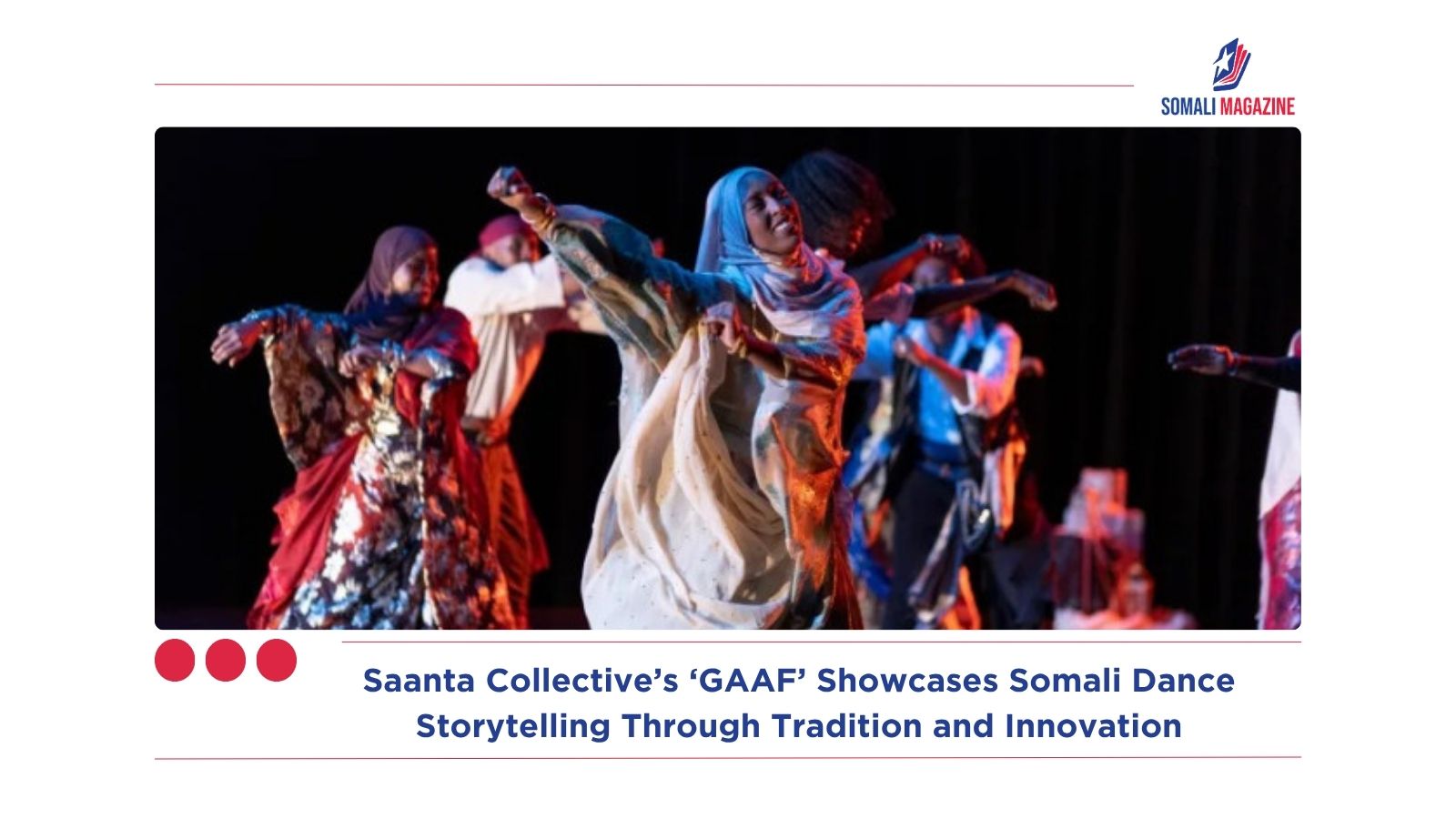
Saanta Collective GAAF Somali dance production is drawing attention for its innovative approach to storytelling, blending traditional movement with contemporary performance styles. The piece, titled “GAAF,” reflects a growing trend within Somali performing arts to reinterpret heritage through modern creative expression.
According to information shared by Saanta Collective, the performance explores themes of identity, memory, and community through choreography that incorporates both classic Somali dance forms and newer influences. Organizers describe the production as an effort to preserve cultural narratives while making them accessible to diverse audiences.
Early reports from attendees and cultural commentators suggest that “GAAF” has resonated with audiences interested in Somali dance storytelling, particularly for its ability to merge rhythm, movement, and narrative. However, detailed critical reviews remain limited, and the production’s broader reception is still evolving.
Traditional and modern Somali dance elements are woven throughout the performance, with dancers using symbolic gestures and coordinated sequences to convey meaning. Experts note that Somali dance has historically served as a form of communication, often linked to oral traditions and social events, making it a natural medium for storytelling.
The Somali performing arts sector has seen increasing efforts to experiment with format and presentation, especially among younger artists seeking to bridge generational perspectives. Cultural expression Somalia initiatives like “GAAF” are often positioned as both preservation and innovation, though their long-term impact depends on continued support and audience engagement.
Participants involved in the production have highlighted the collaborative nature of the project, bringing together choreographers, musicians, and performers. While specific details about funding or future tours have not been fully disclosed, there are indications that similar projects may be developed in the future.
Analysts suggest that such performances contribute to broader conversations about cultural identity Somalia, particularly within diaspora communities and urban centers. They emphasize that artistic platforms can provide space for reflection and dialogue, even when interpretations vary.
As “GAAF” continues to be presented to audiences, Saanta Collective GAAF Somali dance stands as an example of how traditional forms can be adapted within contemporary artistic frameworks. Observers say that the balance between heritage and innovation will remain central to the evolution of Somali performing arts.

 Black News