Wisconsin’s prison population is heading toward a record high. Track the trend here
by Paul Kiefer / Wisconsin Watch and Natalie Yahr / Wisconsin Watch, Wisconsin Watch May 27, 2026. As Wisconsin’s prison population nears a record high, the state’s already-full prisons are […]
 Black News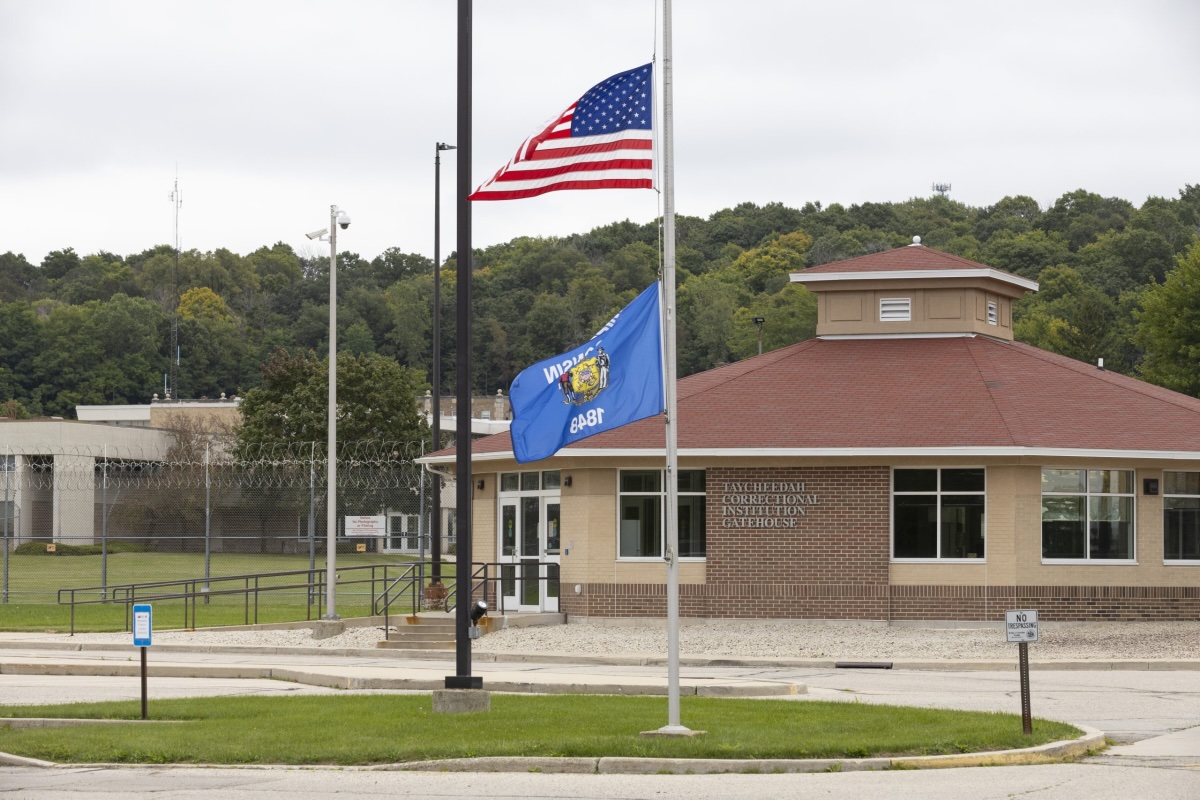
As Wisconsin’s prison population nears a record high, the state’s already-full prisons are getting even more crowded — especially for women. The state’s three women’s prisons collectively house 18 women for every 10 they were designed for, making them the most crowded of all state facilities.
One reason: While growth in the women’s prison population has far outpaced growth in the men’s system, Wisconsin prison officials shrank the facilities that housed them — to make more space for men.
Now, to make room for women, prison officials have set up beds in gyms and offices.
“They just cram us in wherever they can, it’s sad,” wrote Sarah Buckingham, who is currently incarcerated at Robert E. Ellsworth Correctional Center, a minimum-security facility in Racine County that now houses more than twice as many people as it was designed for.
Across the system, the rising number of prisoners and a shortage of staff have strained resources. Prisoners often wait months or years for limited spots in treatment, education and work programs, the very programs designed to prepare them for release. That, advocates say, could mean people wait longer to get out, or even end up returning to prison — making facilities even more crowded.
A new data tool from Wisconsin Watch allows anyone to track the population of the system and of each facility for free. The dashboard, which shows weekly population and capacity counts going back to 2006, updates automatically when prison officials post the latest figures.
The data makes it clear: Overcrowding is not new. Wisconsin’s prisons have held thousands more people than intended for at least the last 20 years. The population dipped during the COVID-19 pandemic but is now heading toward an all-time high. More than 23,600 people are in state custody, according to the latest figures available from the Wisconsin Department of Corrections. That’s about 200 shy of the record 23,826 set in 2019.
https://wisconsin-watch.github.io/wisconsin_prison_population_tracker/
The dashboard can’t show how the trends could soon change. In April, Gov. Tony Evers announced the state would soon commute prison sentences for the first time in 25 years, though it’s not yet clear how many people may be eligible or how long the process will take.
Women’s prisons are the most crowded
Female prisoners bear the brunt of the state’s overcrowding predicament. While the state’s male facilities are about 30% over capacity in total, its female facilities are 78% over capacity. That’s according to the department’s latest data, which shows population and capacity as of May 22.
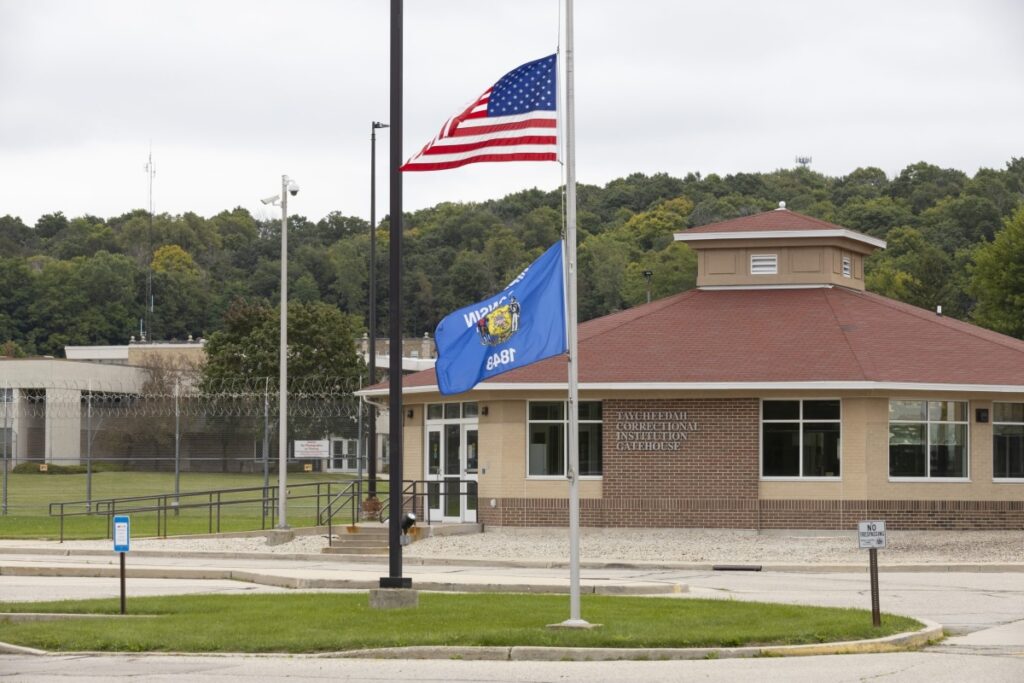
Taycheedah Correctional Institution, the state’s only maximum-security women’s prison, is designed to house 653. On May 22, it housed 1,039.
Prison officials have raised alarms about conditions at Taycheedah for at least a decade.
“The increased population at TCI has detrimental effects on the prison,” they wrote in a 2016 budget request, when the population was 873. Crowded conditions could cause security problems, they wrote, as each correctional officer must supervise more prisoners. They also noted the steep competition for access to programs for treatment or training.
“There is also decreased programming availability to inmates, and programming has been shown to help reduce recidivism,” the authors wrote.
Since then, the facility has added nearly 170 women.
“(Taycheedah) has already undergone conversions to turn spaces into living areas that were not originally meant to be used as living areas due to a problem with overcrowding,” said Daniel Cromwell, an administrator for the state’s corrections department, in an April court filing.
Wisconsin Watch heard from six currently incarcerated women who watched the women’s prison population balloon. They described sharing already overcrowded bathrooms with more women and competing for treatment and employment resources.
Department of Corrections spokesperson Beth Hardtke confirmed that beds have previously been set up in the gym at Taycheedah but said no one is living in the gym now. Taycheedah staff are currently converting a “former property room” into a dormitory to house 20 women, Hardtke said.
The issue isn’t isolated to Taycheedah. The Milwaukee Women’s Center is at 255% capacity. Robert E. Ellsworth Correctional is now at 219% of its capacity.
Fifteen years ago, the state’s women’s prisons had nearly enough space, not just because there were fewer prisoners, but because there was a fourth women’s minimum-security prison. John C. Burke Correctional Center in Waupun, designed for 186 prisoners, housed women from 2000 to 2011, when it was converted into a men’s minimum-security prison.
The move dropped the capacity of the women’s system — just as the number of female prisoners spiked. In the 15 years since, the women’s prison population has grown nearly 29%, more than four times as fast as the men’s population.
Now, state officials are making plans to turn Burke back into a women’s prison, part of a $500 million prison reorganization Gov. Tony Evers proposed last year.
Overcrowding limits education, training
Overcrowding doesn’t just mean getting an extra roommate or waiting longer for a shower. It also means prisons need extra staff — staff they often struggle to find. In 2023, prison officials locked down Waupun — canceling programs and confining prisoners to their cells for the better part of several months — because they didn’t have enough officers to conduct normal operations, Wisconsin Watch reporting revealed.
While the staffing shortage has eased since, the system is still short about 620 full-time correctional officers and sergeants, the latest DOC figures show.
Those shortages can mean prison programs get cut or canceled, said Shannon Ross, founder and executive director of the Milwaukee-based nonprofit The Community, which helps incarcerated people pursue education and develop as leaders.
“If you have too many people to watch per staff member, now, ‘Oh, we can’t have classes tonight because we need to have more people over here watching more people that are incarcerated,’” Ross said.
Ross, who earned a bachelor’s degree while serving a 17-year sentence in Wisconsin prisons, said when prisons are packed and money is tight, prison officials scale back vocational training and higher education to focus on the basics: food, housing, security, court-ordered programming and services prisons are legally required to provide.
“Anything beyond that is going to become superfluous,” he said. That’s a problem, he said, because more than 90% of Wisconsin’s prisoners will one day be released. “Who do we want them to be?”
How we got here
Wisconsin isn’t the only state struggling to find room for all its prisoners. Across the country, prison populations spiked in the 1980s and 1990s as states adopted harsher punishments and “truth-in-sentencing” legislation. The latter requires most prisoners to spend their full sentence behind bars, without the possibility of parole.
Suddenly the flow of people out of prison slowed, while as many as ever flowed in. Lots also flowed back, returning to prison for allegedly violating the terms of their release.
In Wisconsin, the prison population peaked in August 2019 at 23,826, then dropped sharply beginning in March 2020 as courts shut down due to the COVID-19 pandemic. In just over a year, the number of people in prison fell by nearly 20% to 19,381, the lowest figure in the last two decades.
As the state’s courts reopened, they began working through a backlog of cases — and sending more people to prison. In a 2023 report, the Legislative Fiscal Bureau said that if the prison population continued growing as fast as it was, it would set a record of 24,800 by July 2025.
The authors predicted that wouldn’t happen, and they were right.
“While recent growth patterns have been sizable, it is likely that the updated growth rate is too high to continue for the duration of the 2023-25 biennium, and that the recent rapid growth is likely temporary,” the authors wrote, noting that “at some point, the courts will catch up and prison populations will level out and grow at a slower rate.”
Still, the numbers have kept rising, and the growth has gotten faster, not slower. In the last year, that growth has been fueled entirely by a surge in women prisoners: While the male population fell slightly between May 2025 and May 2026, the female population rose by more than 4%.
What’s the solution?
Policymakers and prisoner advocates disagree about the answer to Wisconsin’s crowded prisons.
In the major revamp he proposed last year, Gov. Evers called for, among other things:
- Closing the nearly 130-year-old Green Bay Correctional Institution.
- Transforming Waupun Correctional Institution into a “vocational village.”
- Converting the troubled Lincoln Hills School from a juvenile prison to an adult prison.
- Converting Burke into a women’s prison.
- Expanding a program that allows some people incarcerated for nonviolent crimes to qualify for early release by completing treatment for substance use.
Together the changes would reduce the state’s prison capacity by 700. The plan drew criticism from Republican lawmakers, who pointed to the state’s crowded prisons as a sign that the state needs more space in its prisons, not less.
State Sen. Van Wanggaard, R-Racine, said the answer is “right-sizing” the number of prisoners by “adding additional beds, reducing overcrowding and making facilities safer for not only our inmates, but for our staff,” Wisconsin Public Radio reported.
In October, the State of Wisconsin Building Commission released $15 million to plan for Evers’ proposed changes.
Ross of The Community calls that proposal a “marginal improvement.”
“It’s not getting us the level of change that everybody would need to see and want to see … You’ve got to get past marginal improvements at some point to really have something different,” Ross said. “Otherwise, it’s just a different version of the exact same problem every year we’re facing.”
One way to do that, he said, is to repeal truth-in-sentencing laws to reduce the number of people behind bars.
“Stop having a system in which people cannot get back out if they’re ready,” Ross said.
That, like other major prison changes, would require legislative action. But lawmakers in the Republican majority have stymied reform for years, Evers’ spokesperson Britt Cudaback said.
“Gov. Evers has repeatedly worked to comprehensively reform our state’s justice system and corrections statutes to save taxpayers and reduce overcrowding, invest in evidence-based alternatives to incarceration, and improve public safety in our communities while reducing the likelihood that someone may reoffend once they have completed their sentence,” Cudaback said in an email.
But Evers can’t make those changes unilaterally, Cudaback said, and lawmakers in the Republican majority have “refused nearly every effort to address these challenges over the last nearly eight years.”
In April, with nine months left in office, Evers announced he would use one of the few tools available for single-handedly easing overcrowding: commutations. It’s the first time in 25 years that incarcerated people in Wisconsin can request to have their sentence shortened.
Advocates across the state are still trying to determine how many of Wisconsin’s nearly 24,000 prisoners may be eligible, and they’re working to help as many eligible people as possible apply.
The first meeting of the Commutation Advisory Board will take place in June, and the first commutations will be issued some time after that. With Gov. Evers leaving office in January, it will be up to the next governor to decide whether the process continues.
Wisconsin Watch reporter Addie Costello contributed to this report.
This article first appeared on Wisconsin Watch and is republished here under a Creative Commons Attribution-NoDerivatives 4.0 International License.