Senegal’s new law doubles jail terms for same-sex relations, drawing global outcry
Senegal’s President Bassirou Diomaye Faye has signed into law a controversial bill that doubles prison terms for same-sex relations to a maximum of 10 years, marking one of the most stringent legal shifts on LGBTQ+ rights in West Africa.
 Black News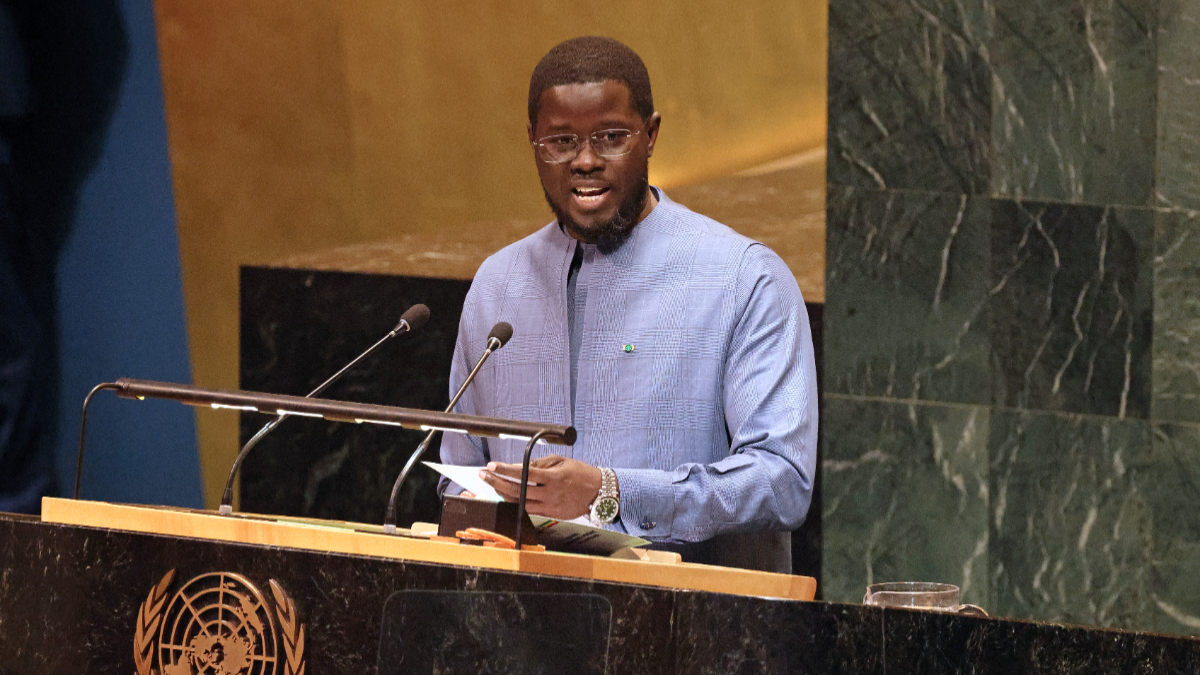
![Senegal's President Bassirou Diomaye Faye speaks during a United Nations Summit on Palestinians at UN headquarters during the United Nations General Assembly (UNGA) in New York on September 22, 2025. [Photo by LUDOVIC MARIN/AFP via Getty Images]](https://ocdn.eu/pulscms/MDA_/f6796ae0f27d290077b721ff356d64b7.jpg)
Senegal’s President Bassirou Diomaye Faye has signed into law a controversial bill that doubles prison terms for same-sex relations to a maximum of 10 years, marking one of the most stringent legal shifts on LGBTQ+ rights in West Africa.
- Senegal has enacted a new law doubling prison terms for same-sex relations to 10 years.
- The legislation also criminalizes the “promotion” of homosexuality, drawing international criticism.
- UN officials and rights groups warn that the move undermines fundamental human rights protections.
- Analysts say the law could shape Senegal’s global partnerships and investor perception.
The legislation, approved overwhelmingly by Senegal’s National Assembly in March, also criminalizes what it describes as the “promotion” of homosexuality, including public advocacy and financial backing by individuals or organizations. Offenders under this provision face between three and seven years in prison.
The law delivers on a key campaign pledge by President Faye and Prime Minister Ousmane Sonko, reflecting a broader political stance that authorities say aligns with public sentiment. The government has defended the move despite mounting international criticism, insisting it mirrors “the values of Senegalese society.”
However, the decision has drawn sharp rebuke from global rights bodies. Volker Türk, the United Nations High Commissioner for Human Rights, described the measure as “deeply worrying,” warning that it “flies in the face of sacrosanct human rights.” Advocacy groups, including Human Rights Watch, have also flagged a recent rise in hostility toward LGBTQ+ individuals in the country.
The law follows a wave of arrests earlier this year, including the charging of 12 men with “acts against nature”, underscoring an intensifying crackdown even before the legislative change.
Senegal’s move mirrors a broader regional trend as countries such as Uganda and Burkina Faso have enacted or advanced restrictive laws similarly in recent years, with Uganda introducing some of the harshest penalties globally in 2023.
While the legislation carries no direct monetary implications, analysts warn it could indirectly affect Senegal’s investment climate and relationships with Western partners, where ESG standards and human rights considerations increasingly shape capital flows.