Sergeant Delice Faces Tough Questions Over Anse Cochon Response
Police Marine Unit Sergeant Sean Delice told the Anse Cochon boat collision inquiry that he was “kept out of the investigation,” but declined to identify who excluded him, during testimony that also brought sustained questioning over the urgency of the search for missing passengers. Delice, a 24-year veteran of the unit with training in navigation, […] The post Sergeant Delice Faces Tough Questions Over Anse Cochon Response appeared first on Saint Lucia Daily Post.
 Black News
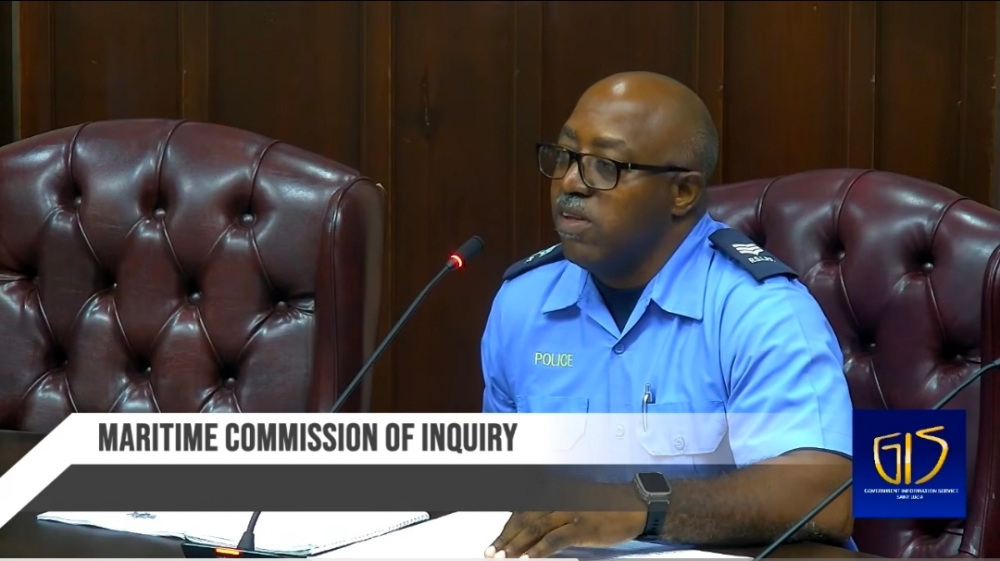
Police Marine Unit Sergeant Sean Delice told the Anse Cochon boat collision inquiry that he was “kept out of the investigation,” but declined to identify who excluded him, during testimony that also brought sustained questioning over the urgency of the search for missing passengers.
Delice, a 24-year veteran of the unit with training in navigation, emergency management and diving operations, defended the decisions he made while coordinating the response to the July 18 collision, which claimed four lives.
However, commissioners challenged the recall of a search vessel while three people remained unaccounted for, questioned whether additional resources should have been requested, and pressed him over the absence of a documented search grid.
The exchange took a particularly pointed turn when Commissioner Frederick asked whether Delice had engaged the investigating officer to assist with the case.
“I was kept out of the investigation,” Delice said.
Asked who had kept him out, he responded: “I will not answer that question.”
Delice subsequently said then Marine Unit Commander Superintendent Alfred had informed him that a special team had been assigned by the Commissioner of Police to investigate the collision. He distinguished his own role coordinating search and rescue operations from responsibility for the investigation.
Much of his testimony centred on his decision to recall one of two police vessels at approximately 3:30 a.m. on July 19.
Delice said the crew had been on duty since 8 a.m. the previous day, had completed its surface search, and included divers who would be needed later that morning. One police vessel remained in the area.
Under questioning, he acknowledged that he knew three people were still missing when he requested the recall.
The chairman repeatedly challenged how reducing the number of search vessels could be reconciled with the possibility that those missing were still alive.
“I am detecting a little bit of lack of urgency,” the chairman said, while acknowledging that he was seeking clarification of marine procedures and the reasoning behind the decisions.
Delice maintained that the searches were systematic and guided by the collision’s estimated location, wind, sea conditions and currents. He said officers were also trying to establish whether missing passengers had reached shore or been taken elsewhere by rescuers.
He defended the recall as a necessary measure to manage limited personnel and prepare for further operations.
The recalled crew departed again with him at approximately 6:15 a.m. Delice said that outing included further searching and towing the yacht Ibis to the Marine Unit base, following a reported break-in.
The chairman questioned whether securing the yacht could have been achieved without removing a vessel and personnel from the area.
Divers began searching at approximately 11:21 a.m., Delice testified. He said the dive covered the bay but could not safely extend into deeper offshore waters because of depth, time limits and the divers’ profiles.
Two men’s bodies were subsequently located outside the bay on Wednesday, in an area Delice said had been searched on the surface but had not been covered by the dive.
Commissioner Frederick also questioned why assistance had not been sought from the Maritime Rescue Coordination Centre in Martinique or additional regional divers.
Delice said he had not personally contacted the centre and did not know whether anyone else had done so. He maintained that the local team had the competence and capacity to handle the response.
When Frederick asserted that the centre had sought information and stood ready to assist, Delice said he was unaware of that communication.
Further questioning established that Delice had no documented grid identifying the estimated collision area. He accepted that producing such a record was a good suggestion and said it could still be prepared.
Despite the criticism, Delice maintained that the unit had acted within its procedures and available resources.
“Search and rescue is the single most important priority of the Police Marine Unit,” he told the commission.
The post Sergeant Delice Faces Tough Questions Over Anse Cochon Response appeared first on Saint Lucia Daily Post.