Somalia: The Disappeared
On the evening of 26 June 2021, a woman named Ikran Tahlil Farah left her home in Mogadishu after receiving a call from a number she did not recognize. She got into a car. Her family watched her go. They have not seen her since. Ikran Tahlil Farah was not a dissident or a journalist. She was not an opposition politician or a civil society activist. She was a senior officer of Somalia’s National Intelligence and Security Agency — NISA — serving as the head of its cyber security division. She was, by any definition, someone the Somali state was […] The post Somalia: The Disappeared appeared first on African Arguments.
 Black News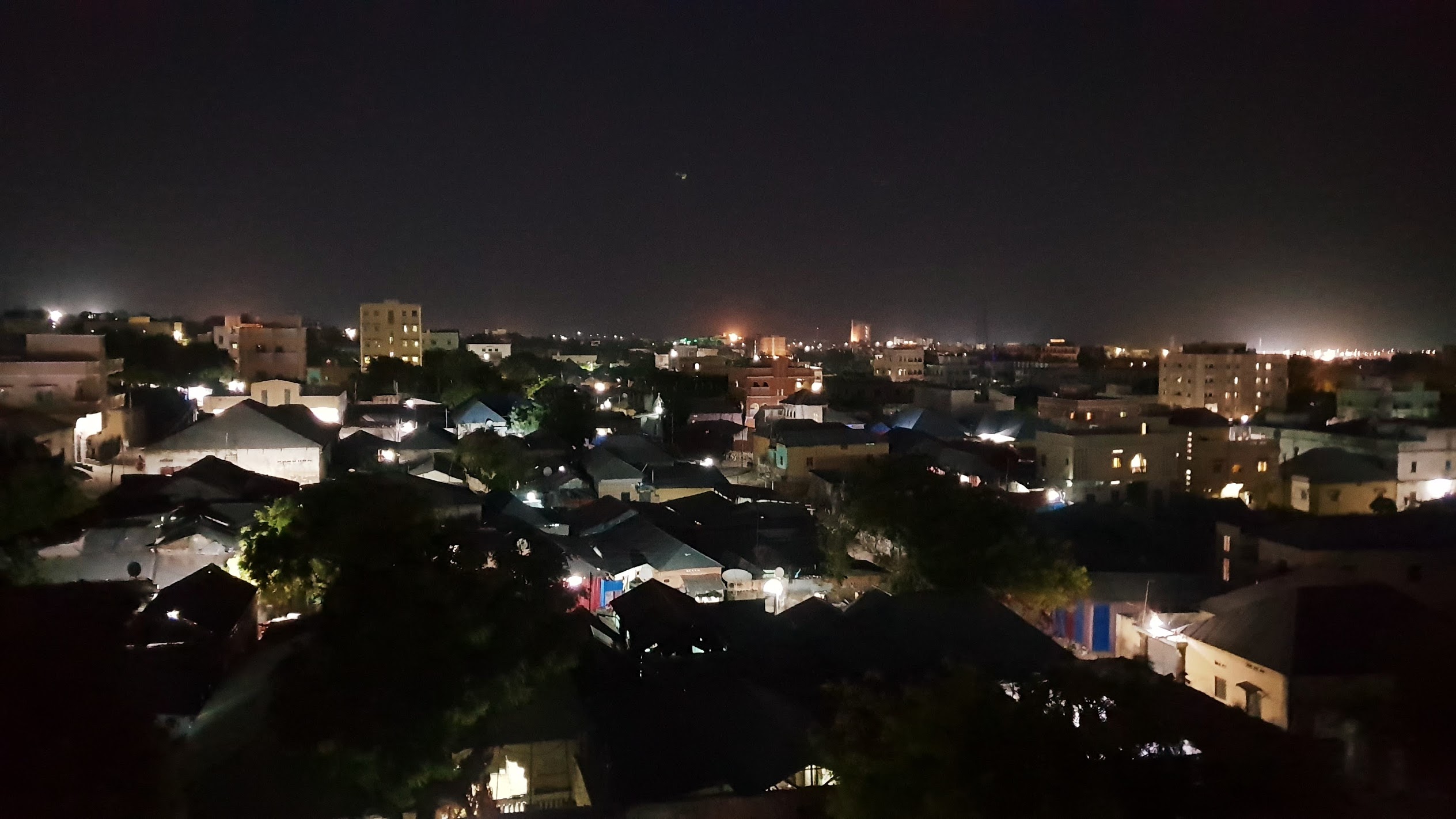
On the evening of 26 June 2021, a woman named Ikran Tahlil Farah left her home in Mogadishu after receiving a call from a number she did not recognize. She got into a car. Her family watched her go. They have not seen her since.
Ikran Tahlil Farah was not a dissident or a journalist. She was not an opposition politician or a civil society activist. She was a senior officer of Somalia’s National Intelligence and Security Agency — NISA — serving as the head of its cyber security division. She was, by any definition, someone the Somali state was supposed to protect.
Her disappearance has never been officially explained. No body has been found. No investigation has been publicly disclosed. No one has been held accountable. As of today, Ikran Tahlil Farah is a disappeared person — one of thousands in Somalia’s history, and one of the most recent.
Her case would be shocking in isolation. In the context of Somalia’s fifty-five-year history of enforced disappearance, it is a continuation.
Somalia has practiced enforced disappearance for over half a century. In that time, not a single person has been prosecuted for it.
Mogadishu at night. No one has been prosecuted for enforced disappearances in Somalia during over half a century.
The practice began within months of Siad Barre’s coup in October 1969. One of his first acts was to pass the Preventive Detention Law of January 1970, which allowed the National Security Service to hold any person, for any duration, without charge, without trial, and without any obligation to tell their family where they were. Habeas corpus was abolished. The disappeared person was written into Somali law as a category of person the state could create at will.
The primary facility was Godka Jilocow — the Hole — an underground detention and torture centre in Mogadishu’s Bondhere district, a short walk from the Presidential Palace. Prisoners were held in cells too small to stand in, in permanent solitary confinement, with no natural light, no clock, and no information about how long they had been inside. Families were not told their relatives had been taken there. People disappeared into it for months. Some disappeared for years. General Mohamed Abshir Muse, the former Commander of the Somali Police Force, spent twelve years there without a single day in court.
When Barre fled in 1991, the institution he had built did not disappear with him. The tools changed hands. The warlords who fought over Mogadishu in the 1990s disappeared people into militia compounds and unmarked graves. Al-Shabaab disappears people in the territories it controls, beyond the reach of any observer. And NISA — the agency that is supposed to be Somalia’s legitimate intelligence service, funded in part by international partners who publicly support human rights — has been documented conducting incommunicado detentions, forcing confessions under torture, and making people vanish without explanation.
The journalist Mohamed Abdiwahab Nur was held by NISA for nearly five months without his family or lawyer being permitted to contact him — a textbook enforced disappearance. He was eventually charged before a military tribunal with murder and Al-Shabaab membership and acquitted of everything. The Somali Journalists Syndicate’s Secretary-General, Abdalle Ahmed Mumin, was arrested three times in thirteen months, held incommunicado, and tortured for thirty-three days. No NISA officer involved in any of these cases faced any professional or legal consequence.
This impunity is not accidental. It is structural. Somalia has no domestic law that criminalises enforced disappearance as a specific offence. It has not ratified the International Convention for the Protection of All Persons from Enforced Disappearance. The 2023 NISA Act, passed by the Somali Senate and condemned by Human Rights Watch for granting the agency sweeping powers with minimal oversight, contains no prohibition on incommunicado detention and no requirement to notify a detainee’s family. It contains, in legislative form, exactly the architecture that enabled the NSS’s disappearances in 1970.
The human cost is not only what happens to the person who disappears. It is what happens to the family left waiting. In Somalia’s clan-based society, a disappeared person creates legal limbo: their family cannot claim inheritance, cannot remarry, cannot officially close a chapter that has not been officially opened. The silence around a disappearance is itself an ongoing harm, inflicted every day on every person who loved the person taken.
The Organization for Prisoners’ Rights has documented this pattern across three generations of Somali governance. We have documented the NSS cells. We have documented the warlord-era disappearances. We have documented NISA’s current operations. The thread connecting all three eras is not ideology — Barre was a socialist, the warlords were opportunists, Al-Shabaab is an Islamist insurgency, NISA serves an elected government. The thread is impunity. Nobody has ever been punished for making someone disappear in Somalia. Not once. Not in fifty-five years.
This must change. Somalia’s Parliament must enact specific legislation criminalising enforced disappearance. Somalia must ratify the international convention. NISA must be required, by law, to notify families of any detention within six hours, to provide access to a lawyer within twenty-four hours, and to operate under independent judicial oversight. The international partners who fund NISA must make these reforms conditions of their support, not optional aspirations.
And someone must account for Ikran Tahlil Farah. She was a professional in the service of her country. She disappeared in the service of her country. Her country has not explained what happened to her. That silence is a statement. It says: this is acceptable. That statement must be contradicted.
Her family is still waiting. In Somalia, families have been waiting for longer than fifty years. The waiting must end.
The post Somalia: The Disappeared appeared first on African Arguments.