State of Downtown report points to gains, ongoing transition in Baltimore’s core
The Downtown Partnership of Baltimore’s 2025 State of Downtown report highlighted continued momentum in the city’s core, pointing to gains in public safety, residential growth and private investment alongside ongoing shifts in the office market and redevelopment pipeline. City leaders said long-term progress will depend on coordinated public and private efforts tied to the Downtown RISE master plan and a series of new development incentives and projects The post State of Downtown report points to gains, ongoing transition in Baltimore’s core appeared first on AFRO American Newspapers.
 Black News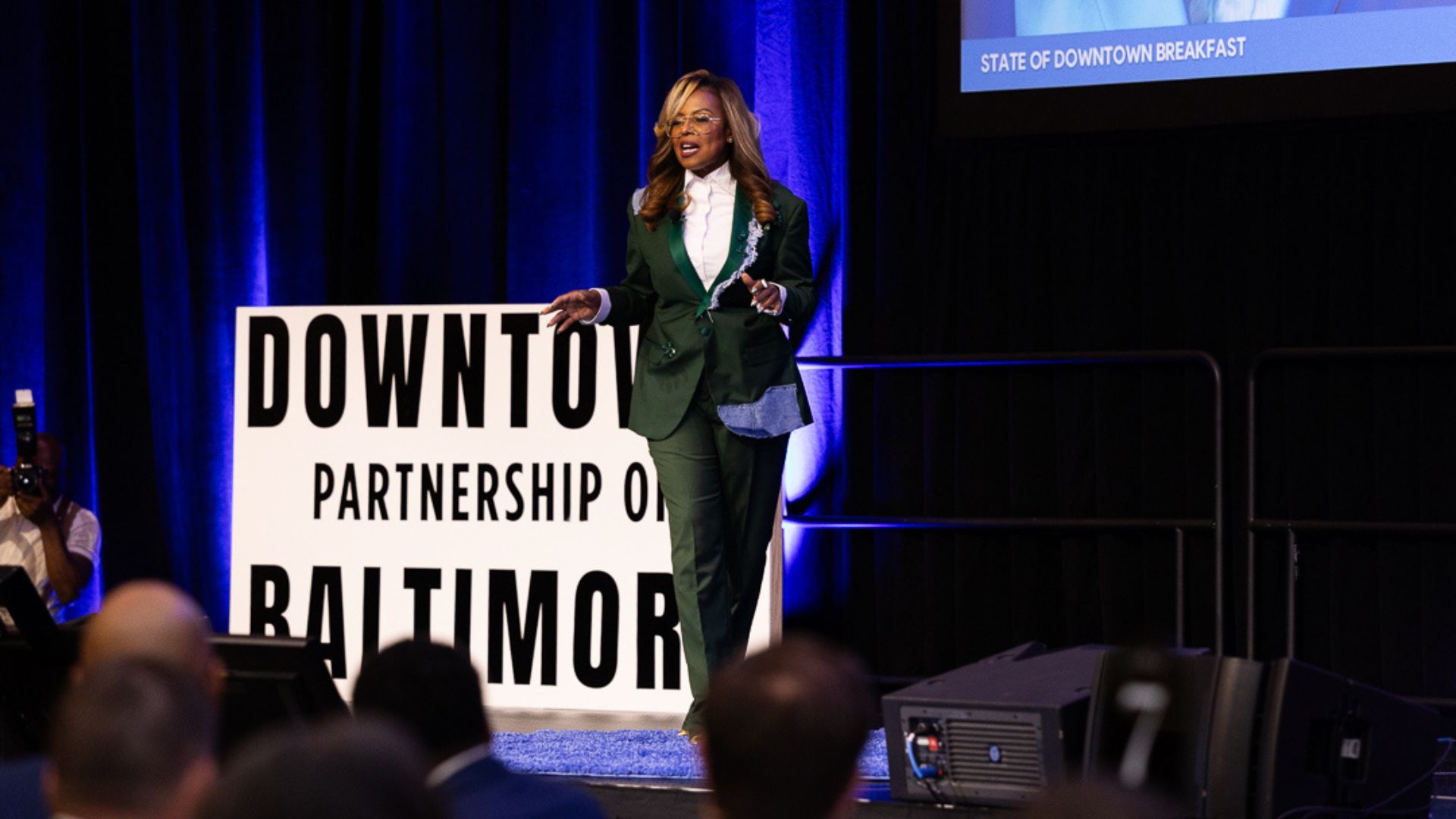

By Megan Sayles
AFRO Staff Writer
msayles@afro.com
The Downtown Partnership of Baltimore (DPOB) hosted its State of Downtown Breakfast on April 16, unveiling its 2025 report on the financial outlook, quality of life and economic development activity in the city’s core. Over the last several years, efforts to revitalize downtown have been guided by Downtown RISE, a roadmap that delineates short-, medium- and long-term priorities for a more pedestrian-friendly, vibrant, recreation-rich and economically stronger downtown.

The 2025 assessment highlighted gains across downtown Baltimore’s trajectory, including improvements in public safety, residential growth, and continued investment activity, along with shifting demographic and workforce trends that city leaders say reflect sustained momentum in the heart of the city.
“The work is underway, and we have a real plan,” said Stokes. “You know what I think about the state of Downtown? It’s rising because of us.”
The report described a downtown economy in transition, marked by ongoing redevelopment activity and continued shifts in office space, including millions of square feet either vacant or being repositioned for new uses. It pointed to a steady investment pipeline across housing, mixed-use projects and entertainment venues, along with a residential population now exceeding 40,000 and a daytime population of roughly 130,000.
Stokes said maintaining that momentum will require continued coordination between public investment, private development and policy incentives.
“All of what we’re doing right now has to work together,” said Stokes. “This is not a Pollyanna talk, this is what we’re doing: state investment, city prioritization and legislation that creates incentives that make development work here.”
Baltimore Mayor Brandon M. Scott said part of downtown’s progress rests on the city addressing long-standing challenges such as crime and the vacancy crisis. In the last five years, homicides and shootings have declined by 60 percent. Additionally, since 2020, one in four vacant properties have been eliminated — a reduction from 16,000 to 11,836.

He highlighted several major developments taking place in the city’s core, including the expansion of Rash Field Park, the transformation of Harborplace, modernization of the Baltimore Convention Center and a new initiative inviting local artists, architects and engineers to redesign downtown’s major gateways.
“We know in Baltimore we can do and will do big things together,” said Scott. “We will deliver and create solutions to generational challenges and drive investment and growth until the residents and business owners in the heart of the city know that Baltimore has reached its full potential.”
With some cities and localities embracing the era of anti-equity, diversity and inclusion ushered in by the federal government, Baltimore leaders believe Charm City’s downtown has an opportunity to attract Black business owners and residents seeking belonging.
Stokes emphasized that both state and local officials, as well as DPOB, recognize the value of diversity.
She pointed to ongoing efforts like the Downtown Black-Owned and Occupied Storefront Tenancy (BOOST) Program, which provides Black entrepreneurs with grants of up to $100,000 and retail space downtown, and the Baltimore Culinary Exchange, which supports new and existing culinary concepts with grant funding and property improvements.
“Part of what we know is that diversity is the lifeblood of our city, and our sponsors and our partners are aligning around that. They’ve not retreated in the work that we’re doing,” said Stokes. “What you’ll see within Downtown RISE is how we integrate that into a more livable, walkable 18-hour downtown.”
The post State of Downtown report points to gains, ongoing transition in Baltimore’s core appeared first on AFRO American Newspapers.