The Buffalo Bills’ Decision To Erase OJ Simpson Is Understandable, But Is It Fair?
The Buffalo Bills have unveiled a new stadium and simultaneously decided to distance themselves from one iconic player.
 Black News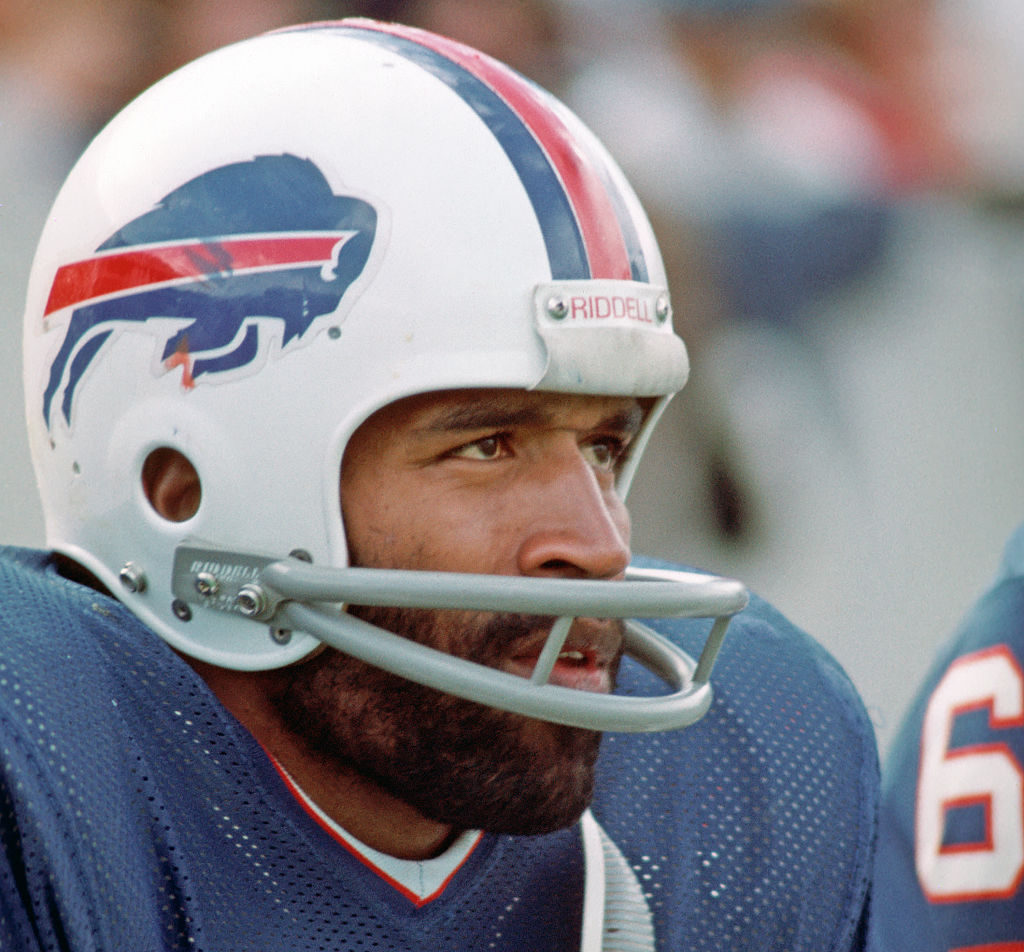
Breaking News: Black man denied honor decades after being found not guilty of crimes that likely led to his discrediting.
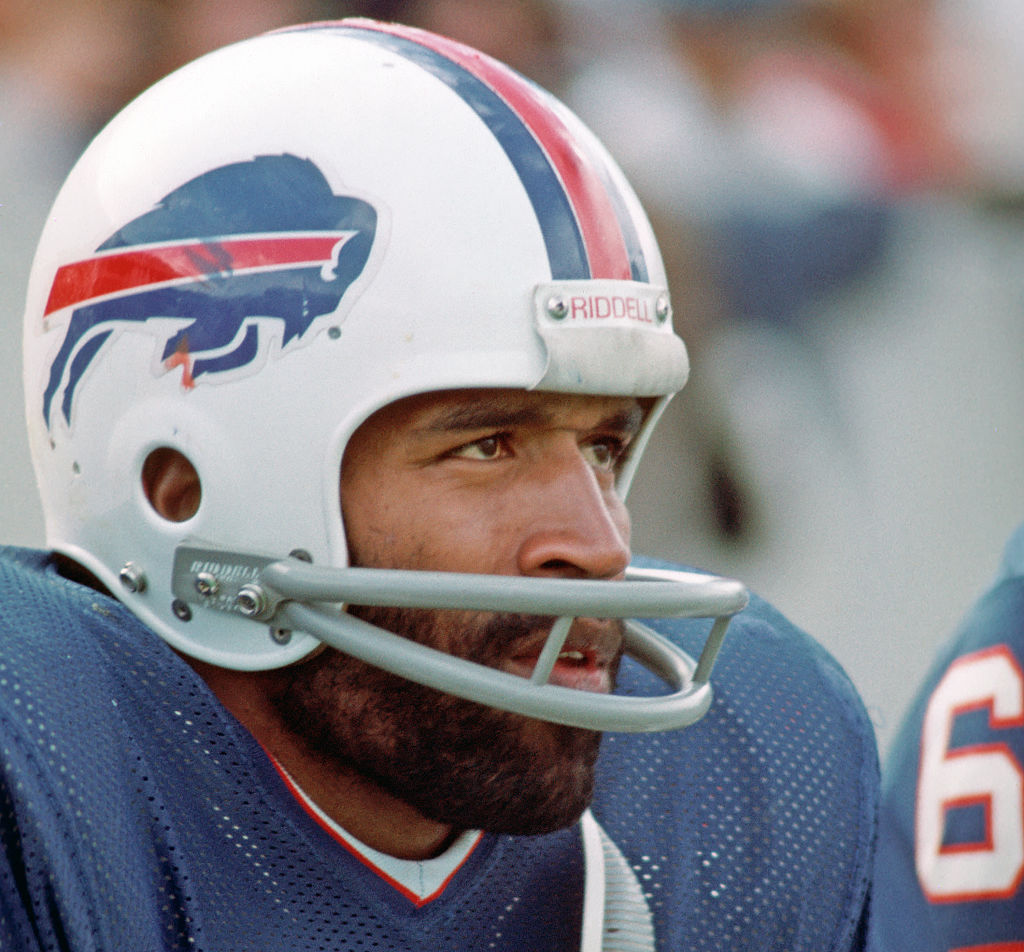
In most scenarios, that would be the headline of a story like this. However, this is about O.J. Simpson — which means it’s never that simple. Coinciding with the grand opening of their new stadium, the Buffalo Bills elected to distance themselves from Simpson’s legacy. Despite Simpson being the first running back in NFL history to rush for over 2,000 yards in a season and serving as the pioneer of the Bills’ Wall of Fame at their old stadium, his image isn’t featured in the new one.
“We have made an organizational decision that he is not a fit to display inside our new stadium and Family Circle,” said Bills COO Pete Guelli in a statement released by the team.
The decision has sparked some controversy, as the organization ultimately decided to punish someone for being connected to a heinous crime that the legal system said they didn’t commit. The Bills have set a precedent that could be labeled as a “slippery slope.” But is that term even applicable when discussing Simpson, given the intense feelings he evokes? The answer is as complex as the case was thirty years ago.
“This was a marketing decision by the Bills that considers what the risk would be to their reputation and brand if they were to do something that honors O.J. Simpson,” Dr. Meredith D. Clark told NewsOne, a former journalist who serves as an associate professor of race and political communication at the University of North Carolina. “And given where we are culturally, honoring any Black person who isn’t completely above reproach is inviting critique directly from the White House. And I can see why they would make this decision.”
Because Simpson is such a controversial figure, there are no grey areas when discussing him. He was a Black man who wanted to be perceived as something above and other than “Black.” The murder trial served as a reminder that one cannot escape one’s racial identity in America.
“It placed the issue of race and justice squarely before the American public, and we had to confront the ugly underbelly of the criminal justice system, the late Charles Ogletree Jr., a Harvard law professor and civil rights scholar, once said about the case and its impact on society. “It was a watershed case for African-Americans because it helped them celebrate the fact that when there’s a doubt in the system, people will be found not guilty. It was a watershed case for whites because it led to remarkably short-sighted and dangerous suggestions about revamping the criminal justice system because one man was found not guilty; that we would give up hundreds of years of justice and a jury system that worked, hundreds of years of a jury system [that] became more representative because people of color and women could finally serve in it — to give up all the benefits of a system because one man was found not guilty.”
Over the years, the NFL has become synonymous with burying its head in the sand whenever talented players find themselves in situations with the law. Coaches, players, team owners, and general managers often turn a blind eye to offenses if someone can contribute to winning. From a series of incidents involving violence against women to issues with substance abuse or even violating the league’s gambling policy, the powers that be have shown little willingness to dismiss players with exceptional talent due to legal troubles.
There’s even the case of Donte’ Stallworth, who returned to the field in 2010 after being suspended the previous season for pleading guilty to a DUI manslaughter charge for killing a woman while drunk driving. However, none of those players achieved the same level of acclaim as Simpson or reached the groundbreaking levels of celebrity he attained as the first widely accepted Black pitchman in advertising and Hollywood. Moreover, none were tried for a double murder. The closest example might be former New England Patriots tight end Aaron Hernandez, who the franchise has completely washed its hands of.
In 2017, Simpson’s parole hearing was broadcast live and drew 13 million viewers across eight networks, as he was eventually released under supervision after serving eight years of a 33-year sentence for a robbery involving memorabilia he alleged was stolen from him. On that day, I was part of a 10-person panel on HLN, brought in to observe and comment on the proceedings. Initially, I was the only panelist undecided about whether Simpson should be paroled, as I recognized that this case was unrelated to the previous one. Though it was almost ten years ago, the moment, similar to today, served as evidence that Simpson remains one of the most polarizing figures in American history. And for that reason, it forced the brass of the Buffalo Bills to make the best business decision for their organization, despite the obvious racial undertones and cringe factor it presents.
“We (Black people) don’t have space in American society to be considered in spite of our significant flaws,” Clark explained to NewsOne. “O.J. was acquitted. Legally, he’s not held responsible for the deaths of Nicole Brown Simpson and Ronald Goldman. But, socially and culturally, he still has to carry that baggage. And that baggage is not just what happened in their deaths; it is what has happened in the deaths of every white woman, in particular, who has ever been harmed by a Black man. And the fear of Black men harming white women.”
What Simpson gained by winning the criminal court case, he ultimately lost in the court of public opinion. His acquittal did not signify innocence, nor did it absolve him in the eyes of society. Charisma and charm could not shield him from scrutiny. Despite his best efforts, his Blackness determined his destiny.
O.J. Simpson was a man driven by the desire to prove that he could win in unfamiliar territories, or “away games.” Being infatuated with reaching the unattainable led to his downfall. It also wound up being why his legacy has been erased at the site where the Buffalo Bills will play their home games.
Carron J. Phillips is an award-winning journalist who writes on race, culture, social issues, politics, and sports. He hails from Saginaw, Michigan, and is a graduate of Morehouse College and Syracuse University. Follow his Substack to keep up with more of his work.
SEE ALSO:
OJ Simpson’s Complicated, Turbulent Life In Photos
5 Things Suggesting O.J. Got Away With Murder