These 9 African countries recorded the highest Canadian visitor visa rejection rates ahead of the 2026 World Cup
For thousands of football fans across Africa, the biggest obstacle to attending the 2026 FIFA World Cup wasn't securing a match ticket, but obtaining a visa.
 Black News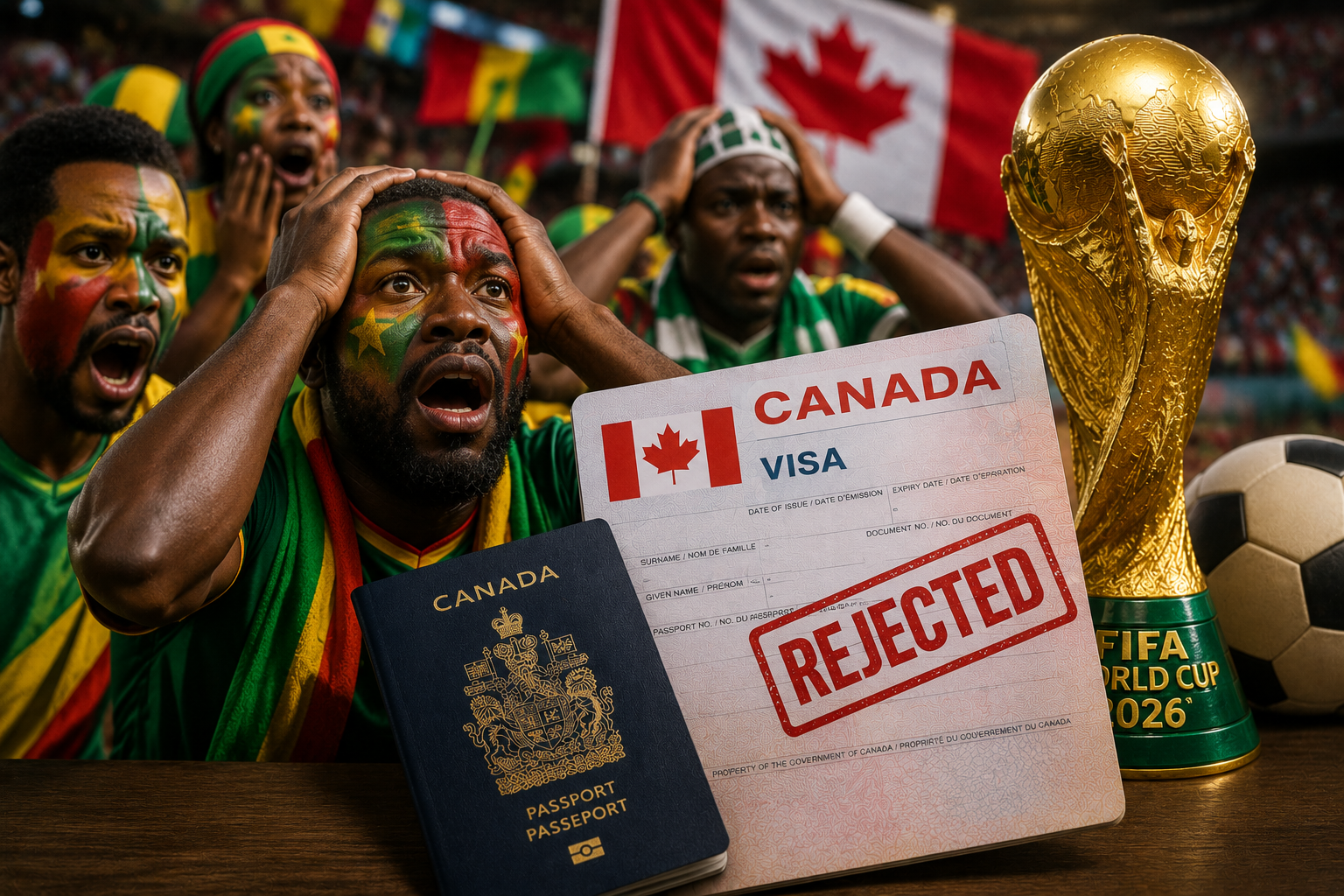

For thousands of football fans across Africa, the biggest obstacle to attending the 2026 FIFA World Cup wasn't securing a match ticket, but obtaining a visa.
- African football fans faced significant visa obstacles when trying to attend the 2026 FIFA World Cup in Canada.
- New IRCC data shows refusal rates for African applicants ranged from 59.1% to 96.1%, with countries like the Democratic Republic of Congo, Kenya, and Ghana most affected.
- Overall, just 41% of all World Cup-related visitor visa and eTA applications were approved during the reporting period.
- African nationals mostly require a temporary resident visa, which demands more documentation and stricter eligibility checks compared to visa-exempt countries.
New data from Canada's Immigration, Refugees and Citizenship Canada (IRCC), provided to CTV News, reveals that visitor visa applicants from several African countries faced some of the highest refusal rates among nations seeking to travel to Canada for the tournament.
Business Insider Africa analyzed the data, focusing on African countries with at least 100 processed FIFA World Cup visitor visa applications between November 14, 2025, and March 31, 2026, to ensure meaningful comparisons.
The analysis shows refusal rates ranging from 59.1% to as high as 96.1%, reflecting the significant visa hurdles faced by many African supporters hoping to attend football's biggest event.
DON'T MISS THIS: Top 10 African countries with the highest Schengen visa rejection
The figures relate to temporary resident visa (TRV) and electronic travel authorization (eTA) applications that were identified as World Cup travel requests.
According to IRCC, nearly 17,000 such applications from more than 160 countries and territories were processed during the reporting period, with just 41% approved overall.
The disparities partly reflect Canada's two-track entry system. While travellers from visa-exempt countries can apply for an electronic travel authorization (eTA), most African nationals require a temporary resident visa, a process that typically involves more extensive documentation and eligibility assessments.
What the data shows
The Democratic Republic of Congo recorded the highest refusal rate among African countries included in the analysis, with 96.1% of its processed applications refused.
Kenya followed with a refusal rate of 91.1%, while Ghana, despite recording the highest number of applications processed among African nations, saw nearly nine out of every 10 applications rejected.
DON'T MISS THIS: Top 10 African countries that lost the most money to EU visa rejections
Nigeria, Africa's most populous country, also featured prominently, with 675 refusals out of 785 processed applications, translating to an 86.0% refusal rate. Senegal and Cameroon each recorded refusal rates exceeding 85%, while Ethiopia and Algeria also saw a majority of applications denied.
Among the countries analyzed, Egypt recorded the lowest refusal rate at 59.1%, though it still meant that nearly six out of every 10 processed applications were unsuccessful.
The figures illustrate the varied outcomes for African applicants but also highlight that many prospective visitors from the continent encountered considerable challenges in securing permission to travel to Canada for the tournament.
A wider mobility challenge
The findings come as the 2026 FIFA World Cup, jointly hosted by Canada, the United States and Mexico, has unfolded amid heightened immigration scrutiny across North America.
While Canada's data does not explain the reasons behind individual refusals, visitor visa applications are generally assessed based on factors such as the applicant's purpose of travel, financial resources, travel history, and evidence that they will leave Canada at the end of their authorized stay.
DON'T MISS THIS: Canada joins U.S. in imposing Ebola-linked travel restrictions on three African countries ahead of World Cup 2026
The figures should also be interpreted in context. They represent processed applications rather than all applications submitted, with pending cases excluded from the analysis. Additionally, the data was rounded to the nearest five for privacy purposes.
Nevertheless, the analysis highlights the persistent mobility challenges facing many African travellers.
Even for one of the world's largest sporting events, obtaining a visa remained a significant barrier for supporters from several countries across the continent hoping to be part of football's global celebration.