Two Defeats, Bigger Questions: Where Cricket Cranes lost the plot against Italy and Hong Kong
Uganda’s Cricket Cranes went into this crucial leg of the ICC Cricket World Cup Challenge League B unbeaten, with momentum, confidence and a clear opportunity to strengthen its path towards the World Cup Qualifier Play-Offs and, ultimately, ODI status. Instead, game days two and three produced two defeats, first a 113-run collapse against Italy and then a […] The post Two Defeats, Bigger Questions: Where Cricket Cranes lost the plot against Italy and Hong Kong appeared first on Kawowo Sports.
 Black News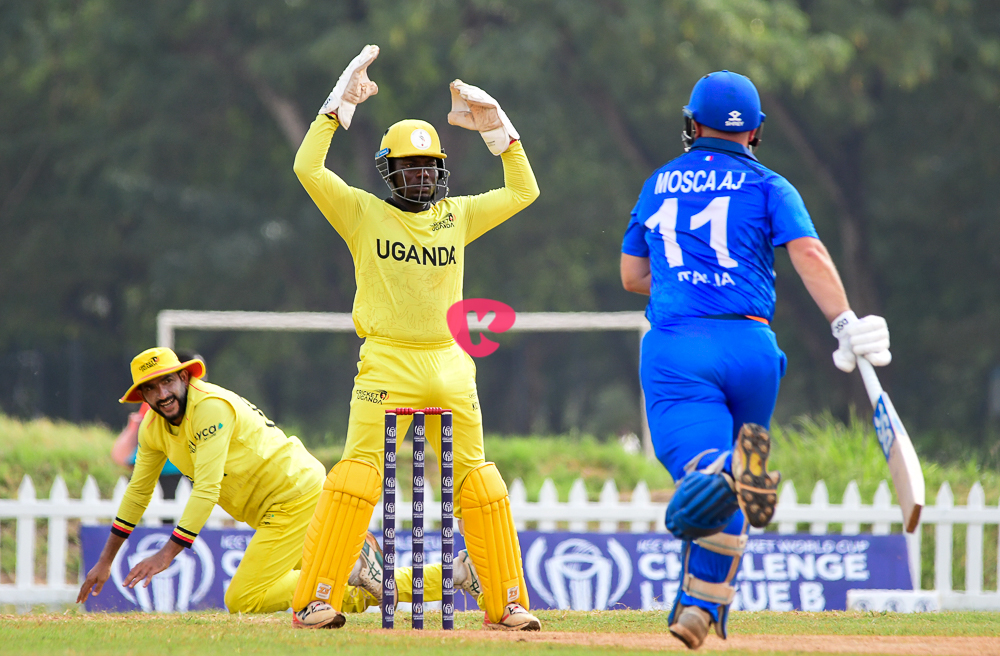


Uganda’s Cricket Cranes went into this crucial leg of the ICC Cricket World Cup Challenge League B unbeaten, with momentum, confidence and a clear opportunity to strengthen its path towards the World Cup Qualifier Play-Offs and, ultimately, ODI status.
Instead, game days two and three produced two defeats, first a 113-run collapse against Italy and then a 51-run defeat to Hong Kong, China. Italy posted 192 for 9 before bowling Uganda out for just 79, while Hong Kong made 170 before Uganda folded for 119.
The results were not merely losses on a scorecard. They exposed a recurring problem: Uganda could compete in phases, but struggled to put together the complete 50-over performance required to win.
Italy: The do-or-die opportunity that slipped away
The Italy match was a do-or-die contest: go big or go home. The winner would take top position and make a statement to the rest of the competition.
For Uganda, unbeaten coming into the game, this was the moment to take the bull by the horns and assert authority. Instead, Italy ambushed them.
Uganda’s bowlers actually did enough to give the batting unit a manageable target. Italy were restricted to 192 for 9 from their 50 overs, scoring at 3.84 runs per over.
The bowling effort was arguably Uganda’s strongest aspect of the match. Alpesh Ramjani returned 2 for 27 from 10 overs, Henry Ssenyondo took 1 for 32, Joseph Baguma 1 for 38 and Dinesh Nakrani 1 for 35. Sumeet Verma was the leading wicket-taker with 4 for 49.


Uganda also managed to keep Italy’s scoring under control for long stretches. Italy’s first wicket did not fall until 13.1 Overs, and they were only 56 for 3 by 19.3.
That suggests Uganda’s middle-over control was effective. The problem was what happened afterwards.
Italy gradually rebuilt, reaching 102 for 4 at 33.4 and 127 for 6 at 39.2 before accelerating towards the finish. They added 65 runs in the final 10 overs while losing three wickets, finishing on 192.
Uganda therefore controlled the run rate for much of the innings but failed to completely shut the door at the death.
The chase was where the match truly unravelled. Uganda never established a powerplay platform. Raghav Dhawan fell at 5.1 overs, Olipa Gerald at 14.1 and Kenneth Waiswa at 16.3. By 16.5, Sumeet Verma was also gone, leaving Uganda 47 for 4.
That is the opposite of wicket retention. The team had neither the runs nor the wickets in hand to manufacture a late assault.
Simon Ssesazi and Olipa Gerald both made 19, with Gerald doing so from 32 deliveries, while Alpesh Ramjani’s 14 was the next-best score. Riazat Ali Shah managed only five.
The biggest problem was the failure to convert starts into partnerships. Uganda lost wickets at 15, 43, 47, 47, 48, 55, 60, 68 and 79. The innings never recovered.
Rakibul Hasan’s six-wicket haul for only 18 runs was devastating, but Uganda also made his job easier by repeatedly presenting him with wickets rather than forcing Italy’s bowlers to defend a substantial total.
Hong Kong: The redemption game that became another warning
The Hong Kong match should have been Uganda’s redemption game. Instead, it became another defeat and a potentially costly one for Uganda’s ambitions of reaching the World Cup Qualifier Play-Offs and securing ODI status.
Hong Kong’s 170 was not an imposing total. In fact, Uganda’s bowlers performed impressively for much of the innings. Dinesh Nakrani conceded only 20 runs from 10 overs, Henry Ssenyondo took 3 for 29 from 10, Joseph Baguma claimed 3 for 38 from eight and Juma Miyagi returned 2 for 23 from eight.
Uganda also repeatedly broke Hong Kong partnerships. Hong Kong went 29 for 1, 75 for 2, 78 for 3 and 81 for 4 before rebuilding again.


This was good tactical bowling. Uganda kept the run rate at 3.40 an over and forced Hong Kong to work for their runs.
But, again, the death overs became important. Hong Kong reached 147 for 8 at 39.3 but recovered to 170 all out after 50 overs. The final 11 overs produced 23 runs, which was not a huge acceleration, but those additional runs ultimately mattered because Uganda’s batting lacked the capacity to chase even 170.
The powerplay problem became impossible to ignore; If Italy exposed Uganda’s inability to build an innings, Hong Kong brutally highlighted the problem at the very beginning.
Uganda lost Simon Ssesazi at 0.2 overs and Raghav Dhawan at 2.2, leaving the team 2 for 2 almost immediately.
The youngster Olipa Gerald then played the innings Uganda desperately needed, scoring 60 from 101 balls, including five fours and a six. But he was fighting a losing battle.
At 16.3 overs Uganda were only 22 for 4. Even when Riazat Ali Shah and Joseph Baguma attempted to rebuild, the wickets kept arriving. Riazat was dismissed at 27.2 with the score at 78, Cyrus Kakuru followed at 28 overs, and Uganda eventually folded for 119 in 36.5 overs.
The chase had effectively been lost in the first three overs.
Powerplay — Uganda’s biggest weakness
This is where the two matches shared the same story.
Against Italy, Uganda lost its first wicket at 5.1 overs and entered the middle overs without having established a strong scoring base. Against Hong Kong, the situation was even worse: two wickets had fallen by 2.2 overs.
A team chasing modest totals cannot repeatedly spend the powerplay rebuilding from damage. The issue was not simply scoring slowly. It was losing wickets without enough runs on the board.
Middle overs — good bowling, poor batting
Uganda’s bowling in the middle overs deserves credit. Against Italy, the bowlers kept Italy below four runs an over for most of the innings and continued taking wickets throughout. Against Hong Kong, Uganda repeatedly broke partnerships and maintained pressure through economical spells.
But the batting was a completely different story. Against Italy, Uganda reached only 47 for 4 by 16.5 overs. Against Hong Kong, it was 22 for 4 at 16.3. There was simply too much rebuilding and not enough controlled accumulation.
Death overs — where opponents gained just enough
Uganda did not suffer catastrophic death-over bowling in either game. Instead, the problem was failing to finish innings strongly with the bat. Italy scored 192, with late contributions from Rakibul Hasan, Crishan Kalugamage and Jaspreet Singh helping them move from 157 for 7 to 192 for 9.
Hong Kong similarly pushed from 147 for 8 to 170 all out.Uganda’s bowlers therefore created opportunities, but the batting unit failed to produce the corresponding finishing response.
The comeback strategy never really arrived
Perhaps the most concerning element across both games was the absence of a sustained comeback. A comeback in a 50-over game does not necessarily mean hitting sixes. It means rebuilding through partnerships, rotating strike, preserving wickets and then attacking with wickets in hand.
Uganda did not have that luxury. Against Italy, six wickets were gone for 55. Against Hong Kong, four wickets were gone for 22.Once those collapses happened, the opposition was effectively able to control the tempo.
| Player | Italy | Hong Kong | Assessment |
| Olipa Gerald | 6/10 | 8/10 | Uganda’s best batting response; 19 in Italy and a fighting 60 in Hong Kong. |
| Henry Ssenyondo | 7/10 | 8.5/10 | Consistent control with the ball; 1/32 against Italy and 3/29 against Hong Kong. |
| Alpesh Ramjani | 8/10 | 6/10 | Excellent against Italy with 2/27 and 10 overs of control; less influential with the bat in both games. |
| Joseph Baguma | 7/10 | 8/10 | Useful bowling in both matches; 1/38 against Italy and 3/38 against Hong Kong. |
| Dinesh Nakrani | 6.5/10 | 8.5/10 | Economical and disciplined against Hong Kong, conceding just 20 from 10 overs. |
| Sumeet Verma | 7/10 | 5/10 | Outstanding wicket-taking effort against Italy with 4/49, but struggled to influence the Hong Kong game. |
| Simon Ssesazi | 5/10 | 3/10 | Could not provide the opening platform Uganda needed; 19 in Italy and out for a duck against Hong Kong. |
| Raghav Dhawan | 4/10 | 3/10 | Early dismissals in both games damaged Uganda’s starts. |
| Riazat Ali Shah | 4/10 | 5.5/10 | Unable to anchor the Italy chase; showed more resistance against Hong Kong with 22. |
| Cyrus Kakuru | 4/10 | 4/10 | Limited impact with the bat and unable to provide the lower-order rescue Uganda needed. |
| Juma Miyagi | — | 8/10 | Excellent against Hong Kong, taking 2/23 and helping keep the hosts to 170. |
The two defeats point to five major problems.
1. Poor starts. Uganda repeatedly lost early wickets, making the rest of the innings a recovery exercise.
2. Weak wicket retention. The team did not preserve enough wickets to launch meaningful attacks later.
3. Lack of partnerships. Uganda’s batting was characterised by isolated contributions rather than sustained partnerships.
4. Failure to capitalise on good bowling. The bowlers repeatedly gave the batsmen chaseable targets, but the batting unit could not convert those opportunities.
5. Inability to change the momentum. Once Uganda fell behind, there was no sustained tactical response capable of turning the game around.
The most worrying part is not simply that Uganda lost two games. It is that the two defeats came in contrasting ways but exposed almost the same weakness.
That means the bowling unit has shown it can keep Uganda in games. The batting has not shown the same consistency; and that is where the World Cup dream becomes uncomfortable.
If Uganda is struggling to get over the line in Challenge League B, can it realistically expect to handle the stronger opposition waiting in the World Cup Qualifier Play-Offs nations such as Nepal, Namibia, Scotland and the likes
That question should not be interpreted as writing Uganda off.Rather, these two defeats have provided the clearest warning yet of what must improve. The challenge now is therefore bigger than bouncing back from two defeats. Uganda must rediscover the ability to start well, preserve wickets, build partnerships and finish strongly.
Because the next two games can break or make Uganda’s dreams and in the next stage, opportunities to recover from 2 for 2 or 47 for 4 may be much harder to find.
Uganda now has to decide whether these two defeats will become the moment its campaign slipped away or the moment it finally recognized exactly what needs fixing before the stakes get even higher.
The post Two Defeats, Bigger Questions: Where Cricket Cranes lost the plot against Italy and Hong Kong appeared first on Kawowo Sports.