Uganda’s hardship allowance should be extended to public servants in cities
The government of Uganda, through the ministry of Public Service, introduced the hardship allowance fund in 2006. It pays a monthly top-up to a public servant in a designated hard-to-reach area in Uganda, or to a Foreign Service Officer posted to a mission in a volatile, hard-to-reach, hard-to-stay, or harsh-climate country. Its goal was to […] The post Uganda’s hardship allowance should be extended to public servants in cities appeared first on The Observer Media Ltd.
 Black News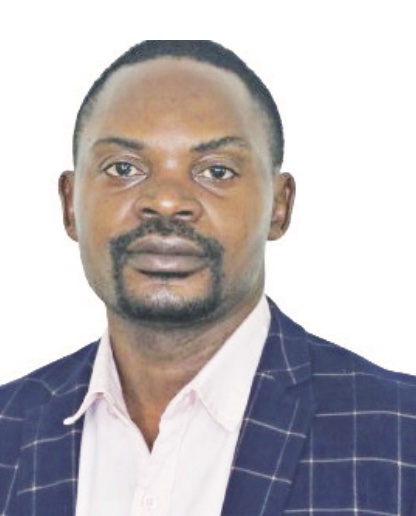


The government of Uganda, through the ministry of Public Service, introduced the hardship allowance fund in 2006.
It pays a monthly top-up to a public servant in a designated hard-to-reach area in Uganda, or to a Foreign Service Officer posted to a mission in a volatile, hard-to-reach, hard-to-stay, or harsh-climate country.
Its goal was to attract and retain teachers, health workers, and other officers in districts most people would otherwise avoid, such as places marked by harsh climates, poor roads, insecurity, and a lack of basic social services.
Urban municipal centers and town councils are excluded. The allowance is paid monthly, fixed at 30 per cent of an officer’s basic salary.
However, the detailed criteria for this designation remain known mainly to the ministry of Public Service, with little public visibility into which districts qualify, and why. The allowance has had impact. But it also raises a fair question. Does Uganda’s idea of “hard to stay” still match today’s reality?
A SALARY IS NOT JUST A NUMBER
Two civil servants on the same salary are not necessarily equally well-off. What matters is not the payslip figure, but what it can buy.
A police officer’s salary may comfortably cover rent, food, and transport in a small town. That same salary may barely survive the month in Kampala, Mbarara, or Gulu, where rent alone can swallow half a paycheck.
Equal pay does not always mean equal welfare. Sometimes it can even be unfair. When the hardship fund was first designed, the logic made sense. Public servants posted to remote areas faced real deprivation: harsh limates, insecurity, and a near-total absence of basic services.
Paying them more was a fair way to compensate for what they gave up. Much of that has since improved. Roads have expanded, and volatile areas are safer. Yet a new, quieter form of hardship has crept in – the rising cost of living in Ugandan cities.
Uganda’s towns and cities are growing fast, pulling in thousands each year chasing jobs and services. That growth has boosted opportunity but hurt affordability. Housing, transport, food, and land have all become significantly more expensive in urban areas.
Teachers, nurses, police officers, and soldiers are increasingly priced out of the places they work. A report by the Equal Opportunities Commission found that most Ugandan households spend about 33.5 per cent of their income on rent.
The average monthly rent stands at around Shs 233,500, leaving little room to save for anything else, let alone buy land. Land itself has become almost unreachable. A standard residential plot of land in many urban and peri-urban areas now costs more than Shs 50 million, against a median monthly income of roughly Shs 220,000.
At that rate, saving for a plot is nearly impossible without decades of discipline, or a lucky windfall. It is not a surprise, then, that 96 per cent of Ugandans cannot afford the cheapest typical house formally built by a private developer, as indicated in the National Development Plan IV.
A HIDDEN COST TO PUBLIC SERVICE
Public servants squeezed by high rent often end up in cramped, overcrowded rooms, far from their workplaces, spending hours in traffic each day to and from the workplace.
That commute is not just tiring; it eats into family time, adds stress, and chips away at service quality. A teacher who arrives exhausted after a two-hour commute is unlikely to perform at their best.
Neither is a nurse who spends the night worrying about rent. Many also fall into a cycle of salary loans and borrowing from moneylenders to bridge the gap between income and expenses.
Rather than easing the pressure, these loans often deepen it, trapping officers in debt, which erodes their quality of life. Financial strain carries a subtler risk too: a struggling officer may be more tempted to demand bribes or cut corners, undermining the integrity of the services they deliver.
REDEFINING “HARD TO STAY”
This calls for widening the existing definition of hardship, not reinventing it. First, government should formally recognise high urban living costs as a form of hardship, alongside remoteness and insecurity.
Second, salary and allowance reviews should account for regional differences in the cost of living. Basic salaries can remain nationally uniform, but targeted urban housing or hardship allowances could close the gap in real purchasing power.
Third, government should speed up staff housing for teachers, health workers, and police in expensive urban areas. Finally, government should strengthen affordable housing programmes for civil servants through more serviced land, low-cost mortgages, and public-private partnerships.
The writer is an Economics Fellow at Blueprint Consortium Africa and Assistant Lecturer at the School of Economics Makerere University
The post Uganda’s hardship allowance should be extended to public servants in cities appeared first on The Observer Media Ltd.