Unions reject proposal to split monthly salaries
Labour unions have rejected a proposal to split workers’ monthly salaries into two payments. This follows City of Windhoek councillor Fransina Kahungu’s proposal this week that salaries should be paid in two instalments each month. She said it would help employees better manage their finances. National Union of Namibian Workers secretary general Job Muniaro, however, […] The post Unions reject proposal to split monthly salaries appeared first on The Namibian.
 Black News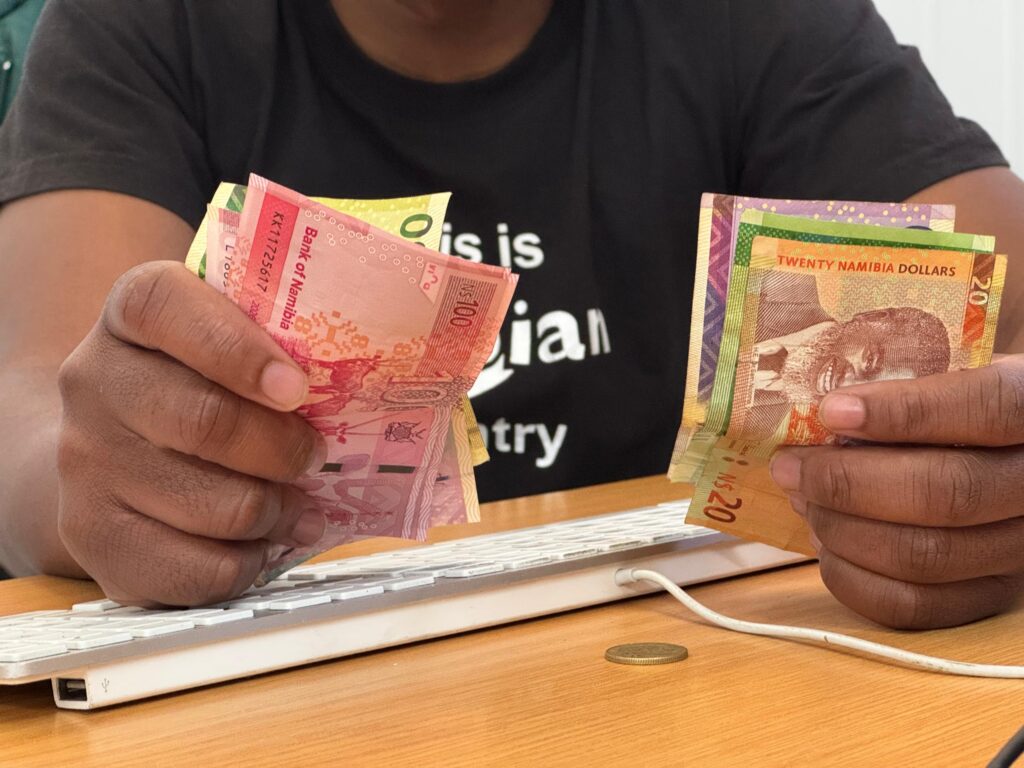
Labour unions have rejected a proposal to split workers’ monthly salaries into two payments.
This follows City of Windhoek councillor Fransina Kahungu’s proposal this week that salaries should be paid in two instalments each month.
She said it would help employees better manage their finances.
National Union of Namibian Workers secretary general Job Muniaro, however, yesterday said splitting salaries would not solve the financial challenges workers face.
“Splitting salaries is going to be an extreme burden to Namibian workers. The idea does not need to be spread any further because it does not speak to the betterment of the lives of Namibian workers,” he said.
Muniaro said many low-income earners already struggle to survive on their monthly wages and dividing those wages into two payments would make it harder for them to meet their financial obligations.
“If someone earns N$1 500 and you give them N$750 to survive for two weeks, yet they have a fixed payment of N$400 every month on an account, how are they supposed to satisfy those obligations? Are they expected to pay everything in fragments?” he asked.
He said splitting salaries would not reduce workers’ monthly expenses, but would make financial planning more difficult.
After deductions, such as loan repayments, insurance premiums and taxes, workers could be left with very little money at month-end to cover transport, food and other family needs, he said.
The Namibia Statistics Agency (NSA) this week revealed that more than half of the country’s working population earns N$2 000 or less per month.
The NSA also found that 71% of workers receive their income once a month, making monthly wages the main source of income for most Namibians.
Trade Union Congress of Namibia secretary general Mahongora Kavihuha says any proposal to split salaries should be supported by research rather than opinion.
He says any change to the payment system should be based on sound economic analysis.
“You cannot simply wake up one day and propose changing the payment system. As a serious labour movement, we do not simply embrace every proposal that comes along.
“Anyone making such a proposal must present scientific evidence or research showing how it would improve workers’ lives and how it would affect the economy,” he says.
Kavihuha says labour unions would not support such a proposal without credible evidence showing that it would benefit workers.
The latest NSA figures also show that Namibia’s working-age population grew by 344 000 people over the past five years, while employment fell by nearly 179 000.
The debate comes as many Namibians continue to face financial pressure.
In May, the Bank of Namibia said 70% of Namibians are too poor to buy a house. The central bank also said less than 10% of the working population owe banks N$45.1 billion in home loans.
Namibian Revolutionary Transport and Manufacturing Union commander-in-chief Petersen Kambinda says the focus should instead be on securing better wages for workers.
He says many Namibians already earn less than what they need to cover basic living costs.
“The little workers are earning is already not enough. Why would we split that amount again? At this point, our energy should be directed towards fighting for better salaries, not splitting inadequate ones,” he says.
Kambinda says many workers already rely on debt to pay their rent, food, medical expenses and school costs.
“Even when they receive the full salary at once, many are still unable to make ends meet,” he says.
He warns that splitting salaries would increase workers’ financial pressure.
“We will simply push people deeper into poverty and bury them in financial stress. That is not the solution,” he says.
‘NOT CONSIDERED’
The Office of the Prime Minister (OPM) says the government is not considering changing the current system of paying public servants once a month.
OPM spokesperson Maximus Halwoodi says the proposal is not on the government’s agenda.
“At the moment, that issue is not even on any discussion table. We are therefore not in a position to say the government is considering it or not considering it,” he says.
Halwoodi says any future changes to the salary payment system would only be considered if there was a clear need for it and after following the required procedures.
“The government will continue with the current system of paying its employees once a month. Should there ever be a need for a review, the relevant stakeholders will be consulted to ensure any outcome benefits everyone,” he says.
REACTIONS FROM THE PUBLIC
Karen Kerry
“Money is never enough anyway . . . it all comes down to budgeting and spending habits.”
Martines Ganaseb
“In that case, all debts should be split in half as well.”
Bloom Herunga
“With a half salary the suicide rate will increase.”
Marthinus Mukoya
“It’s not about the time frame people get paid in and budgeting, it’s about whether what you earn is enough to cater to your needs and wants.”
Michael Katjina
“Yes, giving me two chances a month to make terrible financial decisions is exactly the character development I need, and my debit orders have to fight me in two different weight classes.”
Elifas Ndapuka
“I think it’s a question of how the tax is going to be deducted.”
The post Unions reject proposal to split monthly salaries appeared first on The Namibian.