Voters push Democrats beyond centrist consensus
Democratic voters are challenging a party strategy built around caution, compromise, and centrist assumptions.
 Black News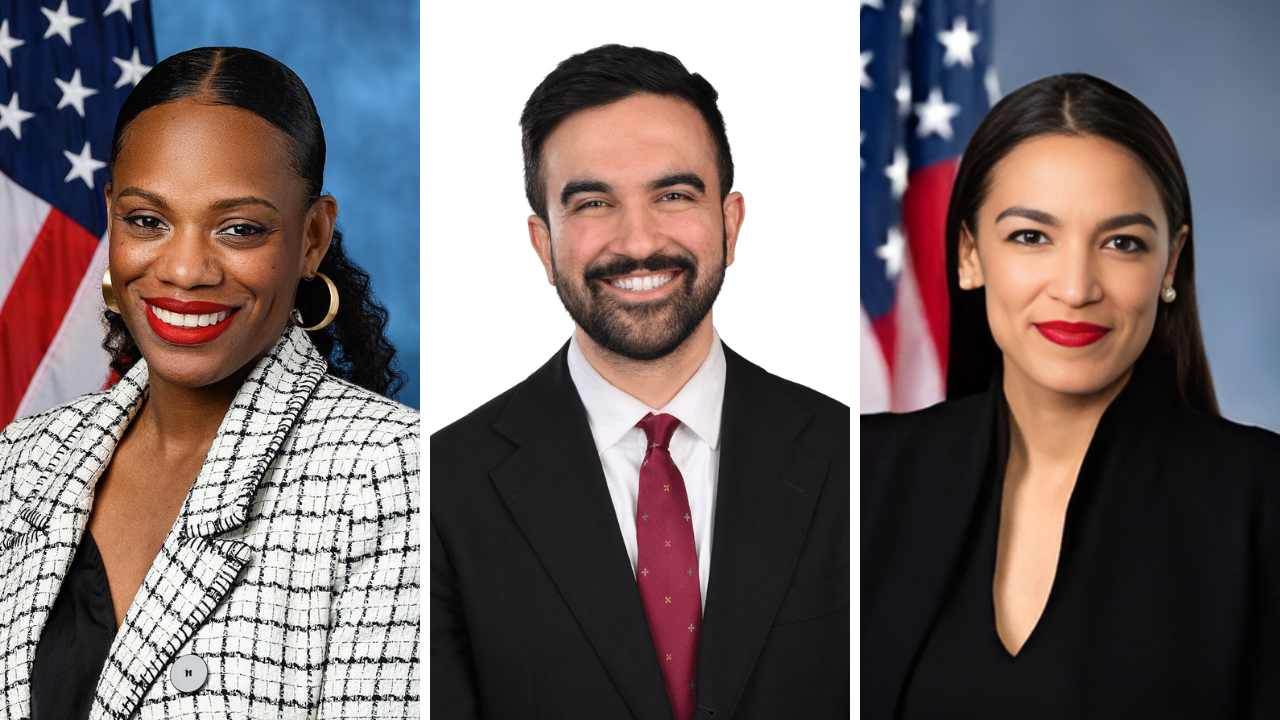

Democratic victories normally bring celebration, particularly when Republicans control the White House, Congress, and much of state government.
But some recent Democratic wins have exposed a growing civil war inside the party.
Centrist Democrats continue warning that Democratic Socialists and other progressive candidates cannot win statewide elections. Progressives counter that the centrist playbook has produced too little resistance to anti-Black and anti-women, and anti-democracy Republican policies and too few tangible results for voters.
The evidence is increasingly complicated for the centrists’ argument. Progressive Democrats are winning elections—and many are winning the approval of the voters who put them in office.
Progressive challenge to conventional wisdom
Consider New York City Mayor Zohran Mamdani, a Democratic Socialist who entered office promising an aggressive affordability agenda. Within months, his administration helped secure $1.2 billion for universal child care, launched free 2-K seats, secured a rent freeze for one- and two-year rent-stabilized leases, sped up buses serving more than a million New Yorkers, and secured millions in settlements for workers and tenants.
Mamdani’s record is not complete. Free buses remain a work in progress, and universal child care is being phased in. But the distinction matters: he has been pursuing his campaign promises rather than declaring them impossible.
And voters have noticed. A March Marist poll found 48% of New Yorkers approved of Mamdani’s job performance, compared with 30% who disapproved. Respondents also viewed him as hardworking, caring, and representative of New Yorkers.
And in a moment when the sitting president of the United States (and family) has reaped record monetary gains from his political position, it is no small thing that Mamdani turned down an approved salary raise.
Mamdani is not alone. Alexandria Ocasio-Cortez won reelection in 2024 with 68.9% of the vote. Voters interviewed afterward described her as a fighter and someone who “loves democracy.” Pennsylvania Rep. Summer Lee, another progressive, survived a heavily contested 2024 primary, with supporters praising her as “the real deal,” a fighter and someone who remained true to her values.
Now, Michigan has produced another test. Progressive Abdul El-Sayed defeated establishment-backed moderate Haley Stevens in the Democratic Senate primary, becoming the first progressive to secure the party’s nomination for statewide office there. His general-election race against Republican Mike Rogers will provide a much stronger test of the “progressives can’t win statewide” argument.
Meanwhile, the debate is hardly theoretical. When Rep. Jasmine Crockett considered a Texas Senate campaign, some Democrats argued she couldn’t win statewide. Progressive Rep. Becca Balint called Crockett an “extremely talented messenger,” while Rep. Al Green said simply: “I believe that she can win.”
Is ‘Electability’ really the issue?
So why are some Democrats so determined to define progressive candidates as unelectable? One possibility—raised by progressives and some voters—is that party institutions have become more invested in preserving existing power structures than disrupting them.
That accusation shouldn’t be treated as an established fact. But it raises a legitimate question: Is electability being measured by what voters actually want—or by what party consultants and institutional leaders are comfortable offering?
After all, if progressive candidates are winning elections, retaining their seats, and receiving praise from voters for delivering results, the blanket argument that progressive politics cannot win becomes increasingly difficult to sustain.
The bigger question may therefore be whether Democrats are measuring success correctly. Is the goal simply to win elections, or to win elections with candidates who will actually fight for and deliver the changes voters were promised?
Let the People Be Heard
The Defender asked local and national readers: “Is the Democratic Party’s approach to fighting for change outdated? If so, what must change?” Every respondent essentially agreed that the current approach is failing. Only their proposed solutions varied.
Why the current approach is broken
- Dr. Marlon Smith: “Leadership.”
- Kefing Moor: That James Carville approach to working across the aisle with folks who have no interest in working with you died with Reagan. People like Carville, the soft white nationalists, as Dr. Greg Carr calls them, are corporate capitalists who smile in your face, stab you in the back, ‘Democraps.’ They’re doing everything they can to hold on to white power and not recognize that Black folks are the driving force towards a progressive society that puts people over profits.
- Craig Hill: “Yes, that’s why we’re seeing a sweeping number of progressive Democrats winning elections.”
- Claudell Cannady: “Ironically, within the Democratic Party, they are fighting hardest against change, fearing losing centrist support.”
- Michael Jones: “It’s the reason so many in the Black community choose or consider third-party voting. And even though misguided and not a sensible reason, it’s why a lot sit out elections altogether.”
Solutions needed
Readers repeatedly emphasized a familiar political lesson: parties win when they mobilize the people who actually constitute their base.
- Dara Landry: “The approach is always ‘Appeal to and ignite the base.’ Democrats need to accept that the base is Black Folks.”
- Travis Martin: “We need Black and Brown leadership from top to bottom. We need white leadership to recognize and promote Black and Brown leadership. We need aggressive talk about socializing programs. Plainly said, people are really hurting. If we can get an organized movement within the Democratic Party to attract and target our Black and Brown population, as well as our LGBTQ communities, we can be successful.”
- Kaleb J. Taylor: “Appeal to the base and drive turnout. Campaign finances and their sources should mirror the party’s alleged ideals. Listen more to actual voters and less to consultants.”
- Kwabena Nkromo: “I’ve been with the Green Party since 2012, and I get to speak my authentic mind and work from the grassroots. It’s a long game, but I think the only truly sustainable one.”
The Democratic Party, therefore, faces a choice that’s bigger than progressive versus centrist. It must determine whether its primary objective is to protect an existing political model or to build a new one around what voters repeatedly say they need. The coming elections will provide more evidence.