What Does Eczema Look Like On Black Skin And How Can You Treat It?
Eczema on Black skin can be easy to miss when you are looking for a bright red rash, and a recent review of pediatric research highlights why recognizing the signs matters. If your child is itchy or...
 Black News
By Janice Robinson-Celeste
Eczema on Black skin can be easy to miss when you are looking for a bright red rash, and a recent review of pediatric research highlights why recognizing the signs matters. If your child is itchy or has rough patches, knowing what to look for can help you ask for the right care.
Quick Answer
Eczema on Black skin may look purple, dark brown, or ashen gray instead of red, and it can include persistent goosebump-like bumps and lighter or darker marks. Gentle bathing, regular fragrance-free moisturizing, and a clinician’s treatment plan can help manage symptoms.
How Does Eczema On Black Skin Look Different?
Eczema on Black skin may show up as color changes and bumps, while intense itching and rough or dry patches are common signs across skin tones.
On darker skin, eczema can look violaceous, purple, dark brown, or ashen gray, rather than bright red. Small bumps around hair follicles may create a lasting goosebump-like texture. Flare-ups can also leave darker or lighter patches after the itching and inflammation settle. These color changes may take time to fade and do not always mean the eczema is still active.
Eczema can appear on the outer arms and legs, trunk, or other areas. Because redness may be less visible, pay attention to other clues: repeated scratching, rough or thickened skin, warmth, crusting, and itch that disturbs sleep. A clinician should check a new or persistent rash, since other skin conditions can look similar. The Cleveland Clinic’s guide to eczema on darker skin offers additional descriptions, and our earlier talk with a dermatologist about childhood eczema is worth a read too.
Why This Matters For Parents Of Black Children
Recognizing how eczema may appear on your child’s skin can help you describe symptoms clearly and seek care before discomfort disrupts daily life.
The CDC’s 2021 National Health Interview Survey estimates that 14.2% of non-Hispanic Black children had diagnosed eczema, compared with 10.2% of non-Hispanic White children. These figures describe diagnosed eczema, not every child who may have symptoms.
A study in the Journal of Investigative Dermatology that tracked children from 2011 to 2018 found eczema in 17.4% of Black children compared with 11.8% of White children, and Black children were more likely to have eczema that persisted over time. A 2025 review also describes differences in eczema severity and access to care, including longer waits for some children to see a dermatologist. These are population findings, not a prediction for your individual child. Successful Black Parenting Magazine believes your child deserves to be seen and treated with care that recognizes their skin tone. That is exactly why our health and wellness guide for Black children exists: so you can walk into any appointment informed and confident.
Eczema affects an estimated 14.2% of non-Hispanic Black children, compared with 10.2% of non-Hispanic White children, according to the CDC. Know a parent who needs this? Send it to them.
What Simple Skin Care Steps Can Help?
A steady, gentle routine can support your child’s skin barrier and make flare management easier to keep up with.
The American Academy of Dermatology recommends a brief, warm bath, using a fragrance-free cleanser, then applying prescribed medicine as directed and a thick, fragrance-free moisturizer within three minutes. This “soak and seal” routine helps hold moisture in the skin. Avoid scrubbing; gently pat the skin dry instead. Applying moisturizer two or three times a day, and whenever skin feels dry, may help keep dryness at bay.
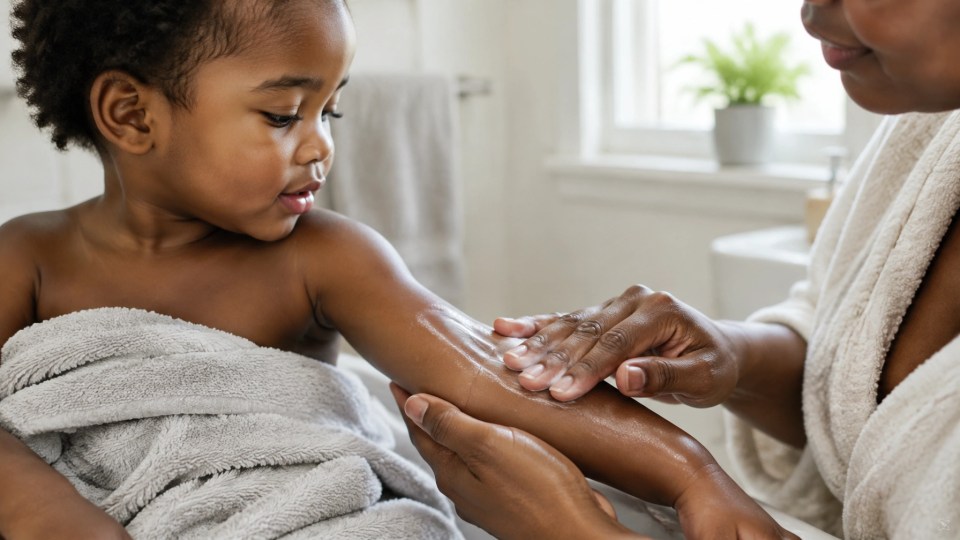
Choose fragrance-free, dye-free laundry detergent and soft, breathable clothes. Notice patterns that may trigger your child’s itching, such as overheating, sweat, or a fragranced product. The AAD’s childhood eczema checklist has more practical care reminders. For more culturally informed skin-care guidance, visit our Hair and Skin Care for Black Children guide.
When Should You Ask A Clinician About Treatment?
Talk with your child’s clinician when a rash is new, worsening, hard to manage, or affecting sleep and daily activities.
A clinician can confirm whether the rash is eczema and recommend a plan based on your child’s age, symptoms, and the area of skin involved. Prescription anti-inflammatory medicine may be part of that plan during a flare. Ask how much to use, where to apply it, and how long to use it. If appointments are difficult to access, ask your pediatrician about a referral, telehealth, or a cancellation list. Bringing dated photos and notes about itching or sleep can make a short visit more useful.
Contact a clinician promptly if the skin becomes increasingly painful, warm, swollen, or develops pus or honey-colored crusts. Do not try bleach baths on your own. The AAD says to use them only when a dermatologist recommends them and gives instructions, generally for selected children with frequent skin infections. We also broke down what to do when eczema in children worsens, if your child’s flares keep coming back.
Should You Change Your Child’s Diet?
Do not remove foods from your child’s diet just because eczema is present.
Food elimination diets are not a routine eczema treatment without signs of an immediate food allergy. Hives, vomiting, swelling, or breathing symptoms after a food need prompt medical discussion. If you suspect a reaction, write down what your child ate, the timing, and the symptoms, then contact their clinician. Unsupervised food restrictions can make it harder to meet a child’s nutrition needs. The NICE guidance for treating childhood eczema explains why dietary changes should be discussed with a health professional.
Key Takeaways
- Notice that eczema on Black skin may look purple, brown, or ashen gray rather than red.
- Look for itching, rough patches, follicle-centered bumps, and lingering light or dark marks.
- Use brief warm baths, fragrance-free products, and thick moisturizer as part of a consistent routine.
- Ask your child’s clinician to confirm the diagnosis and explain any prescribed treatment.
- Avoid food elimination diets or bleach baths unless a qualified clinician recommends them for your child.
FAQs
Can eczema look like dark spots on Black skin?
Eczema may leave darker or lighter marks after a flare, and those changes can take time to fade. A clinician can help tell whether the skin is still inflamed or whether the color change is a leftover mark.
Is eczema contagious?
No. Eczema itself does not spread from one person to another through touch. If a rash has pus, increasing pain, or crusting, ask a clinician whether an infection may also be present.
Should I use lotion or a thicker cream?
Many children with eczema do better with a thick fragrance-free cream or ointment than with a thin lotion. Ask your child’s clinician which option suits their skin and treatment plan.
Can my child’s eczema improve as they grow?
Eczema can change over time, and some children have fewer symptoms as they get older. Others continue to have flares, so follow-up and a clear care plan remain useful.
What Can You Do Next?
A clear care plan and a calm routine can help your child feel more comfortable and supported at home, at school, and during appointments.
What signs have you noticed on your child’s skin, and what questions would you add for other parents of Black children?
Follow and share with us on Instagram, Facebook, YouTube, Pinterest, and TikTok.
Get practical guidance in our free Monday email.
Photos and some content may be AI generated.