A Hurungwe community that held onto land that drought threatened to take away
In Hurungwe District, in northern Zimbabwe, land does not just degrade. It retreats.
 Black News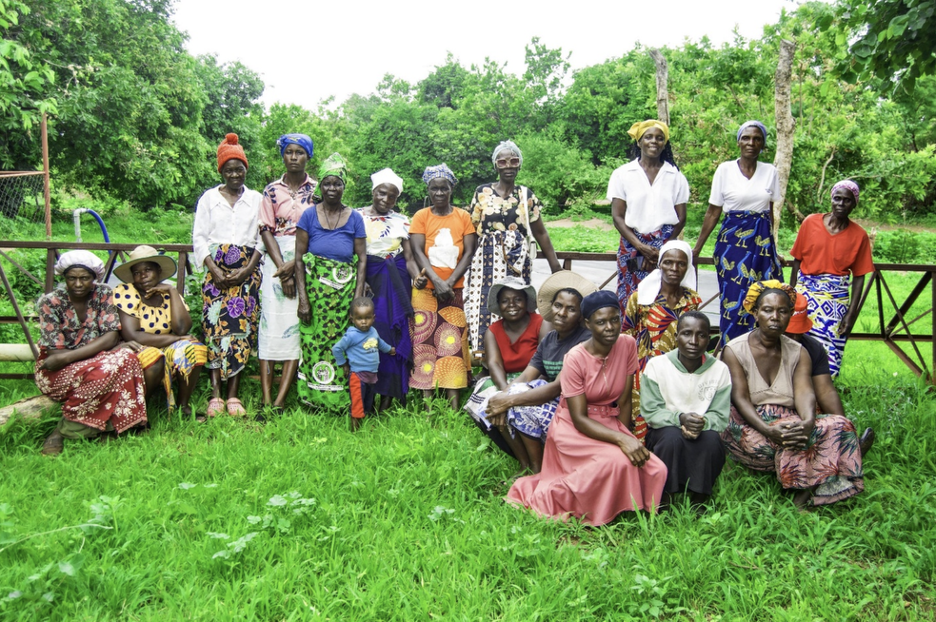
Project beneficiaries gather at the biogas digester site
Photo credit: Tag A Life International
Forests thin year by year. Soil, stripped of cover, bakes under the sun and washes away in the brief, violent rains that do come. For communities in Ward 7, deforestation has long been less a choice than a survival calculation. Trees are cut for fuelwood, charcoal and the hope of staying warm, staying fed and staying alive. The land bears the cost.
This is the place where Tag a Life International (TaLI) spent years building something different: a restoration model rooted not in external intervention, but in community ownership. The project in Nyamakate Village linked livestock, agroforestry and renewable energy into a single circular system. Pig waste would feed a biogas digester, reducing the community’s dependence on firewood. Less pressure on the forest meant 50 hectares of degraded land could come under active sustainable management. An orchard grew. Community stewardship took hold. The circle was turning.
And then El Niño arrived.
Between 2025 and early 2026, an extended drought swept across the Hurungwe region and threatened to reverse this progress.
Crops failed. Animal feed prices spiked and water sources disappeared. The growing pig population — itself a sign that the restoration model was working — now increased pressure on the existing infrastructure.. And with the demand from the livestock, everything else connected to them: the biogas inputs, the household incomes, even the community’s will to keep protecting land they had spent years restoring.
Restoration, it turns out, does not end the day you plant the last tree. It ends the day a community decides it is no longer worth protecting.
This is the gap the G20 Global Land Initiative stepped into.
TaLI deployed the UNCCD G20 Global Land Initiative Restoration Returns Grants support at exactly the right moment. The grant financed pig feed and veterinary inputs (including vaccines) for six months, keeping the breeding stock alive through the worst of the drought. It funded the construction of a new four-compartment pigsty extension to safely accommodate the growing population and reduce the risk of collapse. And it funded the monitoring and site verification needed to confirm that those 50 hectares were still being managed, still being protected, still holding.
Not one hectare reverted during the grant period.
That number matters more than it might seem. In regions where El Niño brought the kind of stress that pushes families toward the forest, the absence of degradation is not a passive outcome. It is an active one — the result of a community that continued showing up for land they had invested in, supported by funding that understood what was at stake.
As TaLI’s team reflects on what the drought period taught them: restoration is not only about planting trees or building systems, it is about safeguarding livelihoods so that communities do not revert to harmful coping strategies. When livelihoods are secure, the land stays secure too.
Across 35 households and 175 people ( farmers, youth and elders ) the project continued functioning through one of the region’s most difficult climate years. The biogas digester is not yet fully operational; that chapter is still ahead, and further investment is needed to close the circle entirely. But the piggery is stronger than before the drought began. The orchard stands. The restored land was not lost.
The G20 GLI grant did not arrive to transform a landscape. It arrived to protect a transformation already underway; at the exact moment that transformation was most at risk. That is a quieter story than before-and-after photographs can tell. But it is, perhaps, the more honest account of what it actually takes to make restoration last.
In Hurungwe, restoration has come to mean something specific. It is not an event. It is a continuous act of protection, carried out season after season, by a community that has decided the land is worth it; and by partners willing to stand with them when the rains do not come.
This project was supported through the UNCCD G20 Global Land Initiative Restoration Returns Grants. Tag a Life International (TaLI) is a Zimbabwean Girls and Young Women’s Rights organization based in Harare, Zimbabwe. Learn more Restoration Return Grants.