Addis Ababa City’s Budget Proposal for the Upcoming Year Tops Half a Trillion Birr, Showing a 43% Increase from Last Year
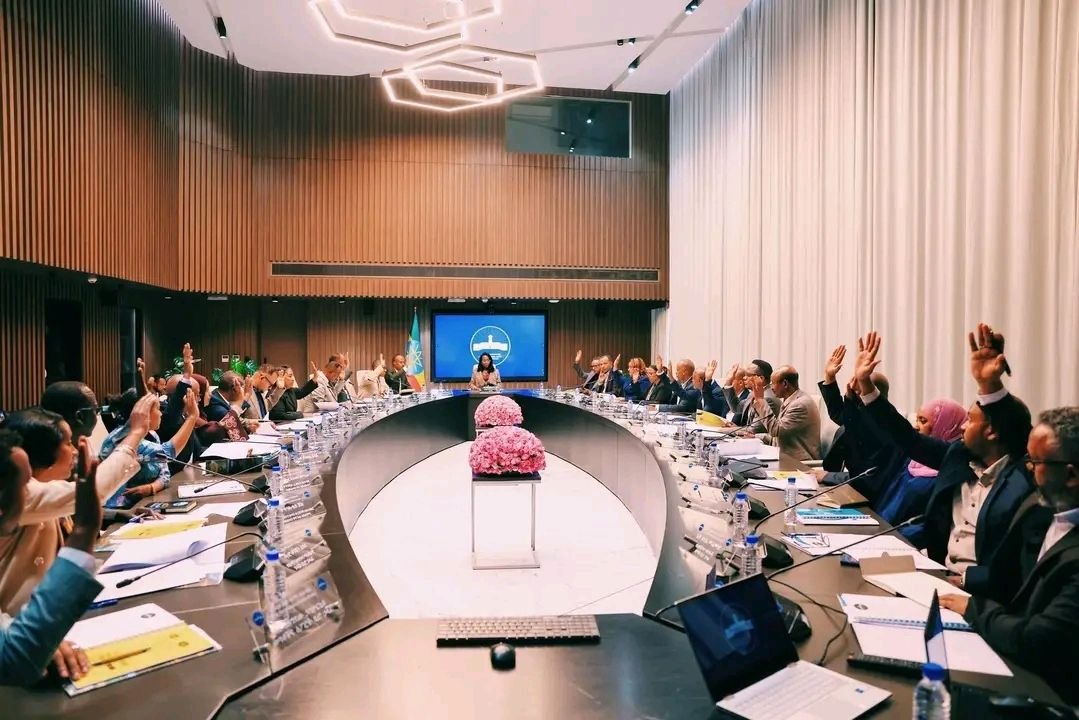
The Cabinet of the Addis Ababa City Administration, in its 5th year 12th regular meeting, has approved the city’s draft budget of 502.27 billion birr (over half a trillion birr) for the 2026/27 fiscal year and directed it to the City Council. This proposed budget shows a significant increase of 152.14 billion birr, or 43.45 […]
 Black News
The Cabinet of the Addis Ababa City Administration, in its 5th year 12th regular meeting, has approved the city’s draft budget of 502.27 billion birr (over half a trillion birr) for the 2026/27 fiscal year and directed it to the City Council. This proposed budget shows a significant increase of 152.14 billion birr, or 43.45 percent (43.45%), compared to the 2025/26 fiscal year budget, which stood at 350.13 billion birr.
It is recalled that out of the total 350.13 billion birr budget for the 2025/26 fiscal year, 91.8 billion birr was allocated for regular expenditures, 246.3 billion birr for capital works, and the remaining 12 billion birr was set aside as a reserve.
It was indicated that this year’s resource allocation and distribution primarily consider the city administration’s development strategies, poverty reduction, ensuring sustainable development goals, and scaling up residents’ demands for development and service delivery.
As stated by the city’s Mayor, Adanech Abebe, special attention is given particularly to infrastructure projects that encourage job creation (such as roads, water, housing, sanitation, transport, and fire and emergency accident prevention) as well as enhancing social services (including education, health, and subsidies for low-income residents of the city).
Accordingly, out of the total expenditure allocated to central sector institutions and sub-cities, the lion’s share, amounting to 71 percent (over 356 billion birr), is designated for poverty reduction and the implementation of sustainable development goals, while the remaining 29 percent is allocated for administrative expenses.
Capital has understood that apart from approving the budget, the cabinet deliberated and passed decisions on four other key agendas that play a major role in the city’s holistic operations and development. First, the cabinet discussed a study conducted by an independent private institution regarding the city’s capacity for revenue generation and indicated that the study should be further enriched through discussions with all stakeholders.
Additionally, the cabinet reviewed and passed a decision on a draft regulation prepared by the Justice Bureau to determine the practical organization and operation of training at the Addis Ababa City Administration Civil Servants Competency Assessment and Certification Institute. Furthermore, it is revealed that the cabinet held extensive discussions and passed decisions on a draft regulation for the enforcement of municipal holding service fees, as well as a land allocation proposal submitted for projects of national significance.