Africa loses $210 million in Ebola funding as vaccine-free strain spreads in Congo and Uganda
Africa’s battle against a fast-growing Ebola outbreak has suffered a major blow after more than $200 million in pledged funding vanished within days, raising fears that a deadly virus with no approved vaccine could spread further across the continent.
 Black News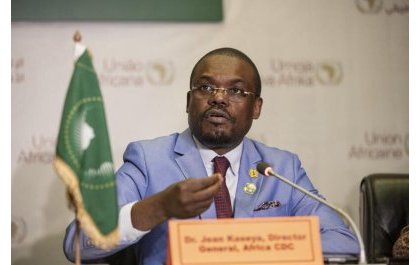

Africa’s battle against a fast-growing Ebola outbreak has suffered a major blow after more than $200 million in pledged funding vanished within days, raising fears that a deadly virus with no approved vaccine could spread further across the continent.
- Nearly half of the money pledged to fight Africa’s latest Ebola outbreak has disappeared within days, according to Africa CDC.
- The outbreak involves the rare Bundibugyo strain, which currently has no approved vaccine or treatment.
- Congo has recorded more than 1,000 suspected cases and 246 suspected deaths, while Uganda has confirmed infections.
- The funding setback threatens containment efforts as countries tighten travel restrictions and health authorities race to stop wider regional spread.
The Africa Centres for Disease Control and Prevention (Africa CDC) said financial commitments made by international partners to support the emergency response have fallen from nearly $500 million earlier this week to around $290 million.
The funding reversal comes as health authorities struggle to contain an outbreak of the rare Bundibugyo strain of Ebola in the Democratic Republic of Congo (DRC) and Uganda.
Unlike the Zaire strain of Ebola, for which vaccines and treatments have been developed, there is currently no approved vaccine or treatment specifically for the Bundibugyo strain. Health experts say that makes rapid detection, isolation and community engagement even more critical.
According to the latest Africa CDC figures, Congo has recorded 1,077 suspected cases and 246 suspected deaths. Uganda has confirmed eight cases.
The World Health Organization has designated the outbreak a Public Health Emergency of International Concern, its highest level of alert for cross-border health threats.
Funding crisis
The sharp decline in promised support has triggered anger among African health officials.
Africa CDC Director-General Jean Kaseya criticised donors who initially pledged support before later withdrawing their commitments.
“People are dying! How can we come and say: we commit X million dollars, and the next day they are calling me to say no, it was a mistake?” he said during a virtual briefing.
Kaseya also questioned why some major global health institutions continue to fund development programmes while emergency outbreak responses struggle to secure financing.
His comments highlight a growing debate over global health funding at a time when aid budgets are under pressure from multiple crises around the world.
The funding shortfall could have immediate consequences on the ground, where health workers are already battling shortages of supplies, logistical challenges and public mistrust in communities affected by previous Ebola outbreaks.
Why the world is watching
This is no longer just a Central African health issue.
The outbreak has emerged in a region characterised by extensive cross-border trade, migration and mining activity, increasing the risk of wider transmission if containment efforts fail.
Governments are already responding.
DON'T MISS THIS: Kenyan court blocks U.S. Ebola quarantine plan after backlash over proposal to house exposed Americans on African soil
The United States has imposed temporary entry restrictions on travellers who have recently been in Congo, Uganda or South Sudan. Other countries are strengthening screening measures as global health agencies monitor developments closely.
The outbreak also carries economic risks. Previous Ebola epidemics disrupted trade, tourism, transport and investment flows across affected regions, leaving long-lasting economic scars.
For African economies already facing slower growth, elevated debt burdens and pressure on public finances, a prolonged outbreak could further strain government resources.
Race against time
The latest funding setback comes as international health authorities warn that speed is critical.
The Bundibugyo strain has historically recorded fatality rates ranging from roughly 30% to 50%, making early intervention essential. Health officials believe some infections may have circulated undetected before the scale of the outbreak became clear.
Despite concerns over shrinking donor commitments, Africa CDC praised the World Bank and the African Development Bank for agreeing to redirect resources towards outbreak response efforts.
For now, health officials are focused on one objective: stopping the outbreak before it evolves into a wider regional crisis.
But with suspected cases continuing to rise and funding commitments moving in the opposite direction, Africa’s fight against Ebola is becoming a test not only of public health systems but also of global willingness to finance emergency responses when they are needed most.