Africa’s AI Governance Gap: Why National Strategies Must Move Beyond Adoption to Execution
In February 2026, the Ghana Revenue Authority deployed Publican AI at Tema Port —software that analyses import declarations, benchmarks values against global trade databases, and flags anomalies before clearance. Within weeks, customs revenue soared from GH₵2.4 billion to GH₵3.6 billion, with the system generating an average of $3 million a day in additional revenue. By any adoption metric, the deployment was a success. By any governance standard, serious operational problems quickly emerged. Traders cannot understand how customs values are determined. All disputes are escalated to a secretariat in Accra that sits only twice a week — meaning an importer whose […] The post Africa’s AI Governance Gap: Why National Strategies Must Move Beyond Adoption to Execution appeared first on African Arguments.
 Black News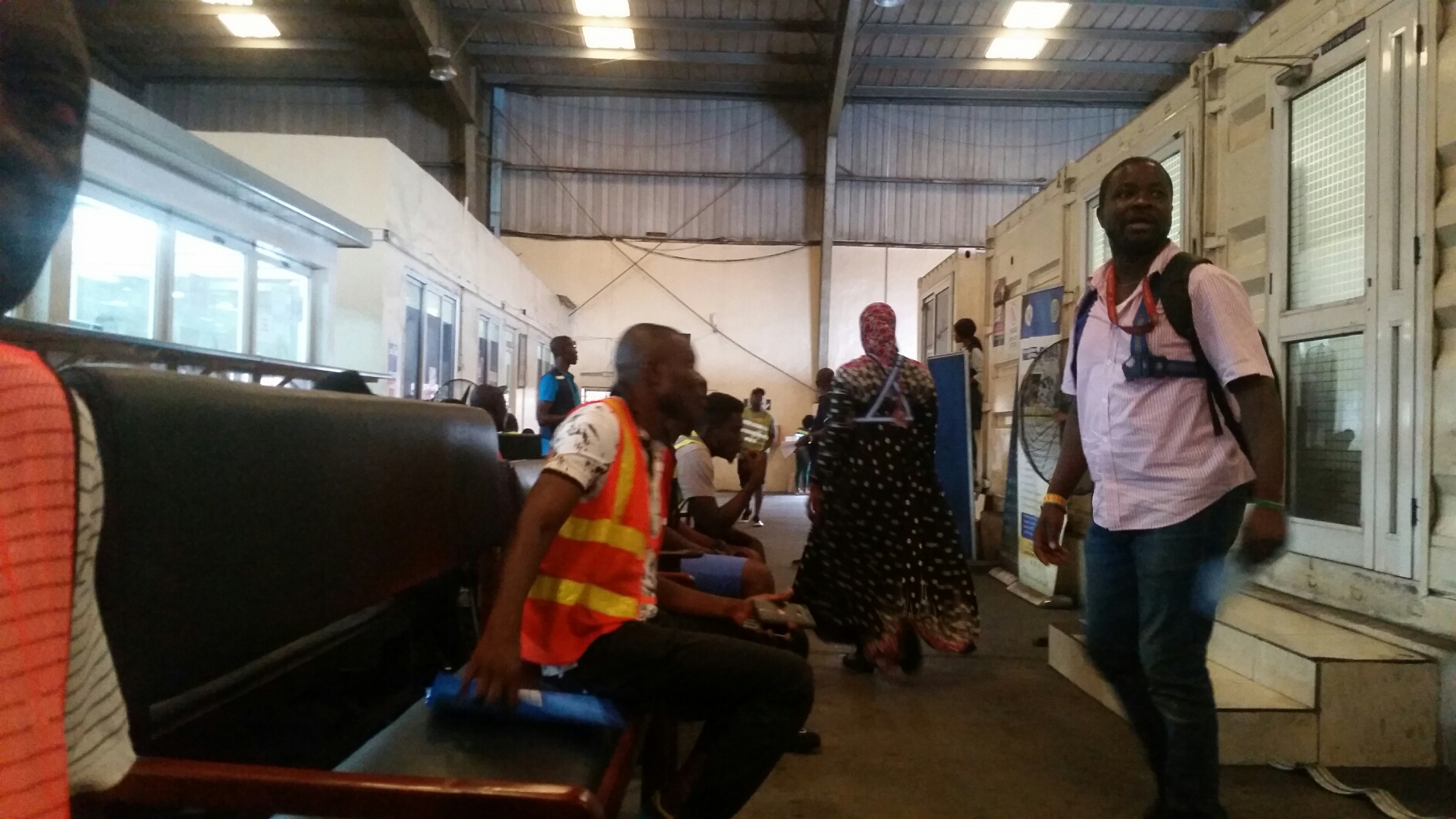
In February 2026, the Ghana Revenue Authority deployed Publican AI at Tema Port —software that analyses import declarations, benchmarks values against global trade databases, and flags anomalies before clearance. Within weeks, customs revenue soared from GH₵2.4 billion to GH₵3.6 billion, with the system generating an average of $3 million a day in additional revenue.
By any adoption metric, the deployment was a success. By any governance standard, serious operational problems quickly emerged.
Traders cannot understand how customs values are determined. All disputes are escalated to a secretariat in Accra that sits only twice a week — meaning an importer whose goods are flagged on Monday waits until Thursday for a hearing. In April 2026, a coalition of freight forwarding and trade bodies launched a strike, citing the complete absence of a functional appeals mechanism.
Publican AI detects anomalies effectively. Neither the system nor its surrounding governance framework was equipped with a structured process for handling what comes next. Who escalates? What triggers intervention? What is the importer entitled to know? How are decisions documented and challenged?
This is not only a Tema Port issue. It is a governance challenge emerging across African states deploying AI systems.

Tema Port, Ghana, where the Publican AI customs system was deployed in February 2026.
Across Africa, governments including Ghana, Kenya, Rwanda, Nigeria, and Egypt have launched national AI strategies positioning artificial intelligence as a tool for economic transformation and public sector modernization. These strategies reflect genuine ambition and growing sophistication in institutional planning.
Yet a more profound question is emerging that no strategy document fully answers.
Most African AI strategies are designed primarily for AI adoption. They are optimized for building infrastructure, developing skills, launching pilots, and securing investment. What they are not designed for is operationalisation: executable governance systems capable of assigning accountability, governing AI-driven decisions, escalating potential harm, and maintaining public trust.
The critical gap is not in vision. It is in execution.
The first phase of Africa’s AI governance evolution has focused on mobilization. This includes national commitments, institutional structures, ecosystem investments, and sectoral adoption targets. Ghana’s National AI Strategy (2025-2035) launched in April 2026, is among the continent’s most ambitious examples. It establishes eight pillars covering education, infrastructure, data governance, sectoral AI adoption, and public sector transformation, with a vision of an AI-powered economy contributing GH₵500 billion to the GDP by 2035.
The second is operationalization — and it is far harder. This phase moves beyond aspirational policy toward executable governance systems. It requires answers to questions no strategy document normally asks: If an AI system, implemented by a government agency, causes harm — how will this problem be escalated? By whom? In what time frame?
Africa’s execution gap reflects a broader global dilemma. The most developed economies have not solved it either.
Europe’s experience shows that sophisticated AI legislation alone is insufficient. Several EU member states struggled to establish the institutional structures required to implement the EU AI Act effectively, revealing that governance frameworks require operational capacity, not only legal ambition.
Conversely, Singapore, on whose model Ghana’s proposed Responsible AI Authority is based, announced a world-first governance framework for agentic AI in January 2026, demonstrating that execution-focused institutions can move quickly.
The lesson is consistent across regions: governance frameworks do not run themselves. What executes them are institutions — and institutions need more than mandates. They need operational architecture: clear decision pathways, accountability channels, defined response times, and auditing capability.
In this arena, Africa is not necessarily behind. In some respects, it possesses greater institutional flexibility than regions constrained by legacy governance systems. This creates an opportunity to design governance systems that are operational from the outset rather than retrofitted after institutional failures emerge. While Europe is attempting to simplify structures it spent years building, African institutions can build execution layers from scratch.
The ultimate question is not whether African countries can successfully adopt AI. It is whether they can build governance systems capable of ensuring accountability at the same speed AI systems operate.
The Publican AI deployment at Tema Port is not simply a customs story. It illustrates a structural governance pattern visible wherever AI systems are deployed faster than the accountability architecture surrounding them.
The customs software is technically effective. The governance failure is not in what the AI detects. It is in what the human institution does next. The AI made determinations at speed and scale while the institutional response architecture operated at committee pace.
Decision velocity exceeded governance velocity.
This widening gap between the speed of AI-driven decisions and the speed of institutional accountability is the defining governance challenge of the current moment. And it will not be solved by better strategies but by better execution institutions.
The Tema Port situation reveals what is missing from most African AI governance initiatives: an operational execution layer that converts risk identification into structured institutional action.
To fix this, there must be a shift from governing data privacy to governing decision-making processes. The institutions most African strategies recommend — Responsible AI authorities, ethics boards, data protection commissions — must be designed as execution institutions, not advisory ones. This means establishing specific escalation paths, named accountability, defined response windows, and mandatory documentation. Governance bodies that meet twice a week cannot govern AI systems that operate every second.
Furthermore, there is a workforce dimension most strategies underestimate. Building engineers and data scientists is necessary. But Tema Port illustrates a different skills gap — the absence of professionals who understand not only how to build AI systems but also how to govern the decisions those systems make. Governance capacity is not a soft skill. Africa’s AI education agenda needs to produce both builders and governors.
Confidence in AI systems can only be sustained by governance frameworks that remain visible, accessible, and accountable when problems arise, not only when systems are performing as expected. The Tema Port strike was not a protest against AI. It was a demand for governance that works.
Africa’s AI future will not be determined by the strength of its strategies alone. It will be determined by whether its institutions can govern the decisions those strategies enable.
The post Africa’s AI Governance Gap: Why National Strategies Must Move Beyond Adoption to Execution appeared first on African Arguments.