Africa's second-largest graphite producer tightens control over mineral wealth with 15% state ownership rule
Mozambique has enacted sweeping new mining legislation requiring the state to hold a minimum 15% stake in all mining projects, as the resource-rich southern African nation seeks to capture a larger share of the value generated by its vast mineral wealth.
 Black News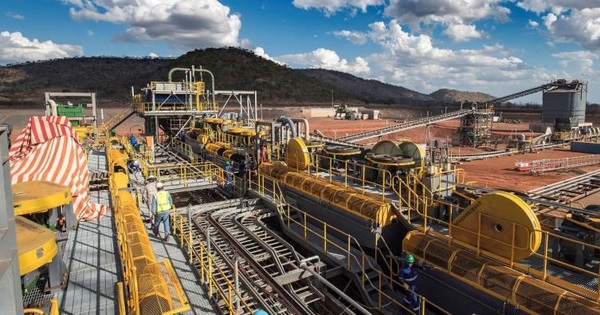

Mozambique has enacted sweeping new mining legislation requiring the state to hold a minimum 15% stake in all mining projects, as the resource-rich southern African nation seeks to capture a larger share of the value generated by its vast mineral wealth.
- Mozambique has enacted new mining laws requiring a minimum 15% state stake in all mining projects.
- The legislation comes amid growing global demand for critical minerals, especially graphite for electric vehicle batteries.
- The state’s stake will be free-carried and non-dilutable, enforced via the National Mining Company (ENM).
- The reforms also restrict the export of unprocessed minerals, encouraging local processing unless specially authorized.
The new law, signed by President Daniel Chapo, comes at a time of rising global demand for critical minerals used in electric vehicle batteries and energy storage systems.
Mozambique is one of the world's leading graphite producers and hosts the giant Balama mine, one of the largest graphite deposits globally.
With graphite emerging as a critical mineral for electric vehicle batteries, the country has become one of the world's most strategically important suppliers, ranking behind only China and Madagascar in global production.
DON'T MISS THIS: Mozambique weighs switching China debt to Yuan as default risk builds
Under the legislation as reported by Reuters, the Mozambican state, through the National Mining Company (ENM), will receive a minimum 15% free-carried and non-dilutable stake in all mining ventures across the value chain. The law was approved by Parliament in May and officially signed this week.
The reforms go beyond ownership requirements. Mozambique has also moved to restrict the export of unprocessed and semi-processed minerals, requiring companies to process resources locally unless they obtain special government authorization.
![Mozambique's President Daniel Chapo speaks during the General Debate of the United Nations General Assembly at the UN headquarters in New York City on September 23, 2025. [Photo by LEONARDO MUNOZ/AFP via Getty Images]](https://ocdn.eu/pulscms/MDA_/a1fe2c3da130eaf6f922e8b62a7f50d0.jpg)
Mozambique joins Africa's resource nationalism wave
The new law builds on Mozambique's efforts to increase state participation in the mining sector and capture more value from its natural resources. Officials say the previous framework, in place for more than a decade, limited the country's ability to maximize returns from its mineral wealth.
Beyond the 15% state ownership requirement, the reforms introduce new licensing rules and require 10% of mining revenues to be directed to a local development fund, ensuring communities benefit more directly from resource extraction.
The move places Mozambique among a growing number of African countries seeking greater control over their natural resources and a larger share of mining revenues.
DON'T MISS THIS: Mozambique signals move to join Africa’s mining revolution with 15% state stake and export ban
Zimbabwe, Africa's leading lithium producer, has introduced restrictions on raw lithium exports to encourage domestic processing, while the Democratic Republic of Congo has pursued policies aimed at increasing local value addition in its cobalt and copper industries.
For Mozambique, the stakes are particularly high. Beyond graphite, the country is home to significant coal reserves and the Montepuez ruby mine, one of the world's largest gemstone operations.
The government says the new measures are intended to strengthen the country's management of strategic resources and ensure that mining activities generate broader economic benefits for citizens.
While it remains unclear whether the rules will apply to existing projects covered by long-term agreements, the legislation signals a significant shift in Mozambique's mining policy and could reshape the operating environment for foreign investors seeking access to the country's critical mineral reserves.
As competition for battery materials intensifies globally, Mozambique is positioning itself to extract more value from resources that are becoming increasingly important to the global energy transition.