Africa’s top cobalt producer moves closer to launching its first stock exchange after $1.25billion Eurobond debut
The Democratic Republic of Congo (DRC), Africa’s largest producer of cobalt and one of the world’s most mineral-rich nations, is moving closer to launching its first stock exchange as the government seeks to build the financial infrastructure needed to attract investment beyond the mining sector.
 Black News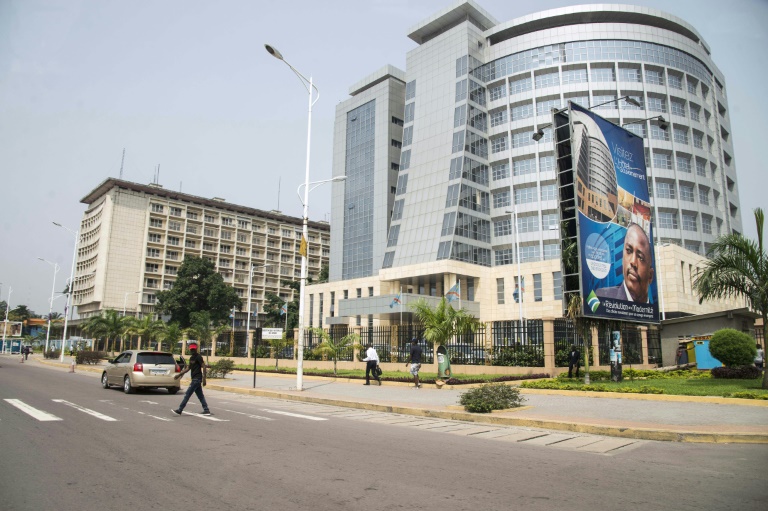
The Democratic Republic of Congo (DRC), Africa’s largest producer of cobalt and one of the world’s most mineral-rich nations, is moving closer to launching its first stock exchange as the government seeks to build the financial infrastructure needed to attract investment beyond the mining sector.
- DR Congo has signed a partnership with the IFC to support the creation of the Kinshasa Stock Exchange.
- The move comes months after the country raised $1.25 billion through its debut Eurobond issuance.
- Authorities hope the exchange will expand financing options for businesses and attract new investors.
- The proposed bourse would become one of Africa’s newest stock exchanges and the country’s first formal securities market.
The Central African nation has signed a cooperation agreement with the International Finance Corporation (IFC), the private-sector arm of the World Bank Group, to support the creation of the Kinshasa Stock Exchange (KSE), a project that would give Congolese companies a formal platform to raise capital while opening a new frontier market to investors.
The move comes just months after the DRC raised $1.25 billion through its debut Eurobond issuance, marking the country’s first-ever borrowing on international capital markets and signalling a broader push to deepen its engagement with global finance.
Finance Minister Doudou Fwamba Likunde Li-Botayi signed the agreement in Kinshasa alongside IFC Country Director Malick Fall.
According to the government, the partnership will focus on six key areas: developing the regulatory framework for the exchange, building market infrastructure, strengthening technical capacity, facilitating knowledge transfer, expanding the investor base and supporting the market during its early years of operation.
The agreement represents one of the most ambitious efforts yet to modernise the country’s financial system and reduce its dependence on traditional sources of funding.
From mining powerhouse to capital-market player
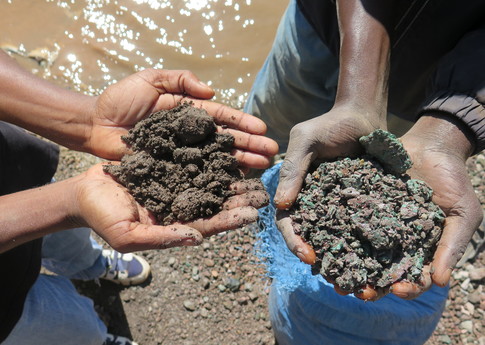
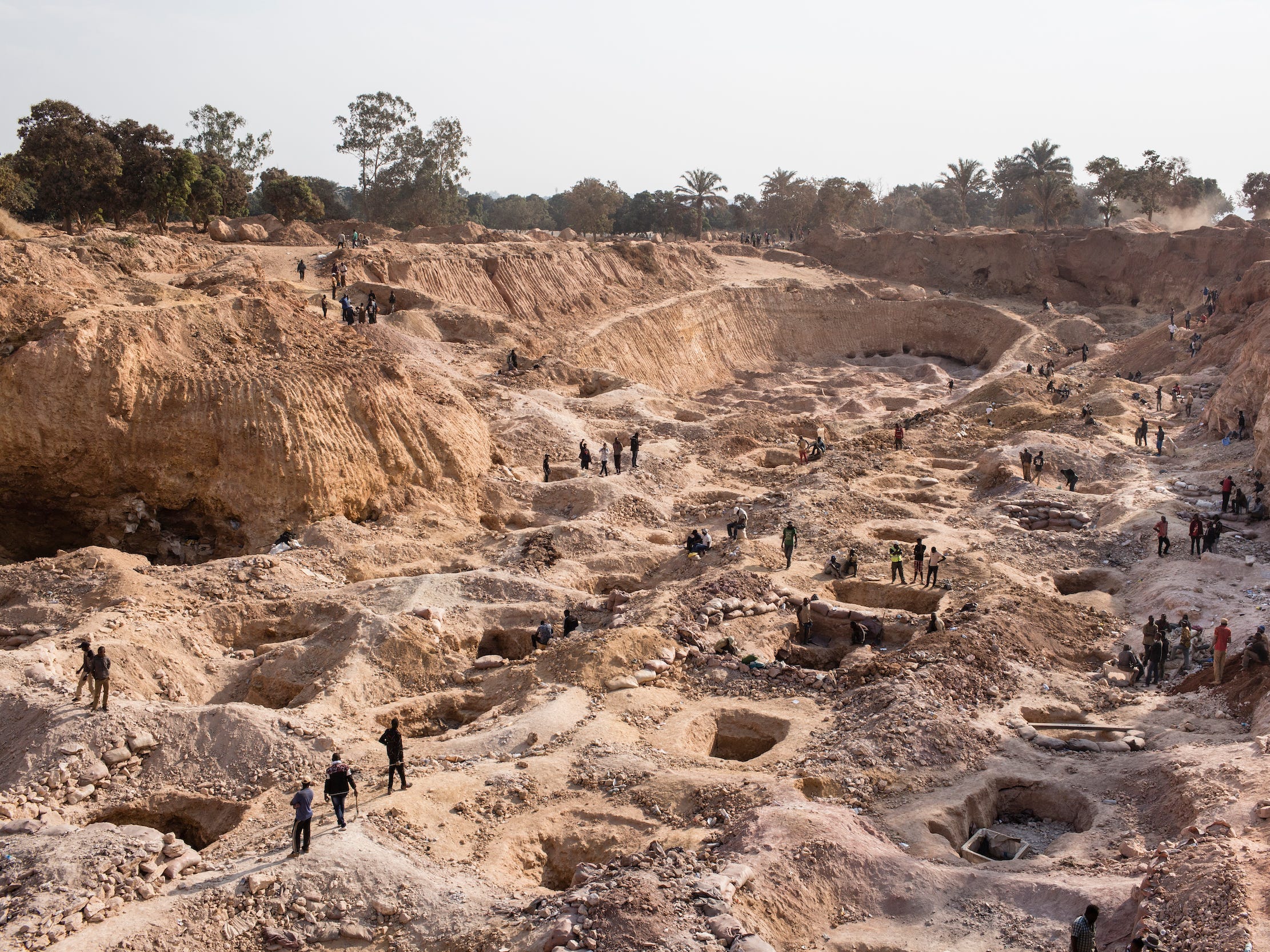
The DRC occupies a unique position in the global economy. It holds some of the world’s largest reserves of cobalt and vast deposits of copper, lithium, tin, gold and other minerals that are increasingly critical to electric vehicles, battery manufacturing and the global energy transition.
In 2024, the DRC accounted for roughly three-quarters of global cobalt production, cementing its position as one of the most strategically important suppliers of critical minerals to the world economy.
Yet despite its vast natural wealth, the country remains among the poorest in the world.
More than 70% of the population lives below the poverty line, while formal financial services remain out of reach for millions of citizens. According to World Bank estimates, fewer than four in ten adults hold a formal bank account.
For policymakers, the challenge has long been how to convert resource wealth into broader economic development. The proposed stock exchange is part of that effort.
Authorities believe a functioning capital market could help mobilise domestic savings, attract foreign investment, improve corporate transparency and provide businesses with alternatives to bank financing.

Building the legal foundations
The cooperation agreement comes as the government moves to establish the legal framework required for a formal securities market.
Earlier this month, Fwamba appeared before the Senate to defend legislation that would create the country’s capital markets architecture.
The bill, which has already been approved by the Cabinet and passed by the National Assembly, provides for the establishment of a securities exchange, a commodities exchange covering agricultural, mining and industrial products, a financial markets regulator, a central securities depository and settlement institutions.
If approved by the Senate, the legislation would lay the legal groundwork for the country’s first exchange, although trading would not begin immediately.
During deliberations, some lawmakers questioned whether the economy is ready for a formal stock market.
Senator Will Mosubu Bussa highlighted concerns over the size of the informal sector and whether local firms can meet the governance, transparency and reporting standards required for public listing.
Those concerns reflect challenges that have slowed capital-market development across several African economies, where relatively few companies are often large enough or willing to meet listing requirements.
Following a broader African trend
The DRC’s push comes at a time when several African countries are seeking to deepen domestic capital markets and reduce reliance on foreign borrowing.
The development follows the launch of the Ethiopian Securities Exchange in January 2025, ending more than five decades without a formal stock market in Africa’s second-most-populous nation.
With Ethiopia’s exchange gradually attracting listings, policymakers across the continent increasingly view capital markets as a tool for mobilising long-term financing for infrastructure, industrialisation and private-sector growth.
Beyond its Eurobond debut earlier this year, the country has become a major destination for regional financial institutions seeking exposure to one of Africa’s largest untapped banking markets.
Over the past few years, banking groups including Access Holdings, FirstHoldCo, Ecobank, Equity Group, KCB Group and CRDB Bank have expanded their presence in the country, betting on long-term growth driven by a population of more than 100 million people, low banking penetration and abundant natural resources.
![Democratic Republic of the Congo President Felix Tshisekedi. [Photo by Alex Wong/Getty Images]](https://ocdn.eu/pulscms/MDA_/bc38a8d59a7d9ccef5bfc3351e16a07e.jpg)
For investors, the appeal of the DRC lies in a combination of scale, resources and untapped potential.
The country sits at the centre of global supply chains for minerals needed in clean-energy technologies, while demand for copper and cobalt is expected to remain strong as countries invest in electrification and energy-transition projects.
A functioning stock exchange could eventually allow local companies, financial institutions, infrastructure firms and other businesses to access long-term capital domestically rather than relying primarily on foreign financing or private funding arrangements.
While significant hurdles remain, including regulatory development, investor education and market liquidity, the planned Kinshasa Stock Exchange represents a major step in the country’s efforts to transform itself from a destination primarily known for extracting minerals into one capable of attracting and retaining investment capital.
If successful, it would not only create a new platform for Congolese businesses but also give investors a new gateway into one of Africa’s most strategically important economies.