Agriculture as the Foundation of Post-War Reconstruction in Sudan
A New Lens on Sudan’s Recovery Agriculture in fragile and conflict-affected states is often viewed as a technical sector — a means of producing crops and earning export revenue. Yet in Sudan today, agriculture is far more: it is a political act tied directly to state legitimacy, social justice, and long-term stability. In the decades before and during Sudan’s civil conflicts, agriculture was repeatedly sidelined in policymaking, treated as a simple economic driver rather than a systemic pillar of national reconstruction and peace-building. This limited perspective contributed to structural exclusion, deepened rural grievances, and ultimately became part of the fuel […] The post Agriculture as the Foundation of Post-War Reconstruction in Sudan appeared first on African Arguments.
 Black News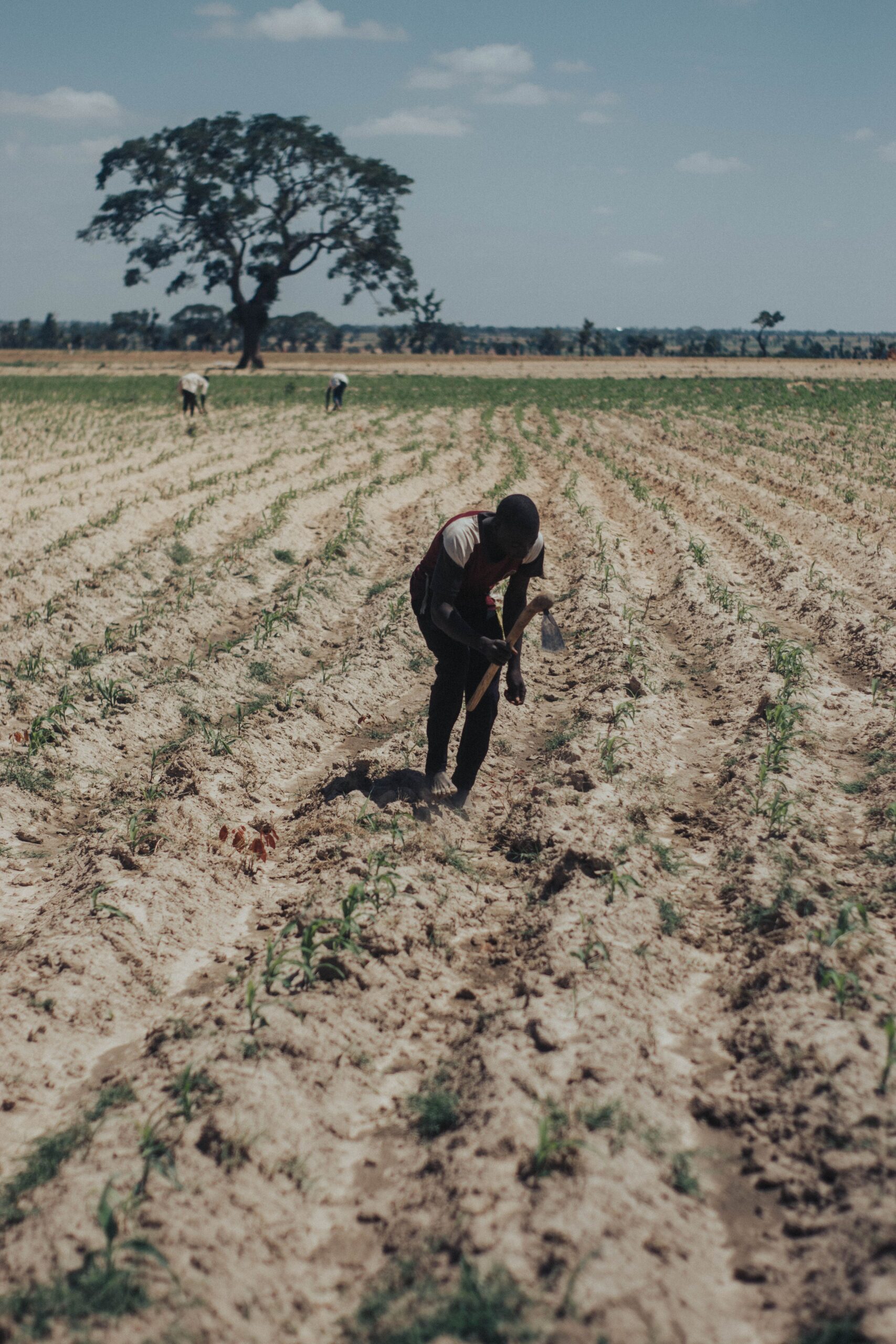
A New Lens on Sudan’s Recovery
Agriculture in fragile and conflict-affected states is often viewed as a technical sector — a means of producing crops and earning export revenue. Yet in Sudan today, agriculture is far more: it is a political act tied directly to state legitimacy, social justice, and long-term stability. In the decades before and during Sudan’s civil conflicts, agriculture was repeatedly sidelined in policymaking, treated as a simple economic driver rather than a systemic pillar of national reconstruction and peace-building. This limited perspective contributed to structural exclusion, deepened rural grievances, and ultimately became part of the fuel that fed the cycles of violence.
Sudan’s search for a sustainable post-war settlement is often framed in political and security terms, such as ceasefires, power-sharing arrangements, and transitional governance. While these issues are undeniably central, they overlook a deeper and more structural question: how Sudan will rebuild its rural economy, where the roots of conflict were planted long before the war began. At the heart of this challenge lies agriculture—not merely as a productive sector but as a political, social, and economic system that has shaped state–society relations for decades.
For much of Sudan’s modern history, agriculture has been treated as a technical domain managed through policies focused on output, export revenues, or mechanized expansion. This narrow framing obscures agriculture’s role in distributing power, allocating land, and defining citizenship, particularly in peripheral regions. In the aftermath of war, repeating this approach risks reproducing the conditions that fueled violence in the first place.
Agriculture as a Political Economy, not a Technical Sector
In post-conflict contexts, agriculture is often seen as a ‘quick win’: a sector capable of generating employment, stabilising food supply, and attracting investment. However, agriculture has never been politically neutral in Sudan. Decisions regarding who controls land, which regions receive infrastructure, and whose production systems are supported have always reflected broader power dynamics.
Large-scale agricultural schemes, particularly those promoted during different political eras, prioritised capital-intensive production models that benefited political elites and commercial actors while marginalizing smallholders and pastoral communities. Rain-fed agriculture—dominant in Darfur, Kordofan, and Blue Nile—was systematically neglected in favour of irrigated schemes closer to the political centre. These patterns entrenched spatial inequality and deepened grievances among communities that were already excluded from political decision-making.
Understanding agriculture as a political economy reveals why many developmental interventions have failed. They addressed symptoms—low productivity or food shortages—without confronting the underlying issues of land dispossession, unequal access to resources, and weak local governance. In post-war Sudan, such blind spots are not merely inefficiencies; they are destabilising risks.
Land, Livelihoods, and the Roots of Conflict
Land is the most contested asset in Sudan’s rural economy. Customary tenure systems, which historically regulated access and resolved disputes, were progressively undermined by state policies that favoured formal titles and large concessions over informal land rights. This erosion of customary governance has left many communities vulnerable to dispossession, particularly when armed conflict has weakened enforcement mechanisms and accountability.
A smallholder farmer cultivating land, reflecting the central role of agriculture in livelihoods and post-conflict recovery.
The war intensified this dynamic. Displacement, militarisation, and the collapse of local institutions have transformed land into both a prize and a weapon. Therefore, any post-war agricultural strategy that ignores land governance is incomplete. Investment that flows into contested territories without resolving tenure insecurity risks igniting new conflicts, regardless of its economic promise.
Reconstruction must begin with the recognition that secure and equitable land access is a prerequisite for peace, not a secondary technical issue to be addressed later. Agricultural investment should be conditioned on transparent land arrangements, community consultation, and mechanisms for dispute resolution that rebuild trust at the local level.
From Relief to Transformation
Sudan’s rural regions have long been trapped in a humanitarian response cycle. While emergency assistance saves lives, it has also created a parallel system that substitutes development rather than enabling it. The challenge after the war is to move from short-term relief to transformational reconstruction, and agriculture is the most viable bridge between the two.
However, transformation does not imply a return to pre-war development models. The temptation to ‘restart’ large mechanised projects or attract quick foreign investment is strong, particularly in a devastated economy such as Ukraine’s. However, such approaches often prioritise speed over inclusion and visibility over sustainability. They also risk consolidating control over land and resources in the hands of a few, thereby undermining social cohesion.
A different path is required—one that places smallholders, pastoralists, and rural workers at the centre of reconstruction, not as beneficiaries but as economic agents. Supporting diversified livelihoods, strengthening local value chains, and investing in rural infrastructure that connects producers to markets can generate growth while reducing inequalities.
Rethinking Investment: Responsible Versus Extractive Models
Post-war Sudan is likely to attract renewed interest from investors seeking land, water, and export opportunities in the future. Investment itself is not the problem; rather, the investment model is. Historically, many agricultural investments in Sudan have been extractive, prioritising land acquisition over productivity, exports over food security, and short-term returns over long-term stability.
Responsible agricultural investment must be judged not only by financial metrics but also by its social and political effects. Does it reduce or intensify competition over land? Does it create employment across value chains or concentrate benefits at the top of the chain? Does it strengthen or bypass local governance?
These questions are particularly urgent in fragile settings. Investment that ignores them may generate output while simultaneously eroding the social foundations of a peaceful society. Conversely, investments aligned with inclusive governance and local participation can become stabilising forces.
The Role of the State in Post-War Agriculture
The Sudanese state’s role in agriculture has oscillated between overreach and absence. At times, it imposed centralised schemes disconnected from local realities; at others, it retreated entirely, leaving markets and communities to navigate insecurity alone. Post-war reconstruction requires a recalibrated role for the state—one that focuses on enabling, regulating, and protecting rather than controlling.
This includes setting clear land policies, enforcing contracts fairly, and investing in public goods, such as rural roads, storage facilities, and extension services. Equally important is rebuilding state legitimacy in rural areas, where trust has been eroded by decades of neglect and coercion. Agriculture provides a tangible entry point for this process as it directly affects livelihoods and daily survival.
Agriculture and the Social Contract
Ultimately, Sudan’s recovery depends on forging a new social contract between the state and its citizens. This contract cannot be negotiated solely in political forums; it must be enacted in the way resources are distributed and opportunities created. Agriculture is central to this process because it touches the lives of most Sudanese, particularly those who bore the brunt of war.
A reconstruction strategy that treats agriculture as a foundation of peace, rather than a sector to be exploited, can help realign state priorities with citizen needs. It can also transform rural areas from zones of marginalisation to spaces of inclusion and productivity.
Conclusion: Rebuilding from the Fields
Post-war Sudan is at a crossroads. One path leads to the rapid revival of pre-war investment models, promising growth but risking a renewed conflict. The other demands a more deliberate and inclusive approach, recognising agriculture as a political and social system that shapes the national stability.
Choosing the latter does not mean slowing down recovery; it means grounding it. Peace will not be secured by infrastructure alone, nor by investment separated from justice. It will be built in fields, grazing lands, and rural markets—where livelihoods are restored, land is governed fairly, and citizens begin to see the state as a partner rather than a predator.
In Sudan, the road to peace runs through agriculture.
This article is adapted from an Arabic-language piece originally published by the author on https://sudaneseonline.com/board/505/msg/1781584352.html, as part of a series on agriculture-led reconstruction in Sudan.
The post Agriculture as the Foundation of Post-War Reconstruction in Sudan appeared first on African Arguments.