Beyond the Cover: What the Elbas’ Vision Means for Africa’s Next Chapter
Idris & Sabrina Elba: A New Blueprint for Sustainable African Investment For much of his life, Idris Elba watched Africa be spoken about from a distance. Growing up in London as the son of a Sierra Leonean father and a Ghanaian mother, he remembers seeing a continent portrayed largely through conflict, instability, and crisis – […] The post Beyond the Cover: What the Elbas’ Vision Means for Africa’s Next Chapter appeared first on Time Africa.
 Black News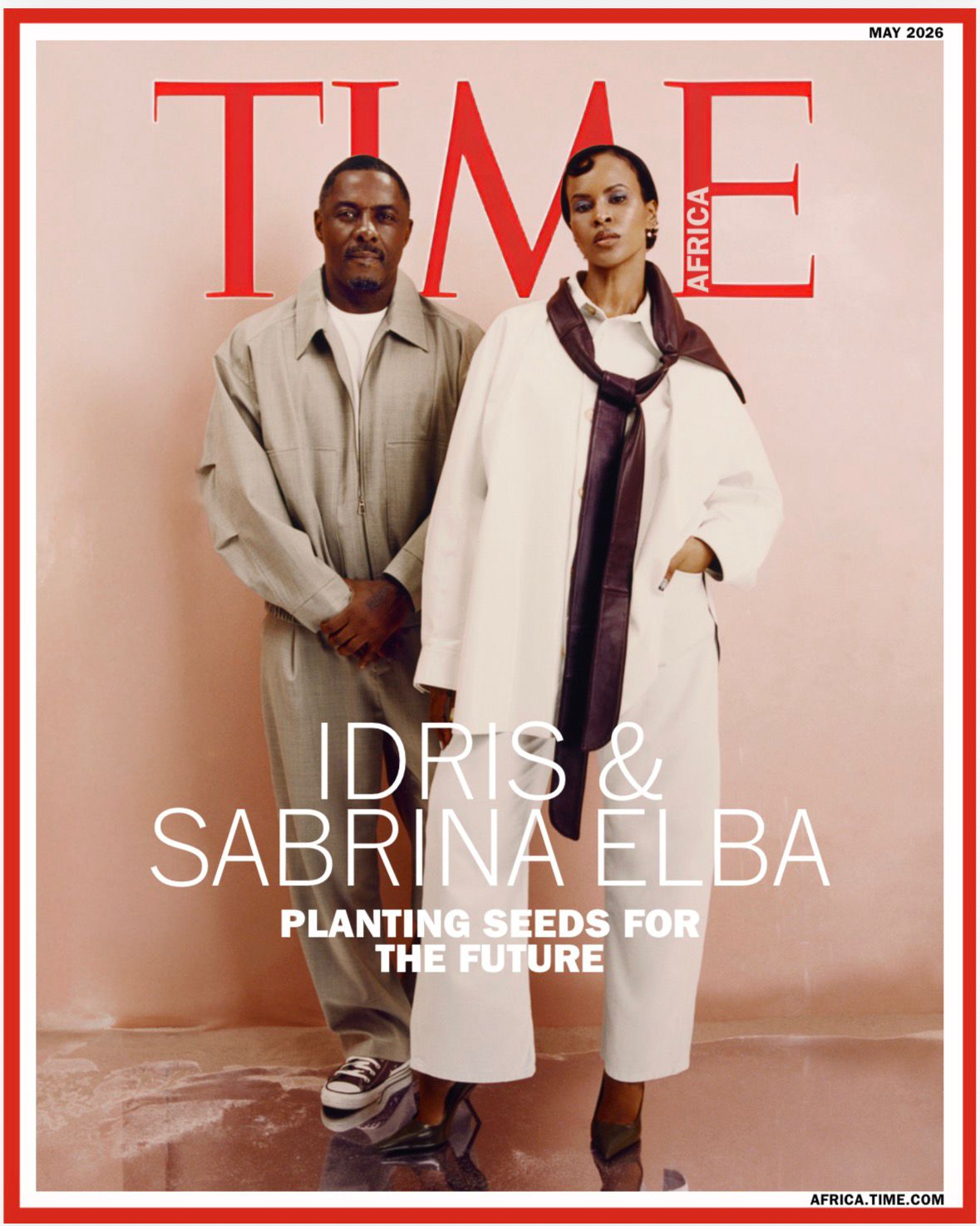
Idris & Sabrina Elba: A New Blueprint for Sustainable African Investment
For much of his life, Idris Elba watched Africa be spoken about from a distance.
Growing up in London as the son of a Sierra Leonean father and a Ghanaian mother, he remembers seeing a continent portrayed largely through conflict, instability, and crisis – a place too often reduced to trauma rather than possibility.
“There was a lot of trauma on TV,” he says. “And I never felt the positive stories were shown enough.”
Today, that frustration has evolved into something larger: a determination to help reshape how Africa is viewed globally – not only culturally, but economically, politically, and strategically.
Together, Idris and Sabrina Elba have increasingly emerged as part of a growing movement of globally connected Africans and descendants of Africans who see the continent not as peripheral to the future, but central to it.
“The world needs Africa more than Africa needs the world,” Idris says.
It is a statement that feels increasingly difficult to ignore.
Africa is home to the world’s youngest population, vast reserves of critical minerals, enormous agricultural potential, rapidly expanding creative industries, and some of the fastest-growing innovation ecosystems anywhere on earth. From music and film to renewable energy, digital finance, infrastructure, and artificial intelligence, the continent is increasingly shaping global conversations rather than simply reacting to them.
Yet for decades, much of Africa’s value – economic, cultural, and material – has flowed outward.
Resources were extracted. Wealth accumulated elsewhere. Stories about the continent were frequently shaped externally rather than by Africans themselves.
Now, a different generation is beginning to challenge that dynamic.
From Aid to Ownership: The New Investment Paradigm
Across cities like Lagos, Kigali, Accra, Nairobi, Johannesburg, Dakar, and Freetown, entrepreneurs, creatives, policymakers, investors, and members of the diaspora are increasingly building systems designed not only to generate growth, but to retain value within the continent itself.
The Elbas have increasingly positioned themselves within that shift.
For Sabrina Elba – who is of Somali heritage and has become a prominent advocate around sustainability, food systems, and agriculture – the work begins with changing the framework through which Africa itself is discussed.
“People aren’t waiting for handouts,” she says. “People are looking for investment.”
That distinction sits at the heart of the couple’s philosophy.
Through the Elba Hope Foundation, Idris and Sabrina have focused on initiatives spanning youth empowerment, agriculture, climate resilience, education, and economic opportunity. But the foundation’s broader approach is rooted less in short-term intervention and more in long-term participation.
“The solutions already exist,” Sabrina says.
“They’re not looking for people to come in with solutions.”

Why Local Expertise is the Key to Continental Growth
It is a perspective shaped by listening – something Idris says became essential to understanding development work across the continent.
“What works in the West doesn’t always work in the Global South,” he explains.
“So I found a lot of listening was really important.”
That idea – that local expertise must shape local solutions – increasingly defines a broader continental conversation around Africa’s future. Development, many argue, cannot simply be imported. It must be built around the realities, ambitions, and knowledge already present within communities themselves.
For the Elbas, those ideas extend beyond advocacy alone.
The Sherbro Vision: Building Future-Facing Ecosystems
In Sierra Leone, Idris Elba has become increasingly involved in the broader vision surrounding Sherbro Island and the Sherbro Alliance initiative — an ambitious long-term project centered around sustainable infrastructure, tourism, economic development, and environmentally conscious urban planning.
The project is significant not merely because of its scale, but because of what it represents.
For generations, conversations about African infrastructure often centered around what the continent lacked. Increasingly, however, projects like Sherbro reflect a different mindset emerging across Africa and its diaspora: one focused on designing, financing, and building future-facing ecosystems within Africa itself.
In many ways, Sherbro is symbolic of a larger psychological shift underway across the continent.
A generation ago, success for many Africans was often imagined elsewhere – in Europe, North America, or the Gulf. Today, while global ambition remains central to African identity, there is also growing recognition that some of the most important opportunities of the coming decades may exist on the continent itself.
That shift is visible everywhere.
A Call to the Diaspora: Planting Seeds for the Next Generation
African music dominates global charts. Nollywood and African cinema continue expanding internationally. Startups across fintech, logistics, agriculture, and artificial intelligence are attracting global investment. Young founders are building companies aimed not merely at solving African challenges, but at shaping global industries.
At the same time, climate, food security, migration, demographics, and resource competition are placing Africa at the center of many of the defining geopolitical questions of the century ahead.
For Sabrina, those issues are deeply interconnected.
“Everything really is connected,” she says.
Agriculture connects to education. Climate connects to economic stability. Food systems connect to migration, opportunity, and long-term resilience.
“We’re looking at long term solutions,” she explains, “solutions that are really going to break a lot of these systemic issues.”
That long-term thinking increasingly mirrors the wider mood emerging across much of the continent itself – a sense that Africa is entering a period not only of global visibility, but of growing strategic importance.
And perhaps that is what ultimately makes the Elbas’ story resonate so powerfully in this moment.
They are not approaching Africa as outsiders rediscovering heritage from afar.
They are part of a broader generation helping shape a new relationship between the continent and its global diaspora – one rooted not only in identity, but in participation, ownership, investment, and belief.
A belief that Africa’s future will not simply be observed by the world.
But increasingly built by those willing to plant seeds within it.
Images by Kendall Bessent for TIME.
The post Beyond the Cover: What the Elbas’ Vision Means for Africa’s Next Chapter appeared first on Time Africa.