Botswana’s 2,488-carat Motswedi diamond, world’s second-largest, finds buyer after two years
Botswana’s 2,488-carat Motswedi diamond, one of the largest gem-quality rough diamonds ever discovered, has finally found a buyer nearly two years after it was recovered from Lucara Diamond’s Karowe mine.
 Black News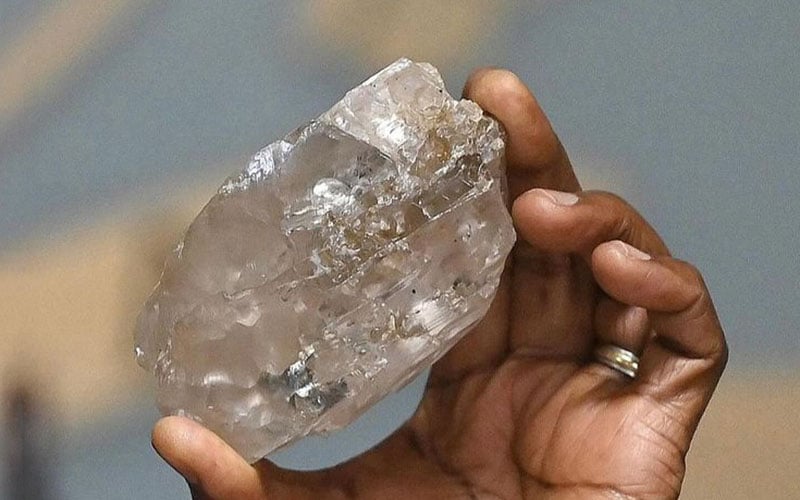


Botswana’s 2,488-carat Motswedi diamond, one of the largest gem-quality rough diamonds ever discovered, has finally found a buyer nearly two years after it was recovered from Lucara Diamond’s Karowe mine.
- The 2,488-carat Motswedi diamond from Botswana was sold nearly two years after its recovery by Lucara Diamond at the Karowe mine.
- Lucara did not disclose the buyer or sale price, only confirming the sale as part of $41 million in Q2 2026 revenue reports.
- The sale process was lengthy due to the diamond’s exceptional size and rarity, making it difficult to value and market through traditional channels.
- Motswedi is the second-largest gem-quality rough diamond ever discovered and notable for its high quality, transparency, and light-brown color.
Canada-based Lucara Diamond disclosed the sale in its Q2 2026 results released on August 7, stating that the 2,488-carat Motswedi was included in the quarter's $41 million revenue.
The diamond remained unsold well into 2026. Lucara’s 2025 year-end report listed Motswedi in its inventory as of December 31, while its Q1 2026 report again said the stone remained unsold.
Lucara has not publicly identified the buyer or disclosed the sale price. The company had previously indicated that monetising a stone of Motswedi's scale could take considerable time because of the complexities involved in marketing, valuing, cutting and polishing exceptional diamonds.
DON'T MISS THIS: Botswana unearths massive 1,305-carat diamond, marking its 10th record-shattering find over 1,000 carats
The sale ends a lengthy search for a buyer for a diamond whose extraordinary size and rarity made it difficult to value and market through conventional channels.
Why the Motswedi took two years to sell
The diamond was recovered in August 2024 and was initially reported to weigh 2,492 carats. After cleaning, its confirmed weight was 2,488.32 carats.
The Gemological Institute of America classified Motswedi as the second-largest gem-quality rough diamond ever discovered, behind South Africa’s 3,106-carat Cullinan diamond, which was recovered in 1905.
Motswedi is also notable for its exceptional quality. GIA described it as a transparent, light-brown, gem-quality diamond and confirmed that it is a single crystal containing several large gem-quality areas with relatively few inclusions.
DON'T MISS THIS: Botswana discovers world's third-largest diamond
Lucara named the stone Motswedi, a Setswana word associated with a water spring or underground water emerging to the surface. The company had previously said it was considering different options for the stone's sale and wanted it to have a “positive and enduring impact for Botswana.”

Finding a buyer was not straightforward. Diamonds of this scale are so rare that conventional pricing benchmarks are difficult to apply. The eventual owner could also choose to keep Motswedi intact as a collector's or museum piece, rather than cut it into multiple polished diamonds.
Museums were previously reported to be among potential buyers, highlighting the unusual status of exceptionally large diamonds as both luxury assets and objects of historical and cultural interest.
The transaction comes as Botswana’s diamond industry faces a difficult market, with weaker demand for natural diamonds and growing competition from laboratory-grown stones putting pressure on prices.
DON'T MISS THIS: Africa's second-largest diamond producer insists on having a seat at Africa's biggest diamond company
Yet the Karowe mine continues to produce exceptionally large diamonds. In July 2026, Lucara announced the recovery of a 1,305.4-carat diamond, its 10th stone weighing more than 1,000 carats since production began at the mine.
Motswedi’s sale also comes as the market for exceptional natural diamonds becomes increasingly distinct from the broader diamond market.
While laboratory-grown stones have put significant pressure on prices for many categories of natural diamonds, ultra-rare stones can command attention from collectors and buyers willing to pay premiums for their scarcity.